
1. 6-inch Deep Floating Shelves With Invisible Brackets
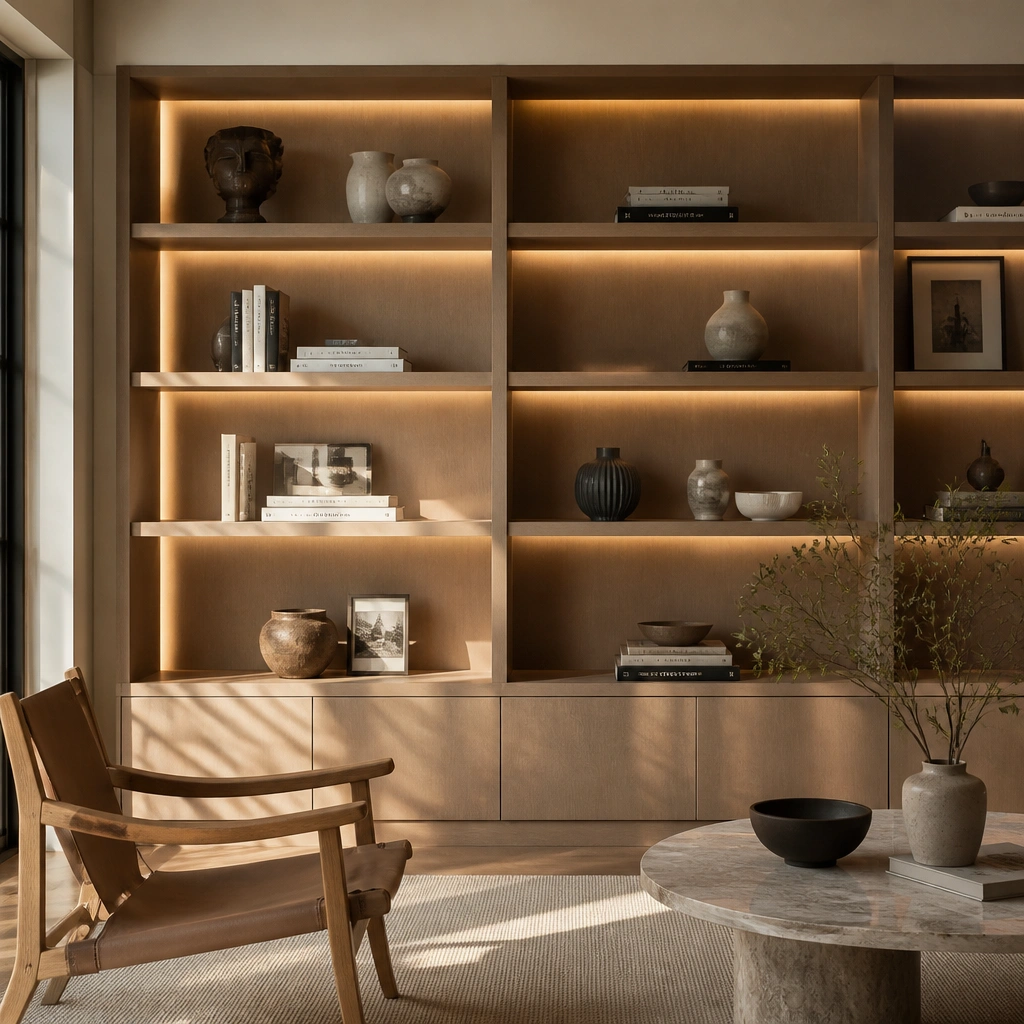
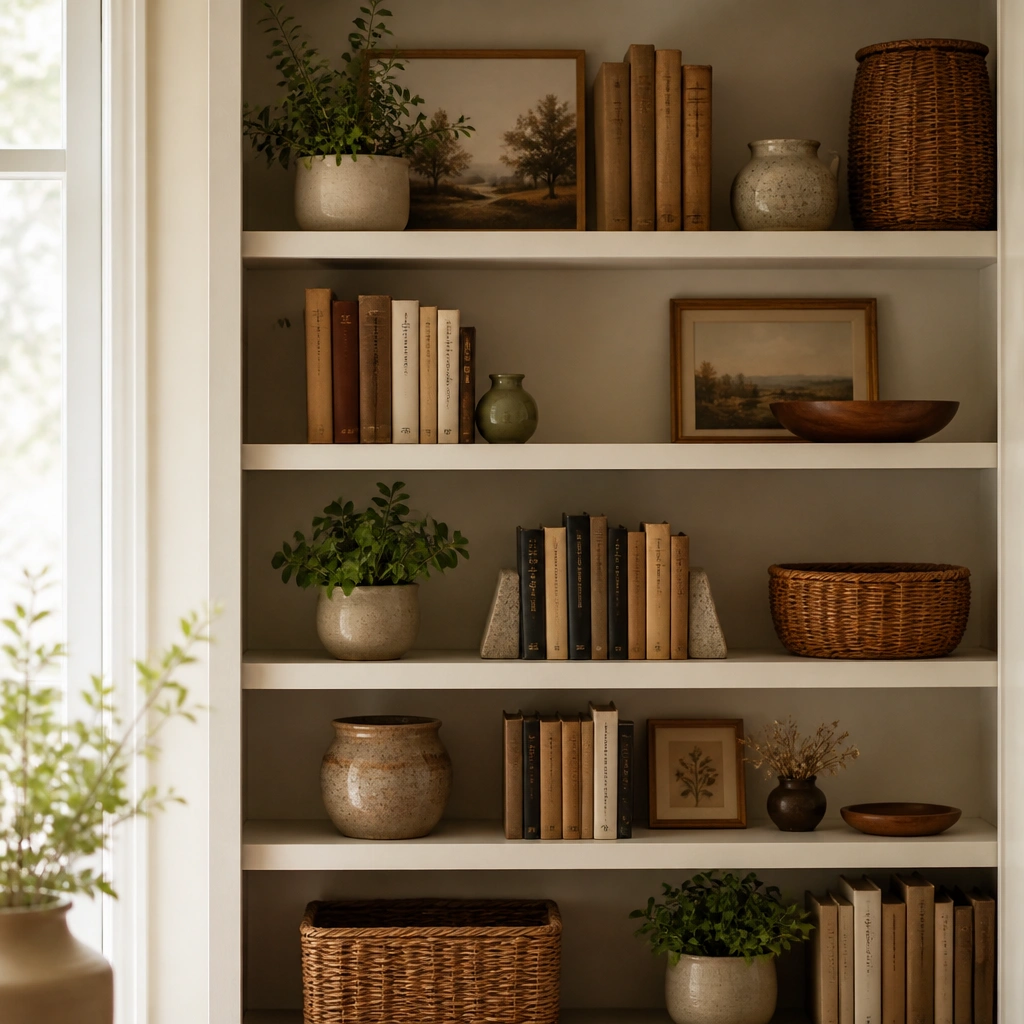
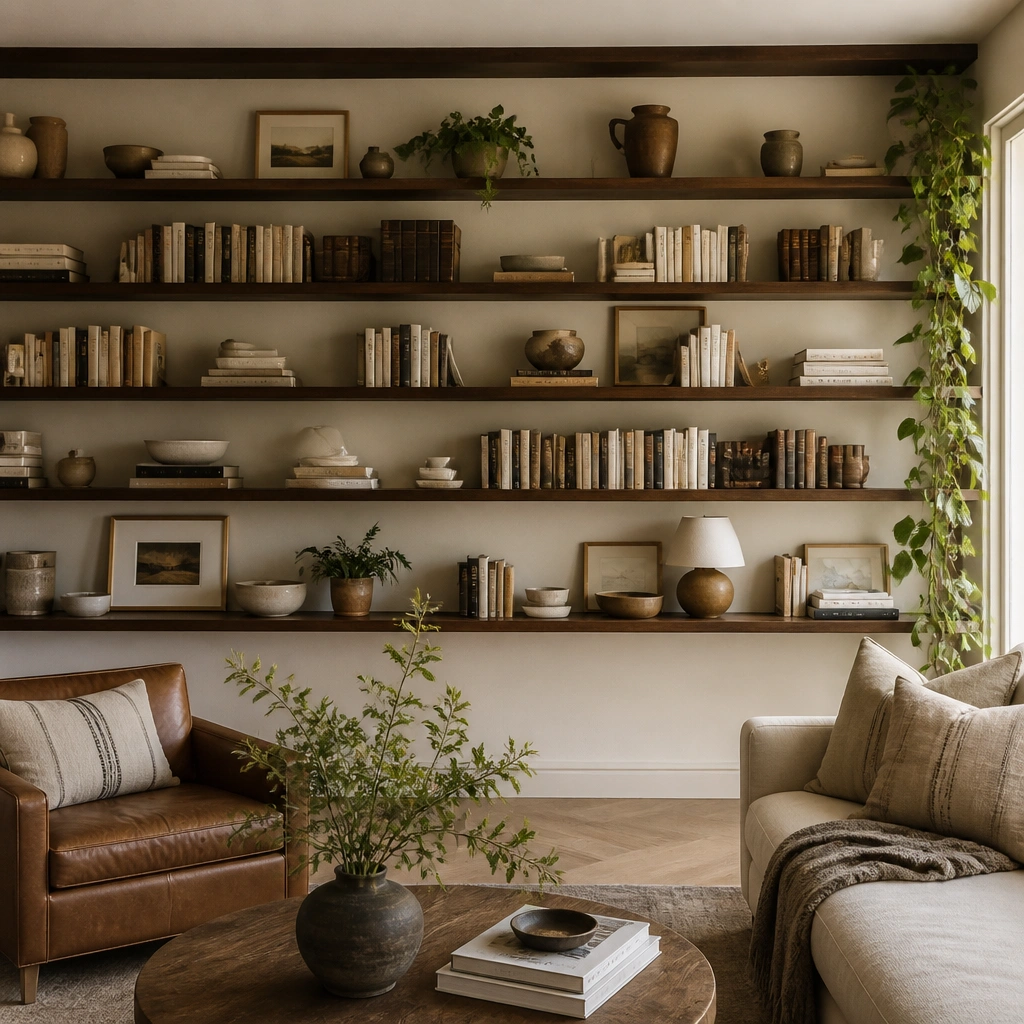
For small-space book shelf ideas small space, floating shelves are the cleanest way to add book display without stealing floor area. Go with 6-inch depth so cookbooks don’t project into the dining walkway, even when you stack them upright. Use a light finish like white oak or matte white so the shelves blend into the wall and feel less bulky. Space the shelves 10-12 inches apart so paperbacks and taller cookbooks both fit without constant reshelving. This setup works best on a narrow wall segment near the kitchen pass-through where you still need clear sightlines.
Measure the wall width and pick a shelf run that leaves at least 12 inches of empty wall space from any door trim. Mark your bracket locations using a level, then install into studs when possible; if you can’t, use heavy-duty anchors rated for your shelf weight. Mount 6-inch shelves in a staggered layout: place the lowest shelf 60 inches from the floor for easy reach, then add shelves above with 10-12 inches between shelf surfaces. Cost is usually $60-150 for shelves plus brackets, depending on material and length.
Pro tipKeep book spines facing outward and alternate vertical and horizontal stacks so the wall looks intentional, not random.
One warningAvoid installing floating shelves only into drywall — use studs or properly rated anchors.
2. Tall Narrow Bookcase With Doors on the Bottom
A tall narrow bookcase saves width while giving you real storage capacity, and the door panels keep the kitchen from looking messy. Choose a unit that is 10-12 inches deep and 70-80 inches tall so it uses vertical height without blocking sightlines into the dining area. Put closed doors at the bottom for extra napkins, takeout menus, and spare dish towels so the open shelves stay focused on books and a few decor items. The open upper section makes it feel lighter than a full-door cabinet. This design is ideal for apartments where you have books plus everyday kitchen items that can’t live in drawers.
Pick a bookcase with adjustable shelves and doors, then measure the spot so the unit clears the tabletop by at least 2 inches when chairs pull in. Level the base, secure it to the wall studs with anti-tip hardware, and start filling the bottom compartment first with kitchen linens and backup paper goods. Set adjustable shelf spacing for your tallest cookbooks — leave about 11-12 inches of height for larger hardcovers. Expect $200-600 depending on whether you buy prebuilt or assembled.
Use woven bins inside the lower doors so you can pull everything out in one grab during a dinner rush.
Don’t choose a deep case (15+ inches) — it crowds narrow dining lanes.
3. Corner Ladder Shelf for Books and Small Kitchen Items
Corners are the easiest place to reclaim space in a kitchen-dining apartment because you’re not stealing linear wall width. A ladder-style shelf uses diagonal visual lines and narrow footprints, so it doesn’t feel like a big block in a tight room. Look for a footprint around 18-22 inches wide per side and shelves that are about 10 inches deep or less. Put cookbooks on the mid-level shelves and use the top for a small tray holding salt, pepper, and a candle. This works well where a wall bookcase would block a walkway or where you don’t have a clean straight wall to mount to.
Measure the corner and leave at least 2 inches of clearance from baseboards and nearby trim. If the shelf is freestanding, anchor it anyway — corner units can tip when you pull books off the top shelves. Arrange by height: store tall cookbooks at the lower two or three rungs and keep decorative items on the upper rungs to avoid a top-heavy look. Budget $90-220, depending on wood type and whether it’s metal or wood.
Choose a single finish family (all black metal or all light wood) so the ladder reads cohesive with your kitchen hardware.
Skip wide-bottom shelves in corners — they eat the angle and look bulky from the dining table.
4. Over-the-Fridge Slim Shelf Rail for Cookbooks
In many apartments, the wall above the fridge is unused, but it’s also where you can store lightweight books without crowding counters. A slim shelf rail is shallow and long, which keeps the footprint tight while giving you a dedicated cookbook zone. Choose a depth around 8 inches so the books don’t jut toward the kitchen aisle. Use a matte finish that matches cabinet hardware to reduce visual noise. This is a smart pick when your dining wall is already booked with art, mirrors, or a narrow bar cart and you still want book storage close to cooking.
Confirm the clearance above the fridge door swing and measure up to the ceiling height so you don’t create an unreachable shelf. Install a rail system into studs, then mount a shallow shelf board or two along the rail at about 66 inches from the floor for easy access. Start with lightweight cookbooks and rotate seasonally so the shelf doesn’t become a permanent junk shelf. Plan for $50-140 for rail kits plus shelf boards.
Use book spacers or a simple stand so books sit upright and don’t slide forward on the shelf.
Don’t mount it too low — you’ll hit it when you open the fridge door.
5. Dining Table Back Wall Mini Bookcase (24-inch Wide)
If your kitchen and dining share one tight wall, a mini bookcase behind the dining area keeps books out of the countertop chaos. Go for a 24-inch wide unit with 10-12 inches depth so it fits without turning your dining chairs into obstruction points. Keep the shelves mostly vertical and use bins on the bottom shelf for menus, extra napkins, and coaster sets. The key is leaving enough clearance between the bookcase and the dining chair so you can slide chairs in and out comfortably. This works best on the wall behind or beside the dining table where you can see the shelf from the kitchen but you don’t need it to be a focal piece.
Measure the distance from the bookcase to the table edge and chair swing path; aim for 30-36 inches from the bookcase face to the nearest chair position. Choose a unit with adjustable shelves, then set spacing for your cookbook sizes: 9-10 inches for paperbacks, 11-12 inches for hardcovers. Put bins in the lower shelf and reserve the upper shelf for books you actually use. Expect $120-350 depending on width and whether it’s preassembled.
Pro tipPick a back panel color that matches the wall so you don’t get a dark block behind your dining chairs.
One warningAvoid shelves with open ladder sides that snag chair backs and sleeves.
6. Bookcase That Slides Past a Narrow Passage (Track System)
When you have a narrow passage between kitchen and dining, a sliding bookcase is the rare layout that actually saves space twice. You get storage when the bookcase is parked against the wall, and you clear the passage when it slides away. Choose a slim depth around 10-12 inches and a height that doesn’t block overhead lighting. This design works when your space is too tight for a swinging door cabinet and when you want to keep books from sitting in the walkway. It’s a great answer for a galley-style kitchen that opens into a dining nook.
Measure the passage width and confirm you can slide the bookcase without hitting outlets or trim. Install a track into studs and level the frame, then attach the bookcase to the rollers so it moves smoothly. Use the open shelves for books and store small kitchen tools in drawers or bins that sit inside the cabinet portion. Budget $300-900 depending on track quality and whether you buy a custom unit.
Add a soft-close or at least a stop block so it doesn’t slam and rattle adjacent cabinets.
Skip this if you have uneven floors — the track will fight you.
7. Staggered Shelf Boxes for Books and Dish Towels
Staggered shelf boxes are smart for small-space book shelf ideas small space because they combine display and storage in the same footprint. Instead of one long open shelf, you get a mix of book space and cubbies for items that would otherwise clutter counters. Choose boxes that are about 10 inches deep, with a mix of 6-8 inch and 10-12 inch openings. Keep the color consistent — white, light oak, or matte black — so the layout doesn’t look chaotic. Place this in a narrow spot next to the dining table or along the end wall where you want storage but can’t spare extra width.
Select a modular system where shelf spacing is fixed or adjustable, then map your book sizes first. Install the main base securely into studs, then level each module. Fill the cubbies with dish towels, extra placemats, and small serving tools, and use the open shelves for cookbooks you reach for. Cost usually runs $150-500 depending on how many modules you buy.
Use fabric drawer liners in the cubbies so towels look tidy even when you pull one out quickly.
Don’t mix too many finishes — staggered boxes already create visual pattern.
8. Built-In Style Bookshelf Using 2x4 Frames and Shallow Shelves
If you want the built-in look without a deep cabinet, shallow framed shelves in a wall niche or between studs are a strong small-space solution. Use 2x4 frames and mount shelves at a depth of about 8-9 inches, then paint the interior the same color as the wall or a matching tone. This makes the unit disappear visually, which is what you want in tight apartments. It’s also practical: you control shelf heights for tall cookbooks and you can add a simple trim that matches your kitchen cabinets. This works best on a narrow wall section where a store-bought bookcase would be too wide or too deep.
Find your stud spacing, then plan frames so you can secure each section solidly. Cut shelves to a shallow depth of 8-9 inches, then attach them with a level so you don’t end up with a wavy row. Paint the frame and interior first, then install books after the paint cures. Tool effort is moderate: basic saw, drill, level, and paint; materials cost often lands around $120-350 depending on shelf length and trim.
Pro tipPaint the back panel the same color as the wall to reduce clutter and make spines pop.
One warningDon’t leave shelves unsealed if you use a lot of kitchen humidity — finish the surfaces.
9. Picture Ledge Shelves With Book Display Lines
Picture-ledge shelves are shallow and perfect for tight dining walls where you still want books to look styled, not stuffed. Choose ledges around 4-6 inches deep, then lean books upright using a small book stopper or a thin standing shelf. This setup works best for smaller-format cookbooks, cookbooks with dust jackets you like to show, and paperback recipe collections. The shallow depth means you keep the wall line clean and you don’t lose walkway space. Put the ledges at staggered heights so books read as a gallery instead of a single shelf that forces everything to look the same size.
Measure the wall and plan a 2- or 3-tier layout so the bottom shelf sits above typical chair back height. Install ledges into studs with proper hardware and use a level for each run. Place a thin book stopper at the back edge so books don’t slide forward when you handle them. Budget around $40-120 for ledges and stoppers, depending on length.
Pro tipUse neutral book stacking: keep spines aligned and leave 1-2 inches of breathing space between clusters.
One warningSkip ledges that are too deep — they start to look like a chunky bookcase.
10. Wall-Mounted Bookshelf With Rotating Display Column
A rotating display column is a niche pick that solves a specific small-space problem: you want books accessible without needing more shelf depth or floor clearance. Mounted to the wall, it keeps the footprint tiny and lets you flip through cookbooks without pulling them out of a deep shelf. Choose a column with a depth under 12 inches and shelves that hold books snugly. This works especially well near the kitchen prep area where you grab recipes quickly and don’t want clutter building on countertops. It also looks tidy because everything sits in a controlled circle.
Pick a rotating column unit with a wall mount plate, then locate studs and measure mounting height so the lowest shelf is reachable while standing at your counter. Install the mount plate first, then attach the rotating unit and test rotation before loading books. Start with 10-15 books you actually use, then keep the rest in a closed cabinet or drawer so the rotation doesn’t become a junk carousel. Cost is usually $120-350 depending on size.
Limit the rotation to one recipe category at a time — it stays organized and you don’t overload it.
Don’t overload with oversized hardcovers — the rotation will feel stiff.
11. Under-Shelf Storage Shelf Above Dining Bar
If you already have a shelf line above a dining bar or pass-through, add under-shelf storage to keep books and small items in the same visual zone. This approach is great for small-space book shelf ideas small space because you reuse existing height and avoid adding new protruding furniture. Use a narrow under-shelf rail or baskets that hold slim booklets, recipe cards, and small cookbooks. Keep the main shelf shallow and matte so it doesn’t look heavy overhead. It works best when your ceiling height allows overhead storage without hitting your head or blocking pendant lights.
Measure the underside clearance and check pendant or light fixtures so you don’t interfere with lighting. Install a narrow rail or basket supports to the underside of your existing shelf, ideally into studs or secured blocking. Place recipe cards and slim cookbooks in the baskets, then add a small label or card holder so you can swap categories quickly. This is a low-cost upgrade at about $20-80 for rails/baskets if your main shelf is already installed.
Use a small tray inside each basket for recipe cards so items don’t fall out when you pull one out.
Avoid hanging baskets too low — you’ll bump them every time you pass.
12. Slim Wall Cabinet With Vertical Book Inserts
A slim wall cabinet is a smart way to store books without adding bulk to your floor plan. The trick is vertical book inserts inside so cookbooks stand upright and don’t get crushed by door swing or shelf overcrowding. Choose a unit that is about 12-14 inches wide and 10-12 inches deep, mounted high enough that it doesn’t block the dining view. Use glass or open interior panels if you want the spines visible, or full doors if your kitchen storage needs to look calm. This works well in apartments where you have a narrow wall and you need the shelf to disappear visually when you’re not using it.
Select a cabinet size that fits your wall stud spacing and measure door clearance so you can open it without hitting a counter or chair. Mount the cabinet securely into studs and confirm it clears the tabletop edge by a few inches. Install or adjust vertical inserts so tall cookbooks have about 11-12 inches of space and paperbacks get tighter spacing. Cost is usually $150-450 depending on cabinet build and whether you add inserts.
Use a simple pull-out tray for small kitchen tools inside the cabinet so books stay visible and tidy.
Skip cabinets that are too deep — they start to look like a bulky appliance against the wall.
13. Built-In Window-Sill Style Shelves for Cookbooks
If you have a window in the kitchen-dining area, you can turn the space beneath it into book storage without losing wall width. Window-sill style shelves are typically shallow (about 8-10 inches), so they don’t project into the walkway and they keep the room feeling open. The light from the window makes book spines look brighter, and the shelf line visually anchors the dining corner. Add small jars or a narrow utensil tray to use the shelf for kitchen items too. This is a strong option when your dining wall is too narrow for a traditional bookcase but you still want storage that feels built-in.
Measure the window opening and sill height, then plan a shelf that sits 2-4 inches above any trim so you don’t block airflow. Install a sturdy support rail or L-brackets into studs, then mount a shelf board cut to the window width minus a small margin. Sand and seal the shelf if it’s near a sink or cooking area where humidity is higher. Costs are usually $80-250 depending on shelf length and finish.
Pro tipKeep the bottom shelf line consistent with your cabinet trim so the whole wall looks intentional.
One warningDon’t place books too close to steam or splashes if the window is near the sink.
14. Dining Nook Side Shelf With Removable Spice Drawer Base
A side shelf unit is a practical small-space book shelf idea small space because it adds storage where you already have a narrow gap — beside the dining table or next to a bench. Make the top section for books and the base for kitchen items that need quick access, like spice jars and tea. Use a unit that is 10 inches deep for the book section so it doesn’t eat walking space. The removable drawer keeps clutter contained and lets you pull the drawer out to restock without dumping everything. This works best in dining nooks where counters are far and you want recipes and ingredients close.
Measure the gap between the dining table and the wall so the shelf face leaves at least 30 inches clear for chair movement. Choose a unit with a drawer front and interior dimensions that fit your spice jars; most spice jars need about 2 inches of depth and 2-3 inches of width each. Mount or anchor the shelf so it doesn’t wobble when the drawer slides. Budget $140-420 depending on whether you buy a ready-made unit or assemble from parts.
Pro tipUse a tray organizer inside the drawer so jars stand in rows and you can spot what you’re missing.
One warningAvoid shelves without anchoring — drawer weight makes them tip-prone in tight rooms.
15. Sofa-Back Floating Ledge System With Hidden Book Cubbies
This setup uses the wall behind your sofa, so it fixes the small-space problem without stealing floor area. The trick is mixing a thin floating ledge for books with a shallow “drop” cubby underneath for the stuff you don’t want on display. I’d build it in matte white or warm off-white with a light wood top edge (oak or ash veneer) so it reads airy, not heavy, in a tight apartment. Keep the ledges shallow and the cubbies deeper so books don’t bulge into the room. It works in living rooms where the sofa blocks wall space and you still need storage that doesn’t interrupt walking paths.
Step 1 — Measure the wall behind the sofa and plan for a 36 to 40 inch wide span. Use 1x8 boards for the floating ledges (about 7.25 inches deep) and 1x4 or 1x3 boards for the cubby backs and sides (about 3.5 inches deep), with a 10 to 12 inch gap between ledges. Step 2 — Install a French cleat or heavy-duty concealed shelf brackets into studs 16 inches on center, then mount the ledges first. Add the cubby front panel last using pocket screws and wood glue so the underside looks clean from eye level. Step 3 — Finish with a durable wall-friendly paint for the white parts (semi-matte) and a clear matte poly or hardwax oil on the wood edge; total cost is usually $120 to $250 depending on wood choice and bracket quality.
Stagger the cubbies so one row has cubby doors and the other row stays open — it breaks up the blocky look and makes the wall feel wider.
Don’t make the ledges deeper than 8 inches or the books will visually push the wall out and shrink the room.