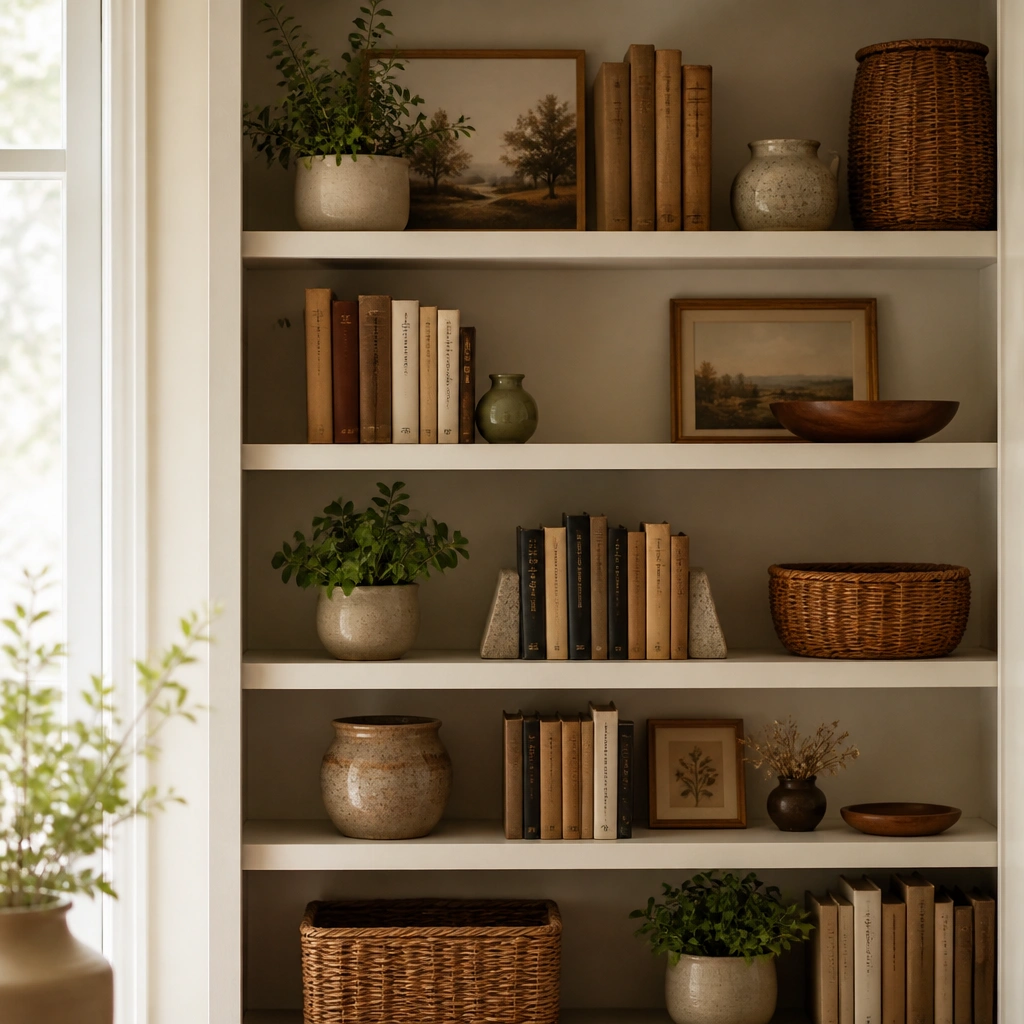
1. Tension-Rod Recipe Divider Rows
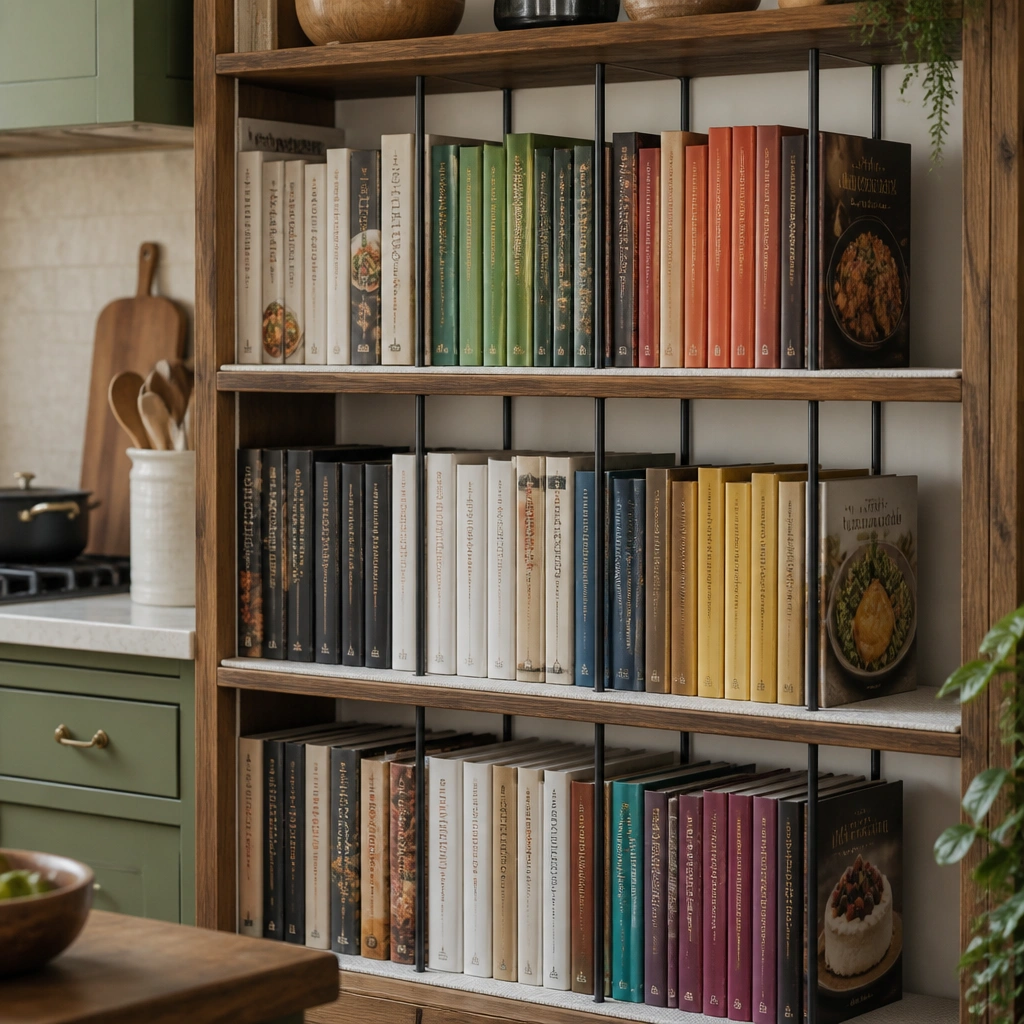
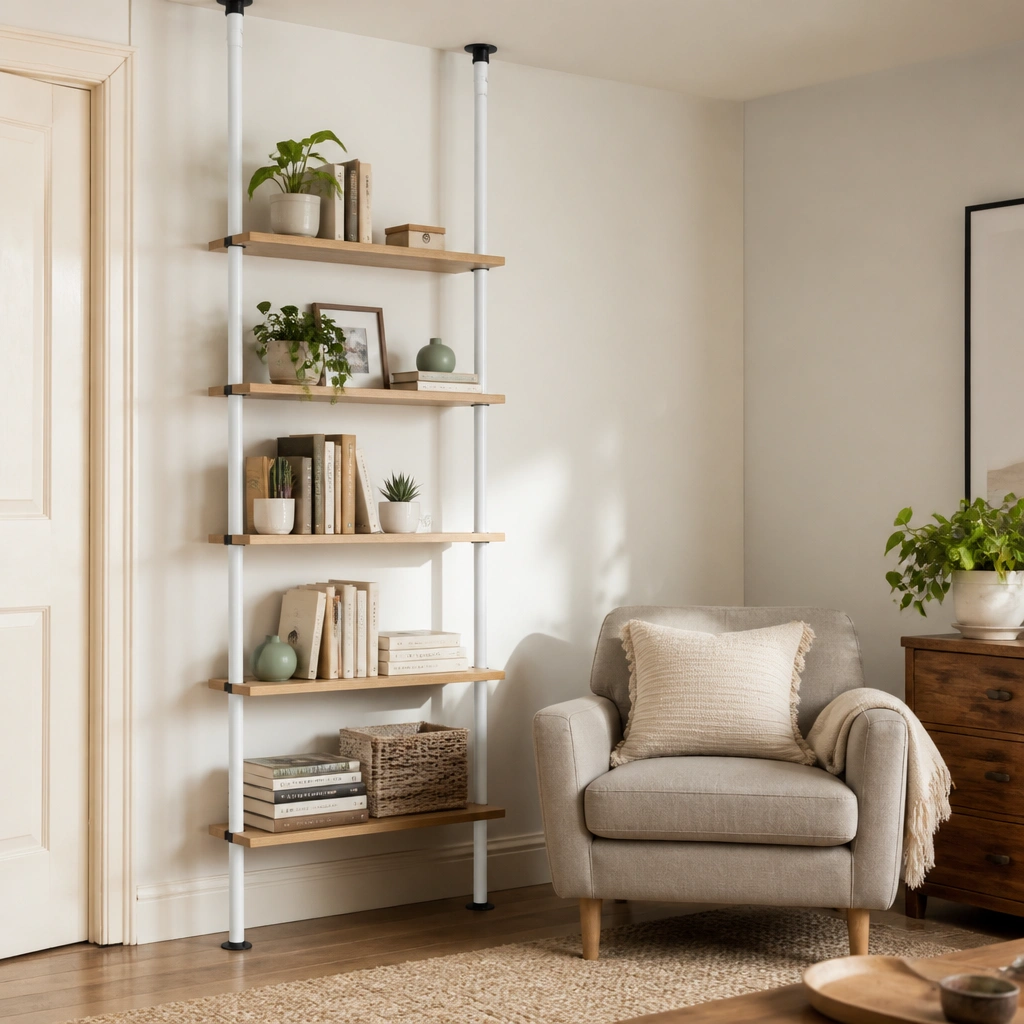
This setup uses tension rods to create straight, slim boundaries between cookbook stacks. Choose rods that fit the shelf width, then place them so each category has its own “lane” — like quick dinners, baking, and grilling. The liner under everything helps prevent book edges from sliding and adds a clean, bright base that looks more expensive.
Pro tipMeasure shelf depth first, then buy tension rods labeled for your depth range. Add two small foam pads (from a craft store) where the rods meet the shelf to reduce scuffing.
2. Binder-Clip Cookbook “Bookmarks” for Sections
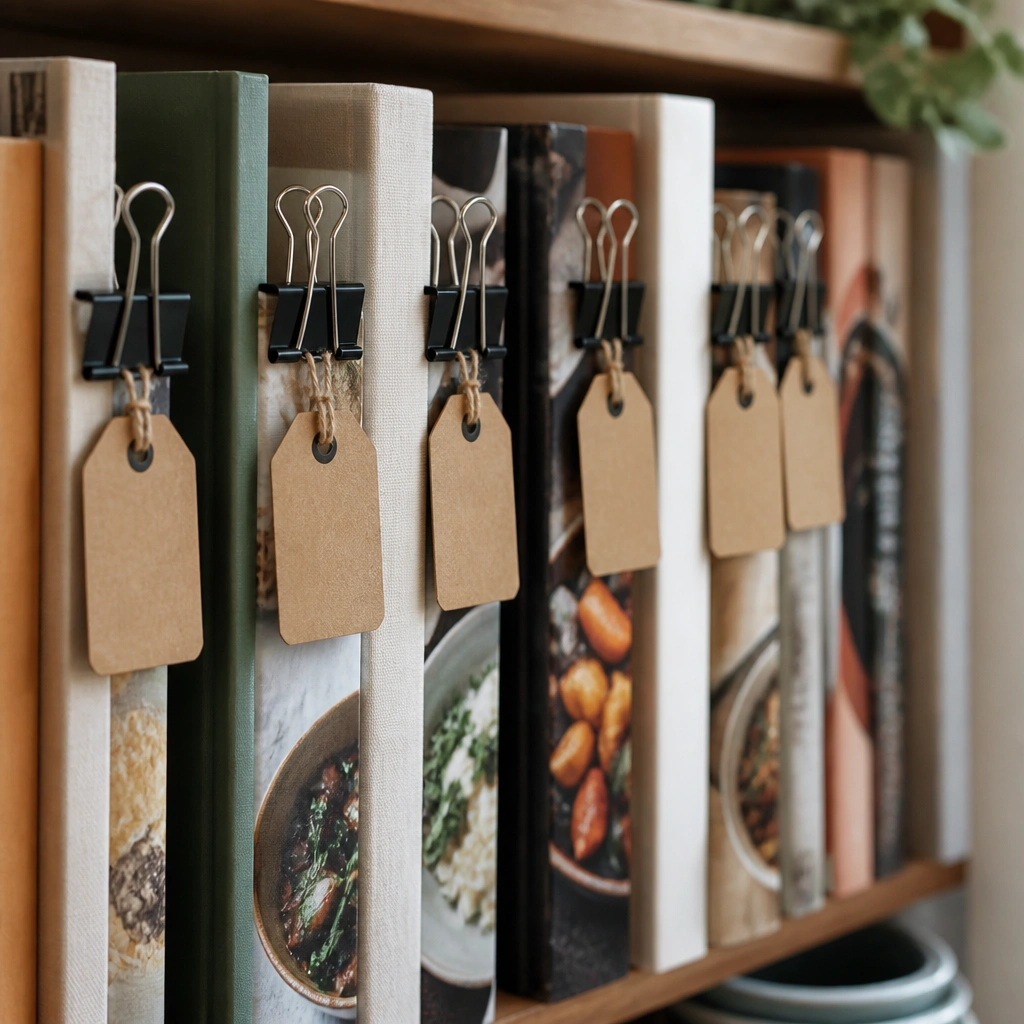
Binder clips act like cheap, no-drill dividers. Clip them to the front edge of a book to mark where one category ends and another begins, then keep the next stack aligned behind it. This works especially well for cookbook collections because spines are already your visual guide — the clips just make the boundaries obvious.
Pro tipUse heavy-duty binder clips and attach a label tag with a hole punch. Keep labels short — like “Weeknights” or “Desserts” — so they don’t crowd the shelf.
3. Clear Storage Bin Zones for Dining-Table Books
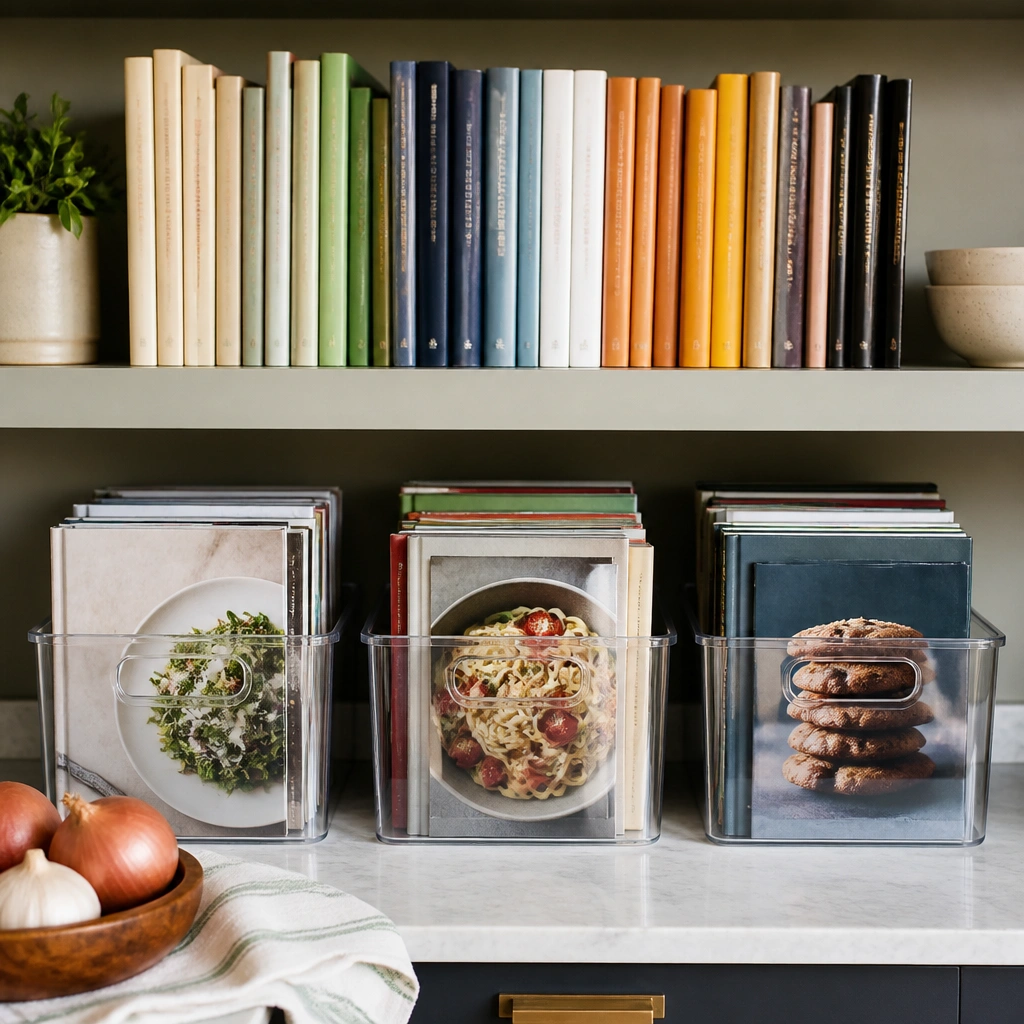
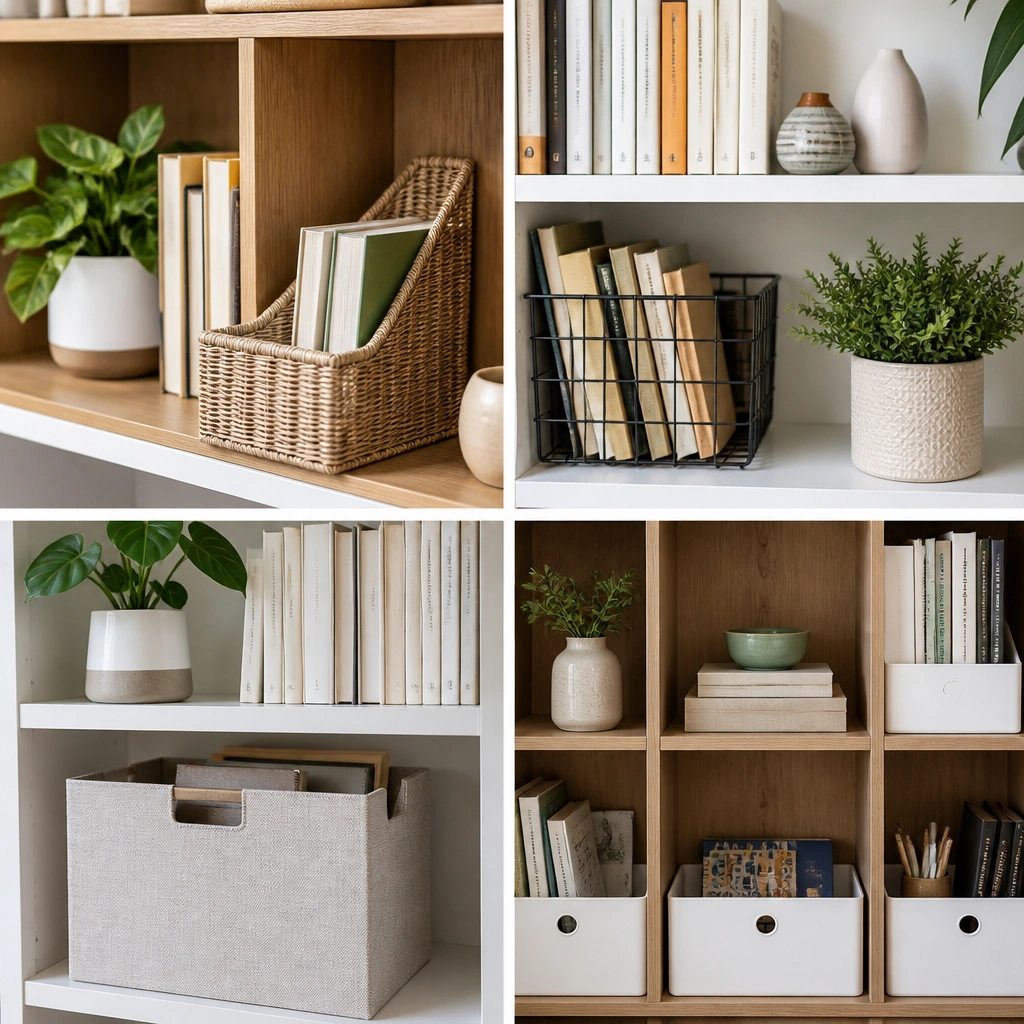
Clear bins hide the “in-between” items — extra copies, seasonal magazines, and holiday cookbooks you don’t reach for daily. Because the bins are see-through, you still get the easy scan you want from bookshelf organization. Grouping by season or occasion keeps the front row tidy while the bins handle the overflow.
Pro tipChoose bins with flat front edges so book spines sit neatly inside. Add a strip of painter’s tape to the outside as a temporary label, then swap to printed labels once you finalize categories.
4. Removable Shelf-Liner + Color-Coded Labels
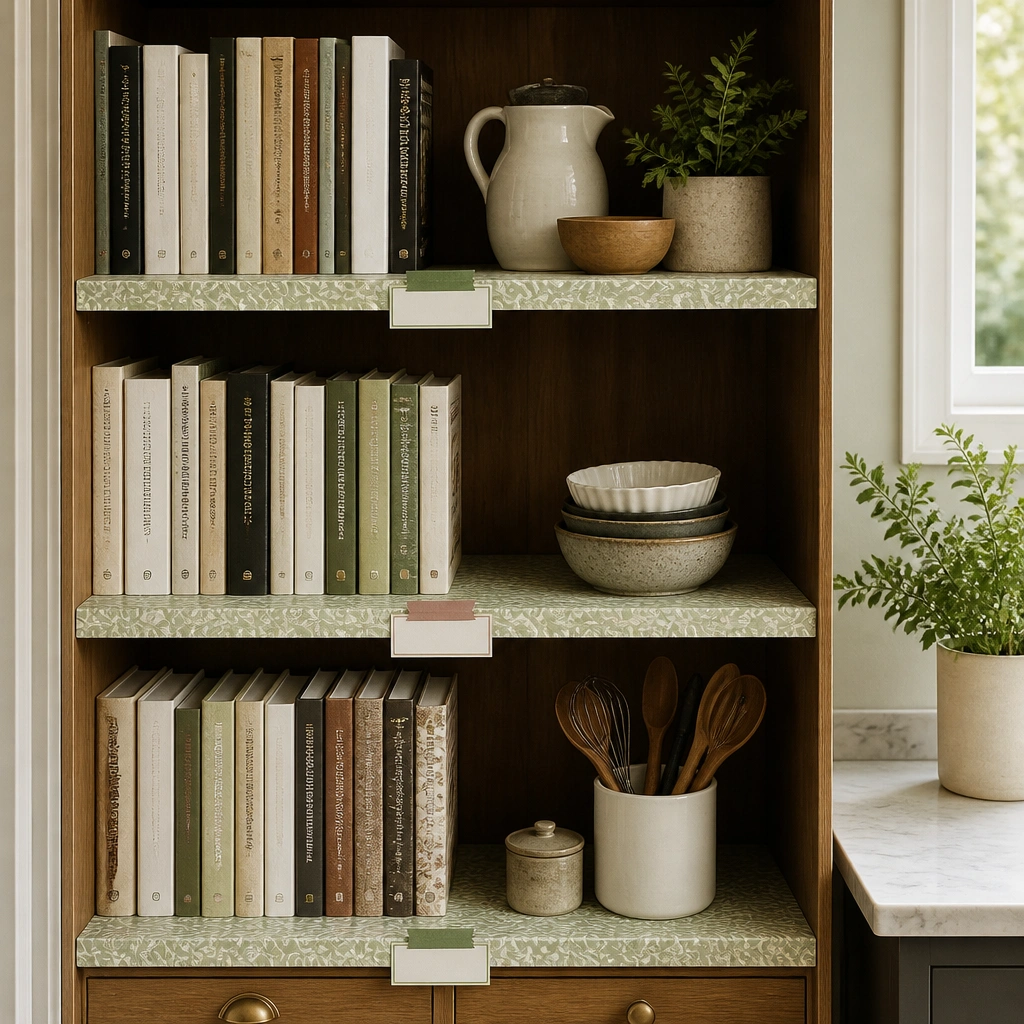
A removable shelf liner instantly upgrades the look and gives you a “grid” for organizing. Pick a pattern that matches your kitchen palette — like muted sage, warm beige, or subtle cream stripes. Then add color-coded label cards at the shelf edge so you can keep books sorted even when you’re busy.
Use removable vinyl shelf liner if your shelf is slightly uneven. Print labels on cardstock, then back them with double-sided tape so they stay put.
5. File-Style Cookbook Stands (No Hardware)
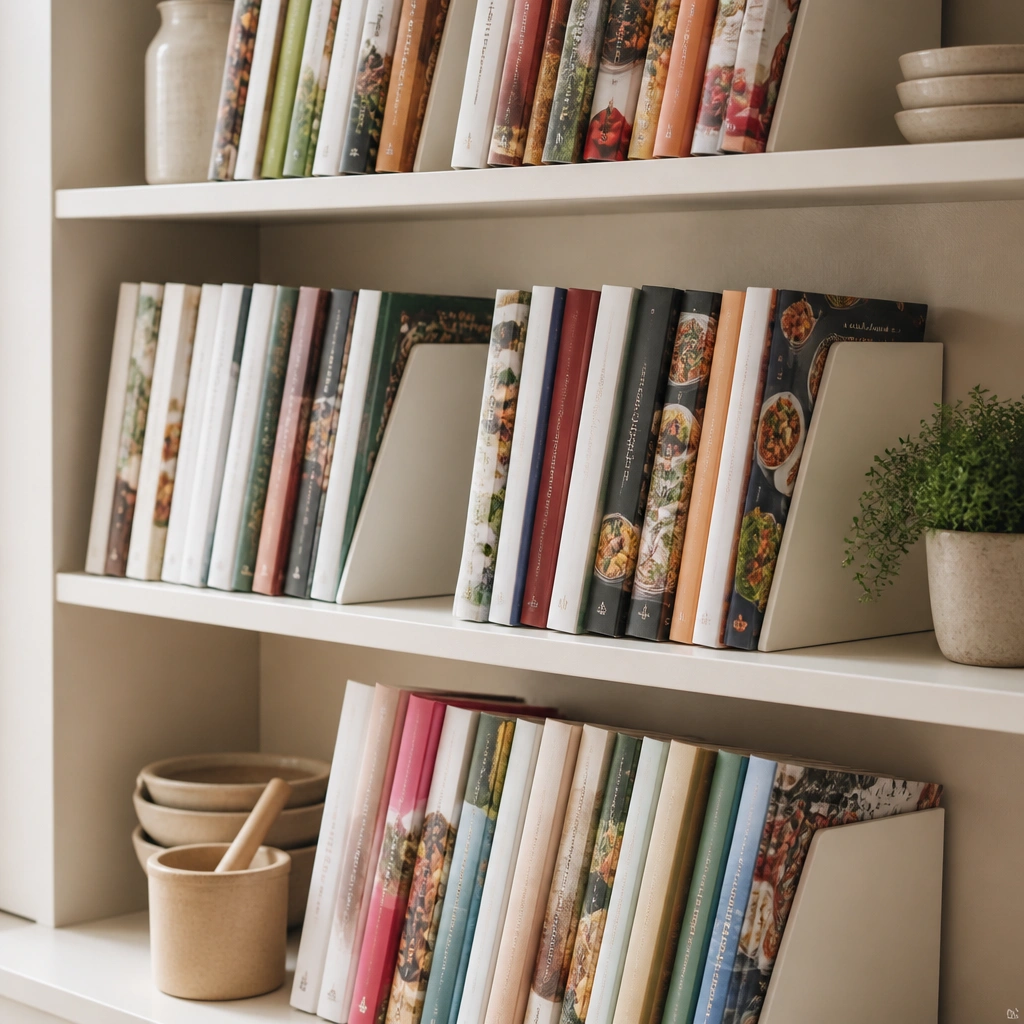
File-style stands create gentle angles that keep books from leaning and makes the shelf feel organized. You can build them from inexpensive foam board and cover with contact paper to match your decor. The angle also improves visibility for small cookbooks and recipe booklets that tend to get shoved back.
Test the angle on your shelf before covering. Aim for a slight tilt so books don’t slide — then secure the stand with a strip of non-slip shelf liner under it.
6. Under-Shelf Wire Basket for Small Extras
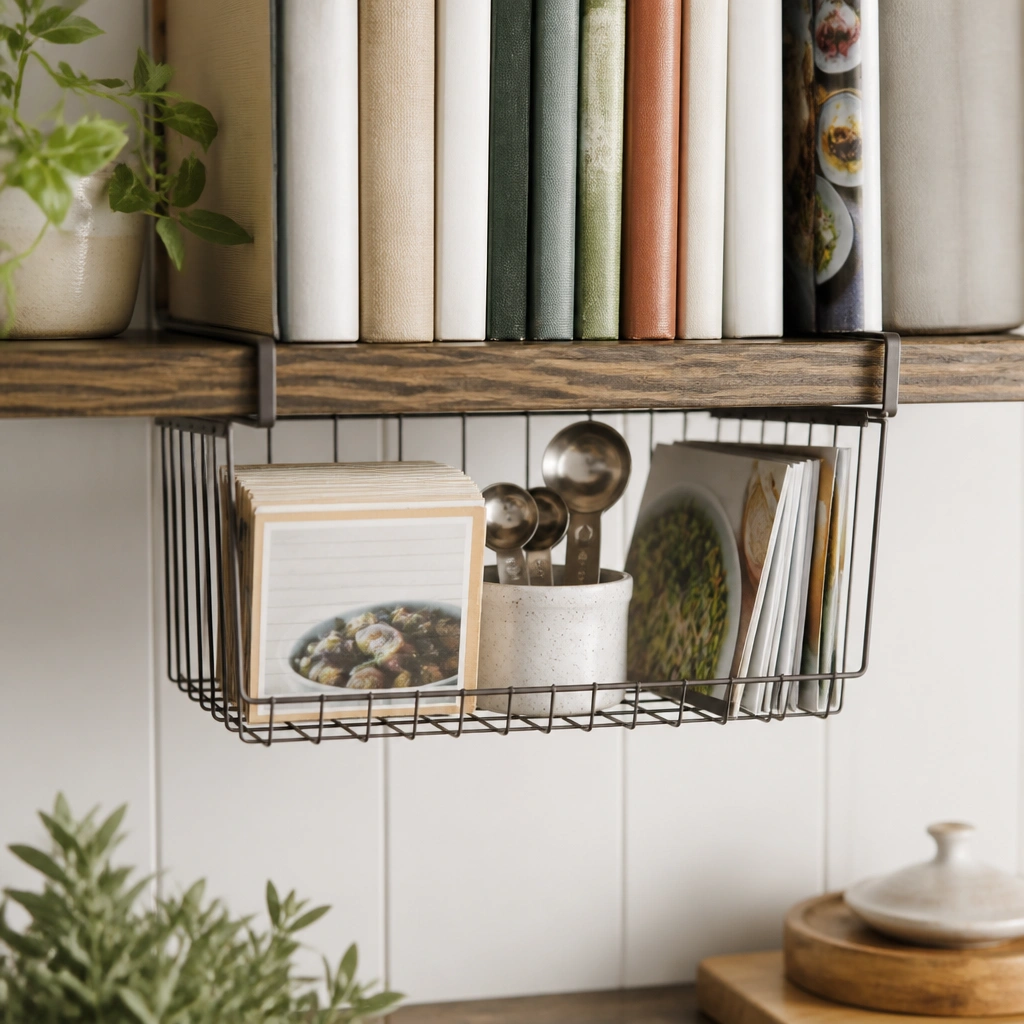
An under-shelf wire basket is a budget way to store small kitchen paper items without cluttering the main shelf. Use it for recipe cards, folding meal planners, or small pamphlets you keep “for later.” Keeping these items below the book spines prevents visual mess and makes the shelf look cleaner.
Pro tipChoose a basket with a lip that grips the shelf edge. If you can’t attach it, place the basket on a small non-slip mat so it doesn’t shift.
7. DIY Rolled-Chalk-Label Tags for Rotating Titles

Rotating cookbooks (holiday baking in winter, grill guides in summer) need flexible labeling. Chalkboard-style tags let you change the wording without printing new labels. Clip the tags to the shelf edge or binder clips so you always know where the current rotation lives.
Write with white chalk pens for smoother lettering on dark tags. Wipe clean with a damp cloth and let fully dry before re-clipping.
8. Magazine-File Inserts for Slim Recipe Booklets
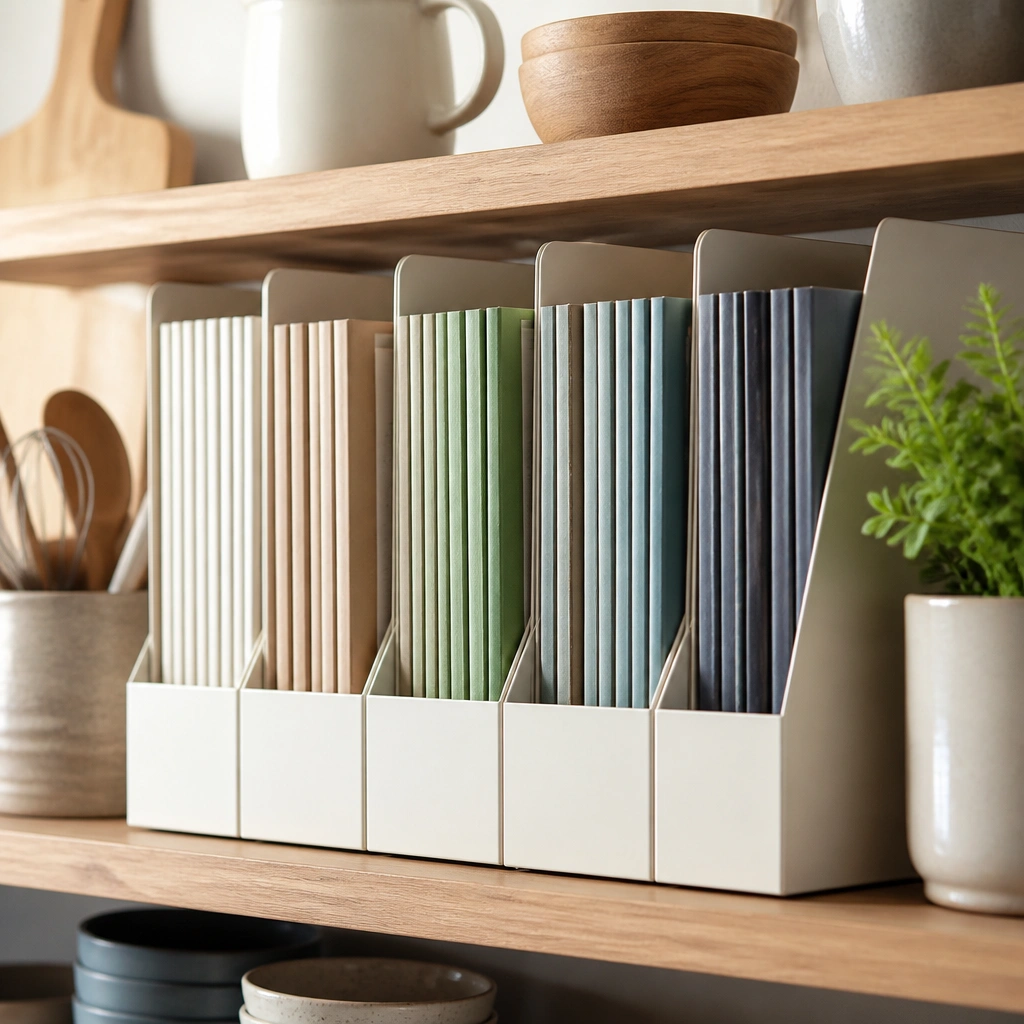
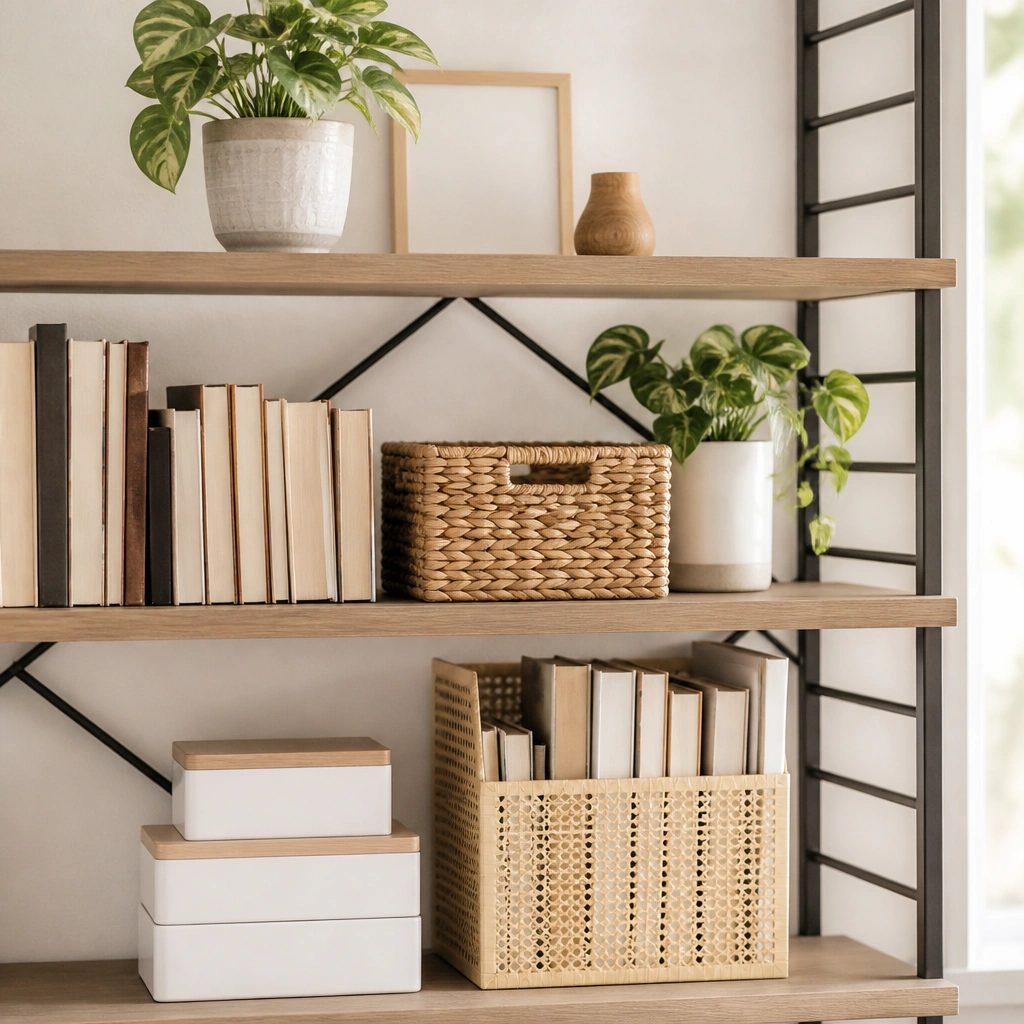
Slim recipe booklets and pamphlet-like cookbooks are the hardest to organize because they fall or get hidden. Magazine-file inserts hold them upright so you can see each title clearly. This is a great “budget correction” when your shelf is full of books that don’t have the same height.
Pro tipPick inserts with adjustable width or add a thin spacer (like a piece of foam board) to tighten the fit. Leave a small gap so booklets slide in and out easily.