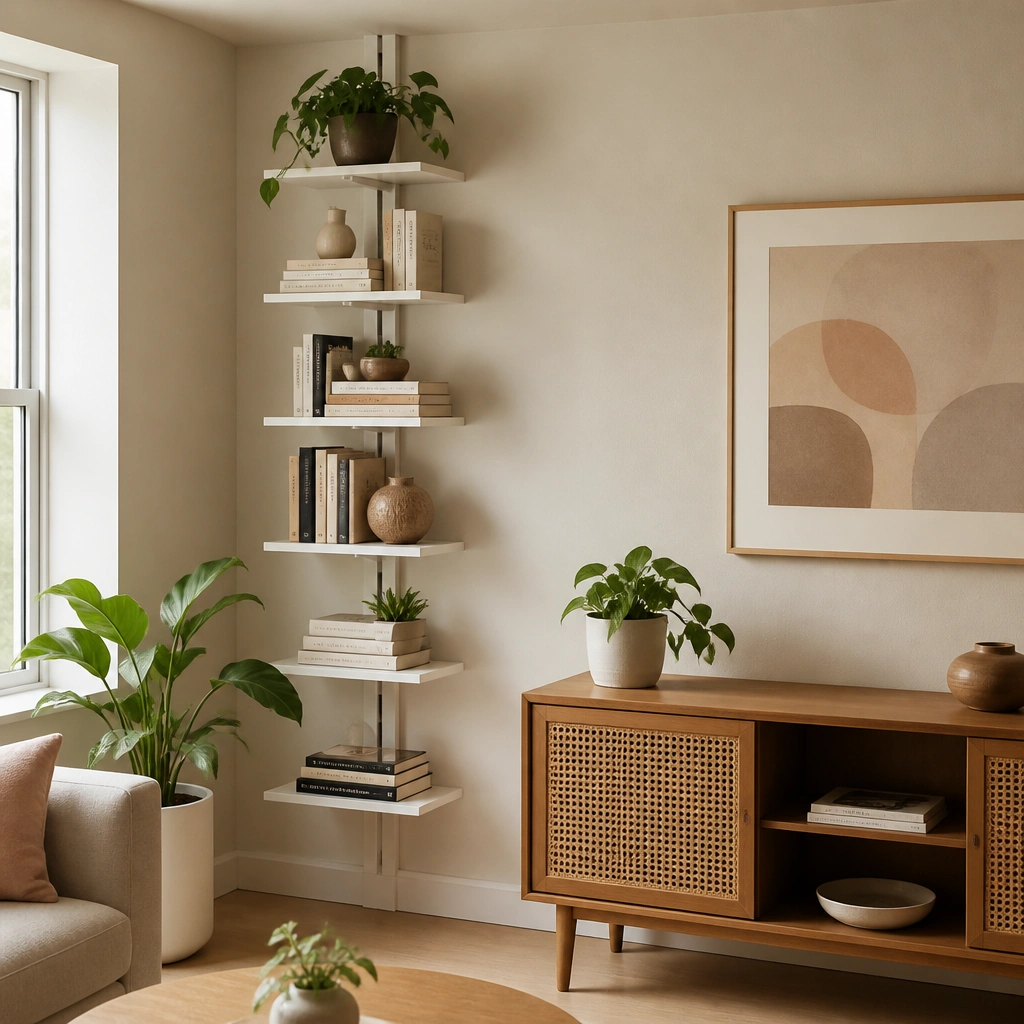
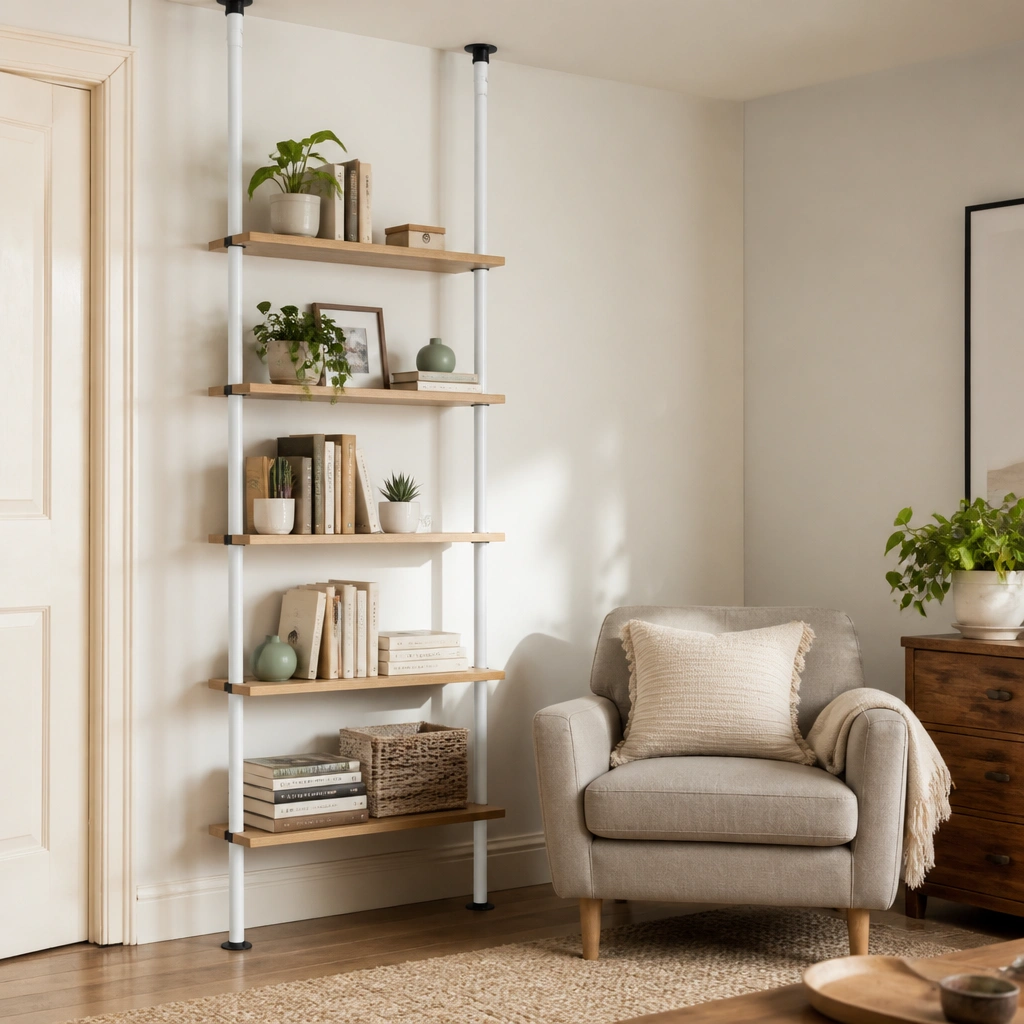
1. Tension-Rod Shelf Ladder for the Dining Nook
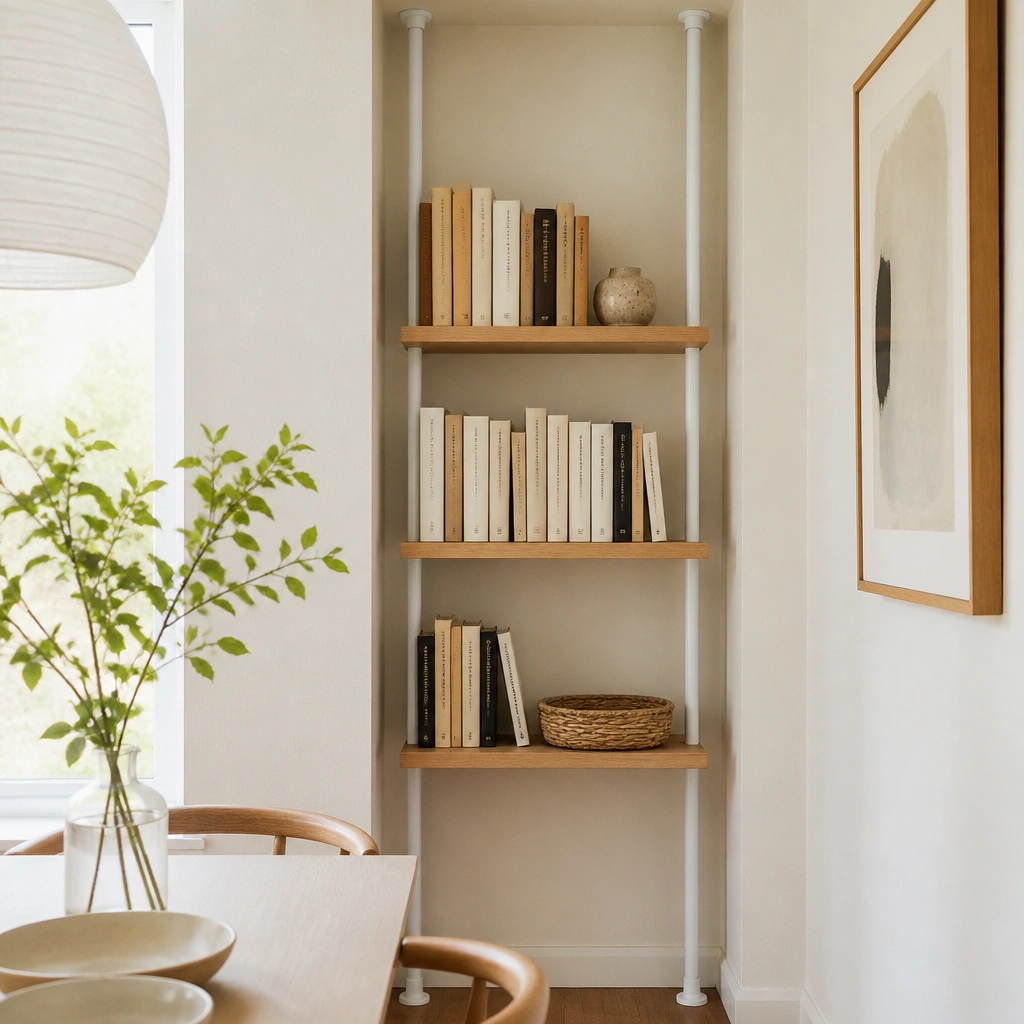
This works when you can fit a tension rod between two solid surfaces (like a corner or between cabinet sides). Add lightweight wooden shelves (or shelf-style brackets) clipped to the rod so you get vertical storage without drilling. It’s great for dining areas because it keeps cookbooks and menus visible without crowding your table.
Pro tipMeasure the gap first and buy rod-to-shelf clips that match your rod diameter; start with a single shelf, load test with a few heavy books, then add the rest.
2. Removable Adhesive Shelf Rails (Temporary Book Stacks)
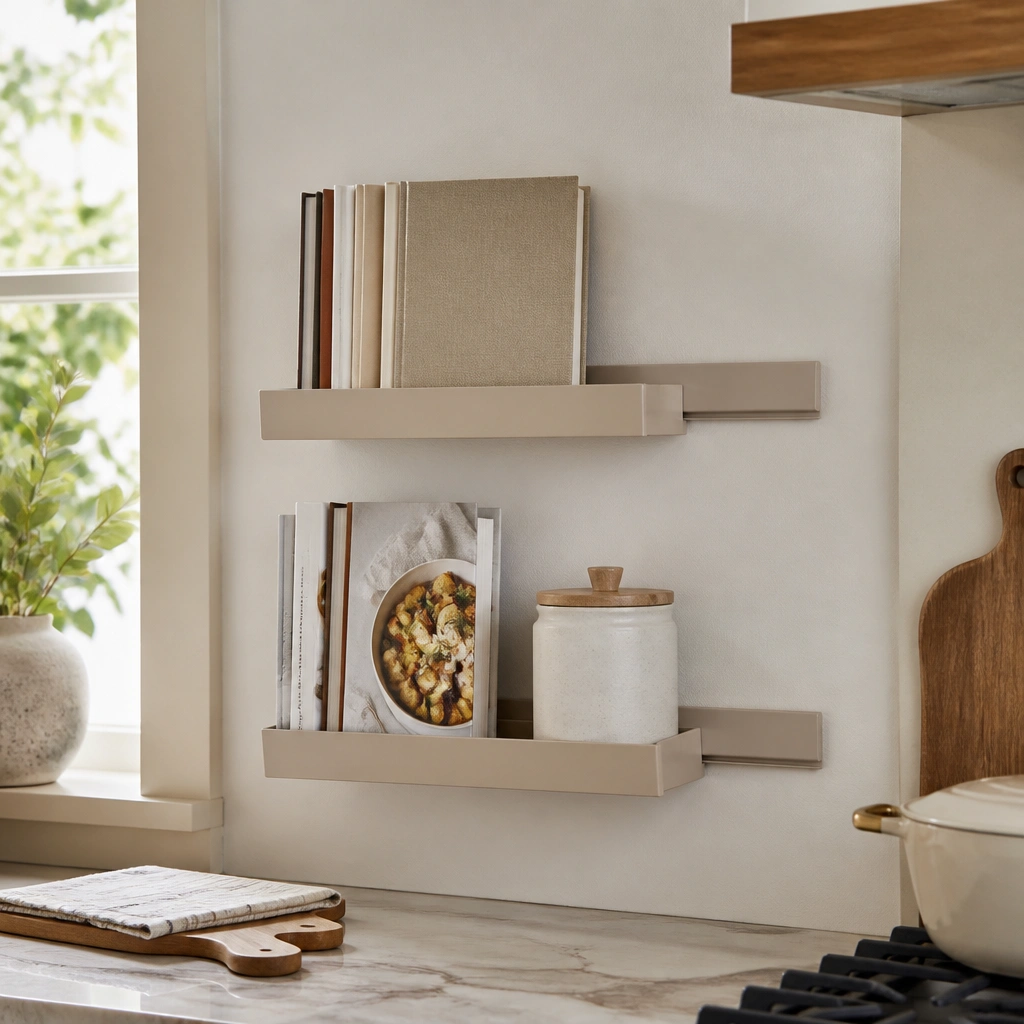
Adhesive shelf rails are a renter-friendly alternative to drilling, especially for shorter book runs. The key is using rails made for shelving (not picture strips), then pairing them with shelves that aren’t overly deep. Keep the look clean by choosing light wood shelves and a neutral rail finish (white, black, or brushed metal).
Clean the wall with isopropyl alcohol, let it fully dry, then place rails only after you confirm level with a phone level app.
3. Over-the-Door Book Shelf for Tight Kitchens
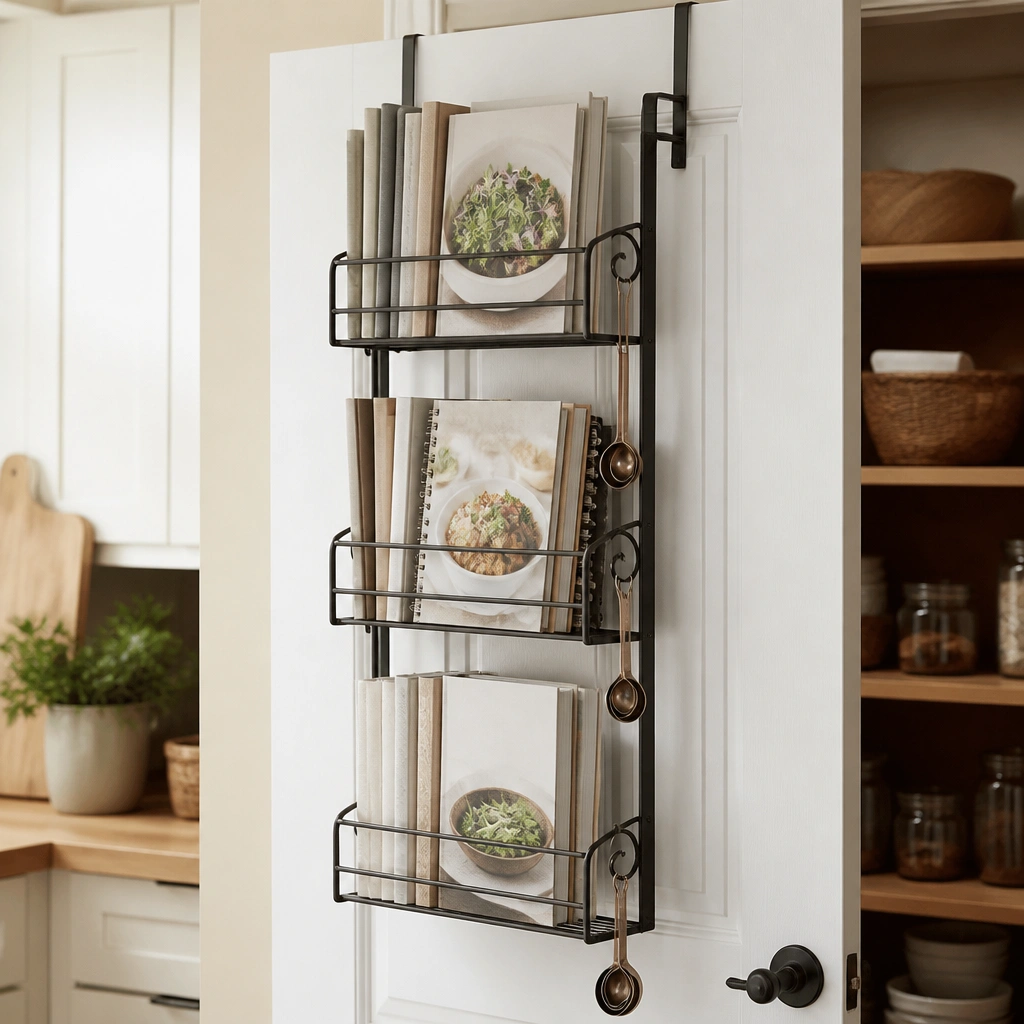
If you don’t want to touch the wall at all, an over-the-door rack gives you instant, removable shelving. Look for models with a sturdy top bar and non-slip pads so the weight doesn’t sag. This is perfect in kitchens where the dining wall is off-limits or where you’re storing smaller-format books.
Choose a door rack with adjustable depth or side brackets so it clears the door handle and doesn’t scrape your trim.
4. Magnetic Knife-Style Rails + Magnetic Book Clips
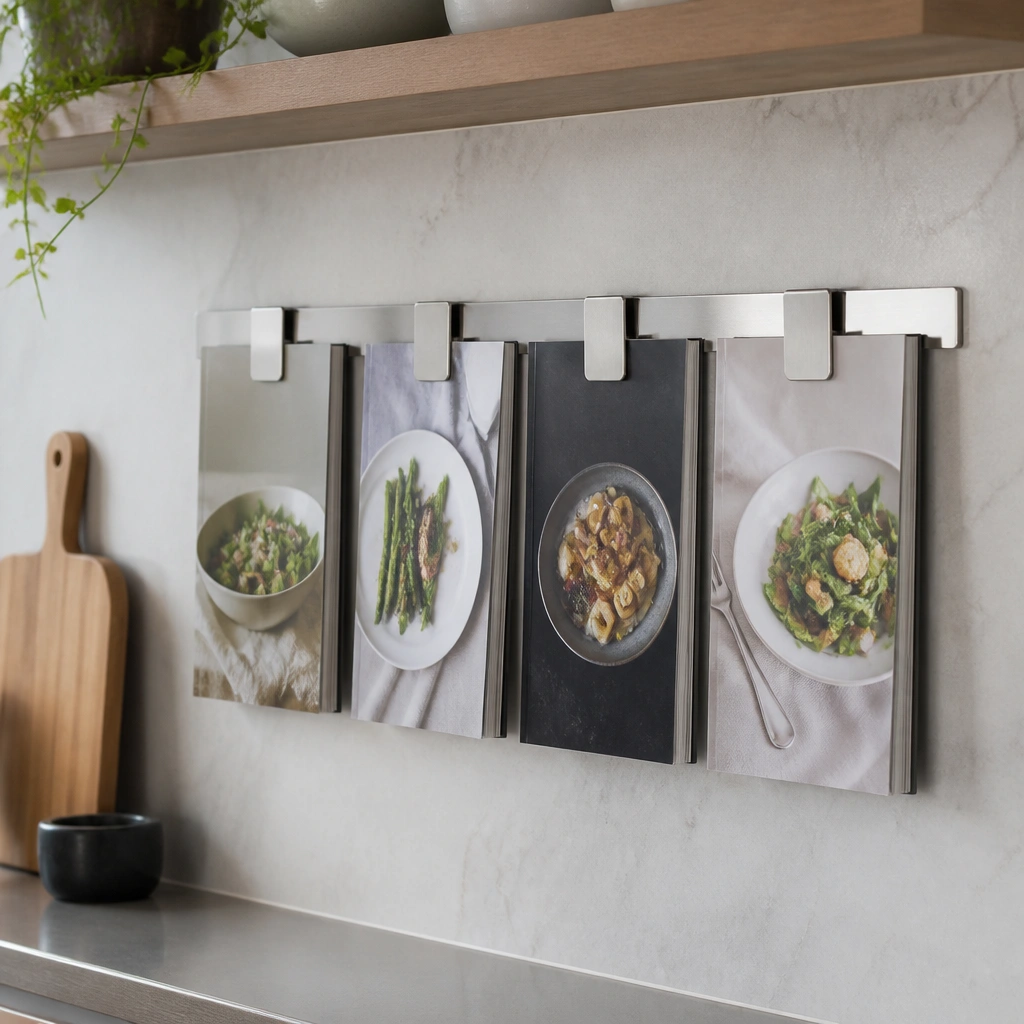
For thin books, menus, and recipe cards, magnetic clips can act like a “book shelf” without any drilling. The trick is using a removable metal backing system or a magnet-friendly surface spot so the rail can hold weight. It looks modern in kitchens and keeps your most-used recipes within arm’s reach.
Test with 2-3 books first, then increase load gradually; avoid heavy hardcover stacks on magnetic setups.
5. Freestanding Rolling Book Cart with Shelf Inserts
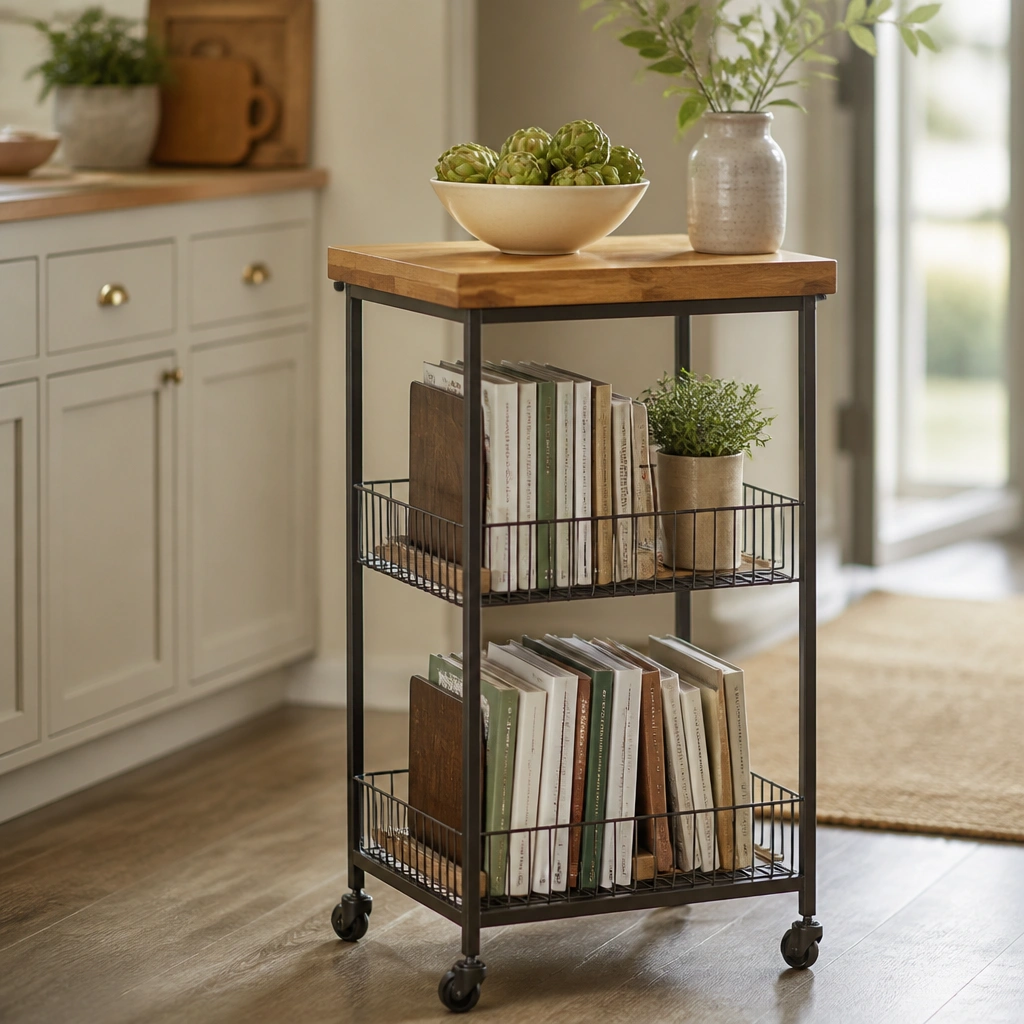
A freestanding option is the easiest “no drill” win because you can place it anywhere in your kitchen or dining area. Use shelf inserts or book dividers so books stay vertical instead of leaning. Rolling carts also double as serving storage during dinner parties, which makes them feel less like “temporary decor.”
Pro tipPick wheels with a soft tread and add felt pads under the cart to prevent floor scuffs.
6. Countertop-to-Wall Bracket Shelf Using Removable Standoffs
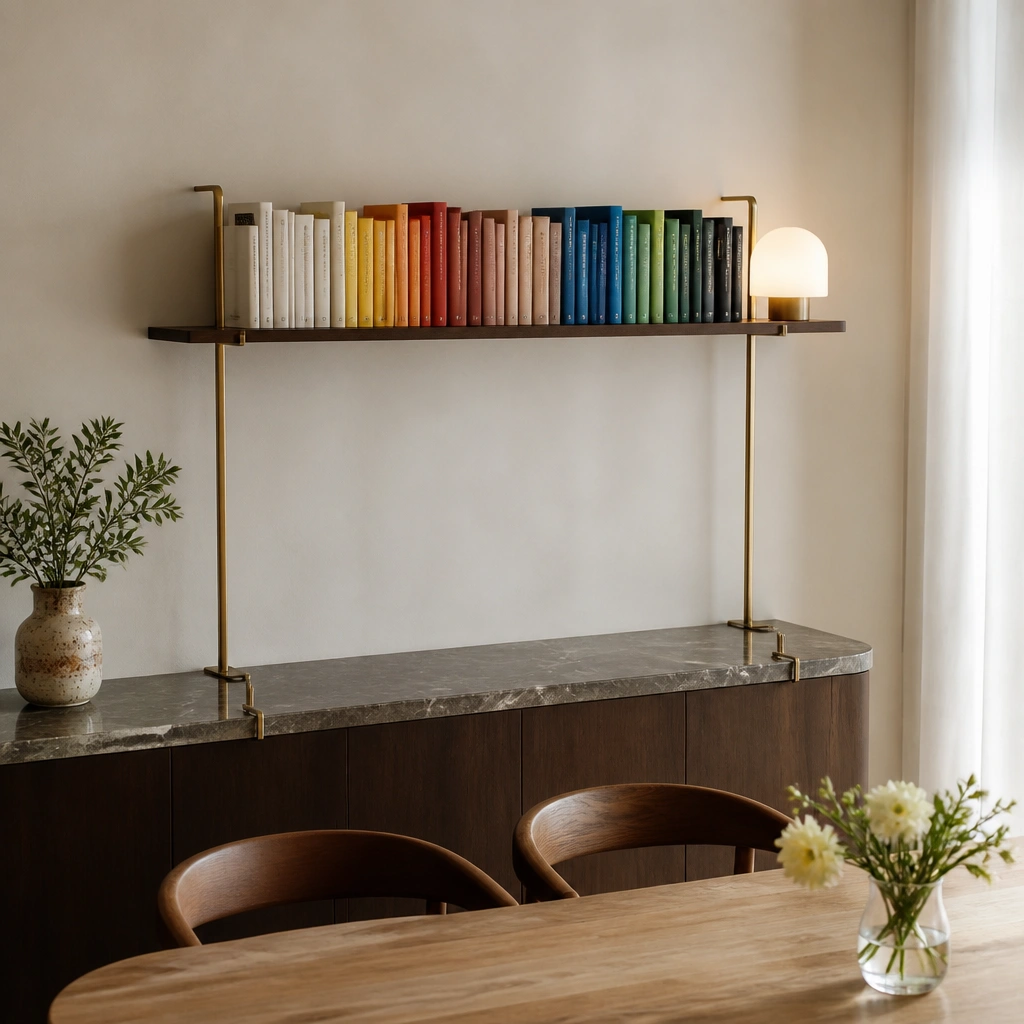
Some renters can create a stable “floating” look without wall anchors by supporting a shelf from a countertop edge or built-in furniture. Removable standoffs clamp to furniture surfaces and let you take the whole shelf down later. Keep it shallow and use book stops so the shelf doesn’t become a tipping hazard.
Pro tipClamp standoffs only to surfaces that can handle pressure (not crumbly laminate edges), and confirm the shelf can’t slide sideways.
7. Removable Pegboard Panels with Clip-On Shelves
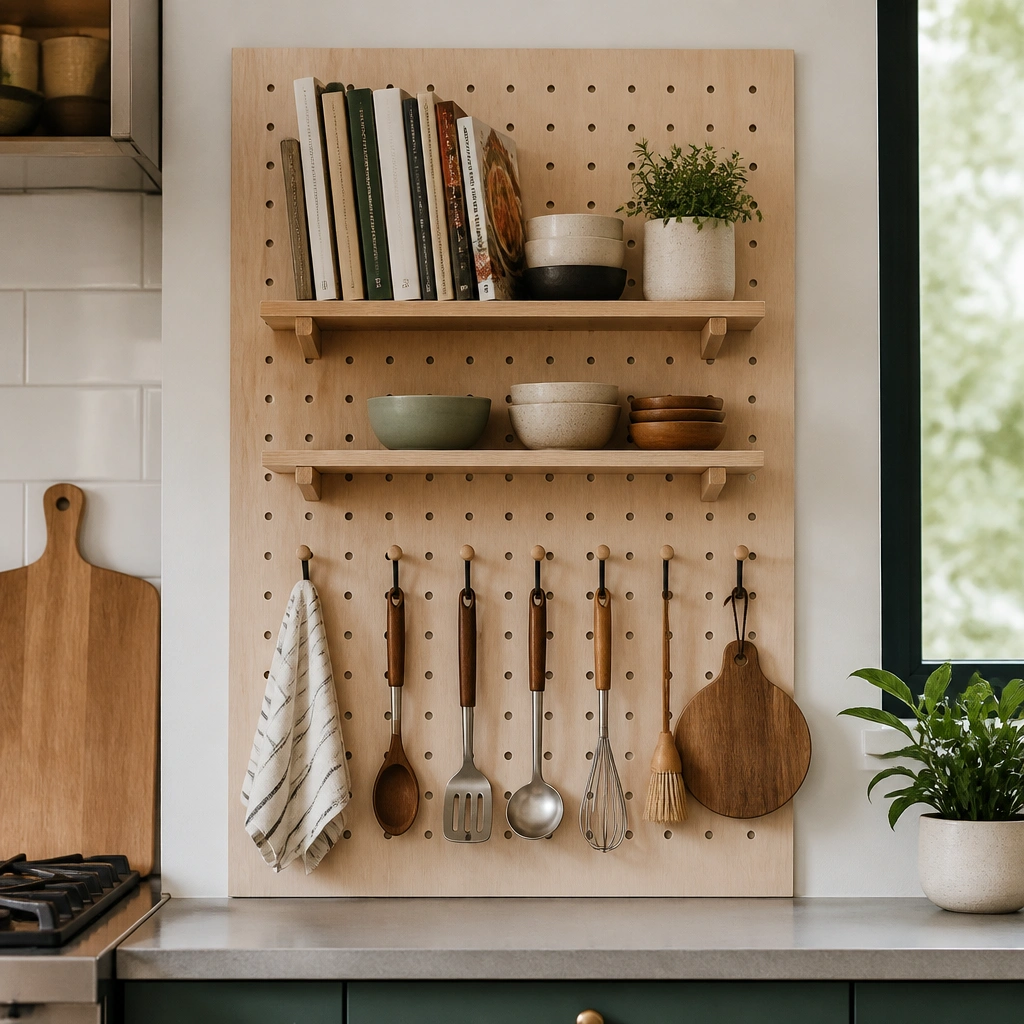
Pegboard gives you flexible placement without drilling, especially if you use removable pegboard panels or adhesive-backed mounting points designed for renters. Clip-on shelves let you rearrange as your collection grows. In dining spaces, pegboard also doubles as a visual organizer for measuring tools and recipe accessories.
Use clip-on shelf brackets that lock securely, then keep the shelf depth under 6-7 inches for better stability.
8. Stackable Crate Shelves with Anti-Slip Pads
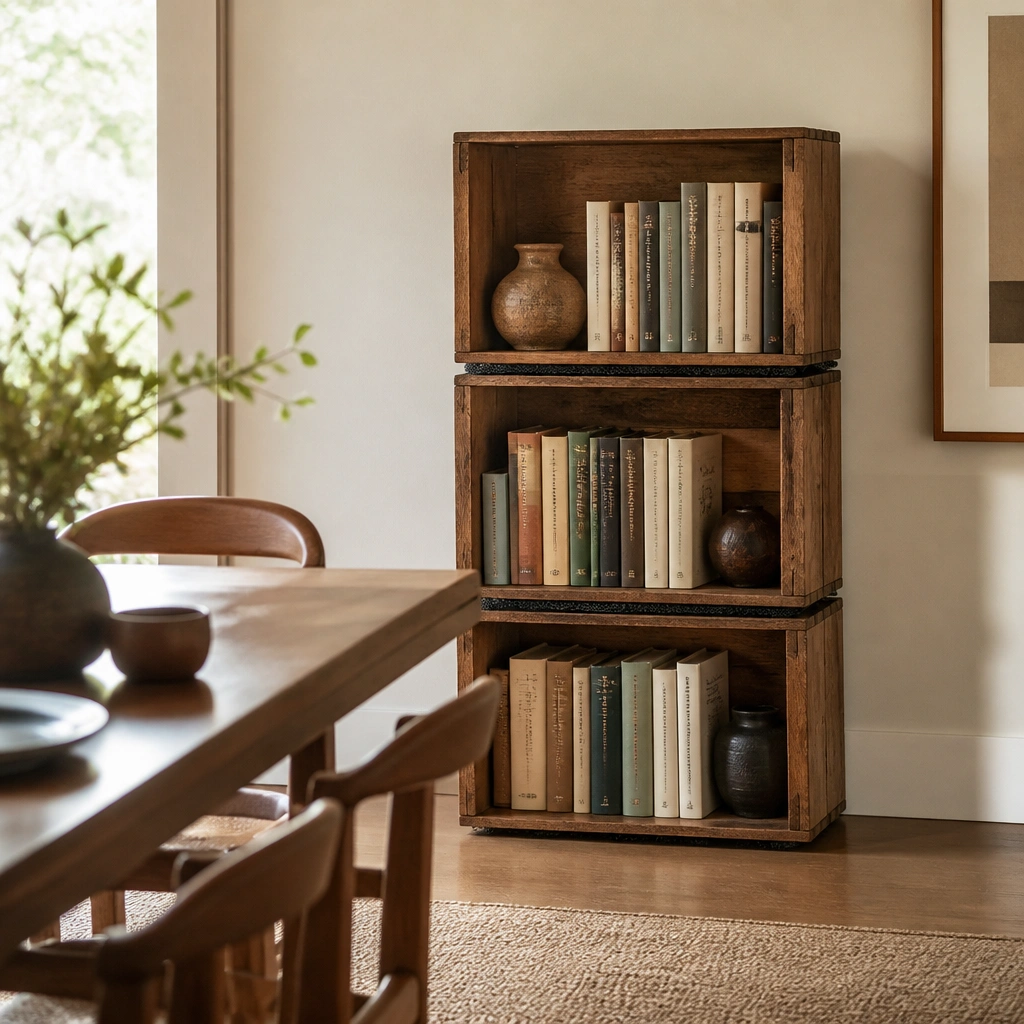
Stackable crates are a renter-friendly way to build a “shelf wall” without any mounting. By adding anti-slip pads between crates and using book stops, you can keep books from sliding forward. This looks cozy and farmhouse-ish in kitchens, and it’s easy to expand by adding one more crate later.
Line the crate bottoms with grippy shelf liner and add a thin front lip or book stop so spines stay upright.