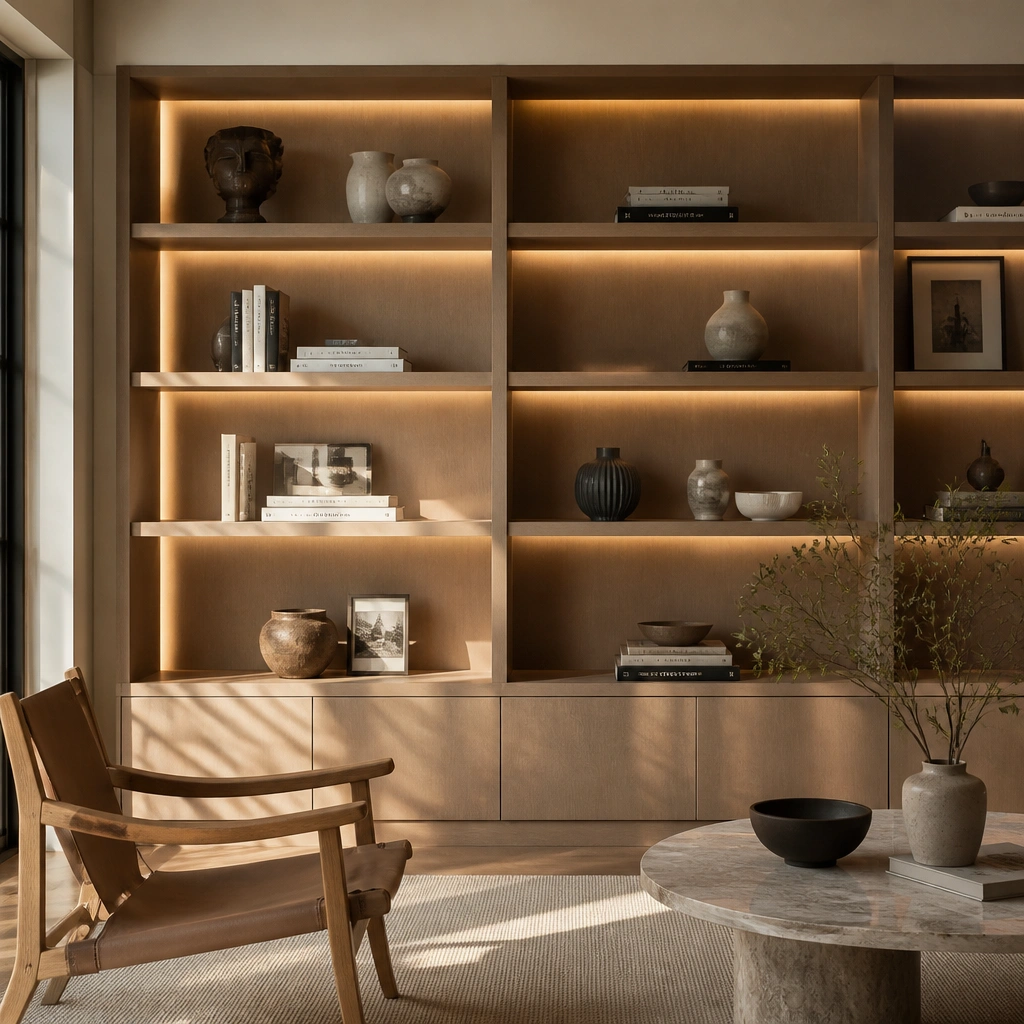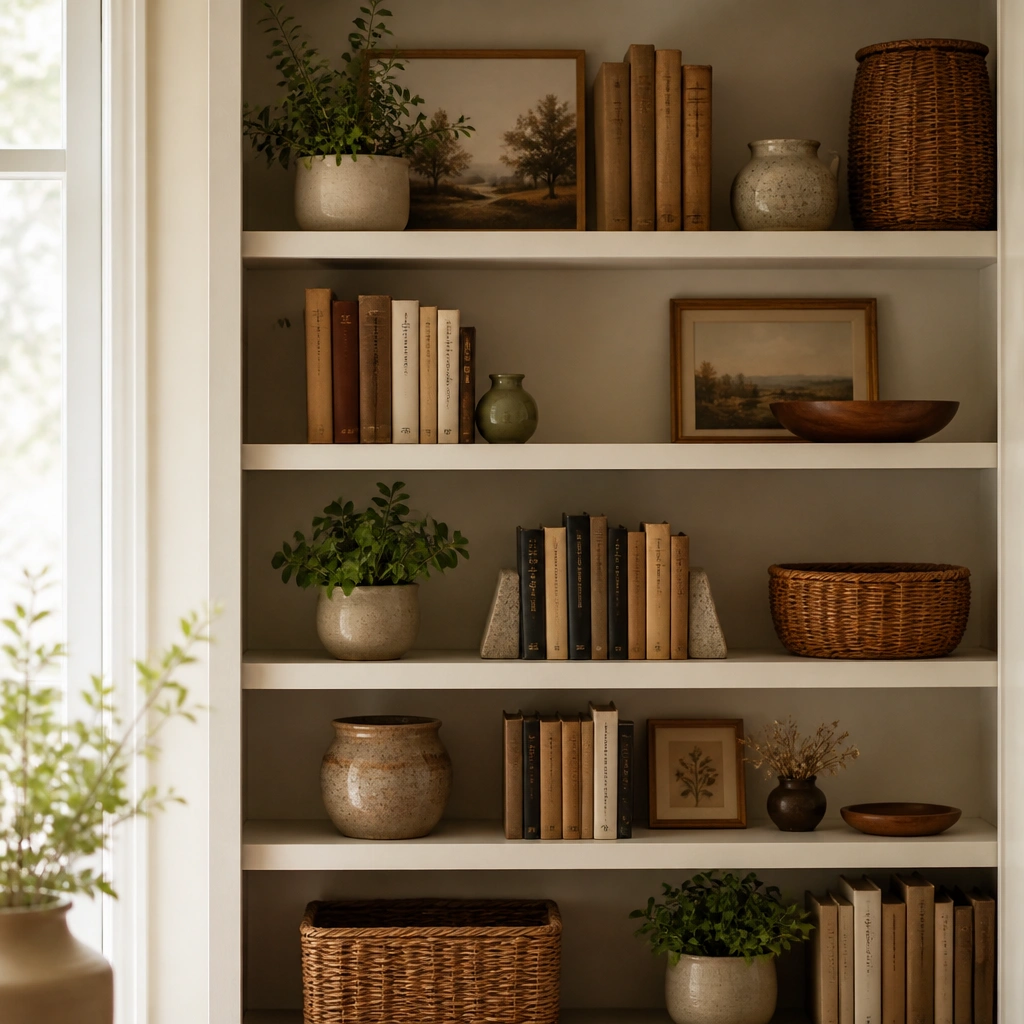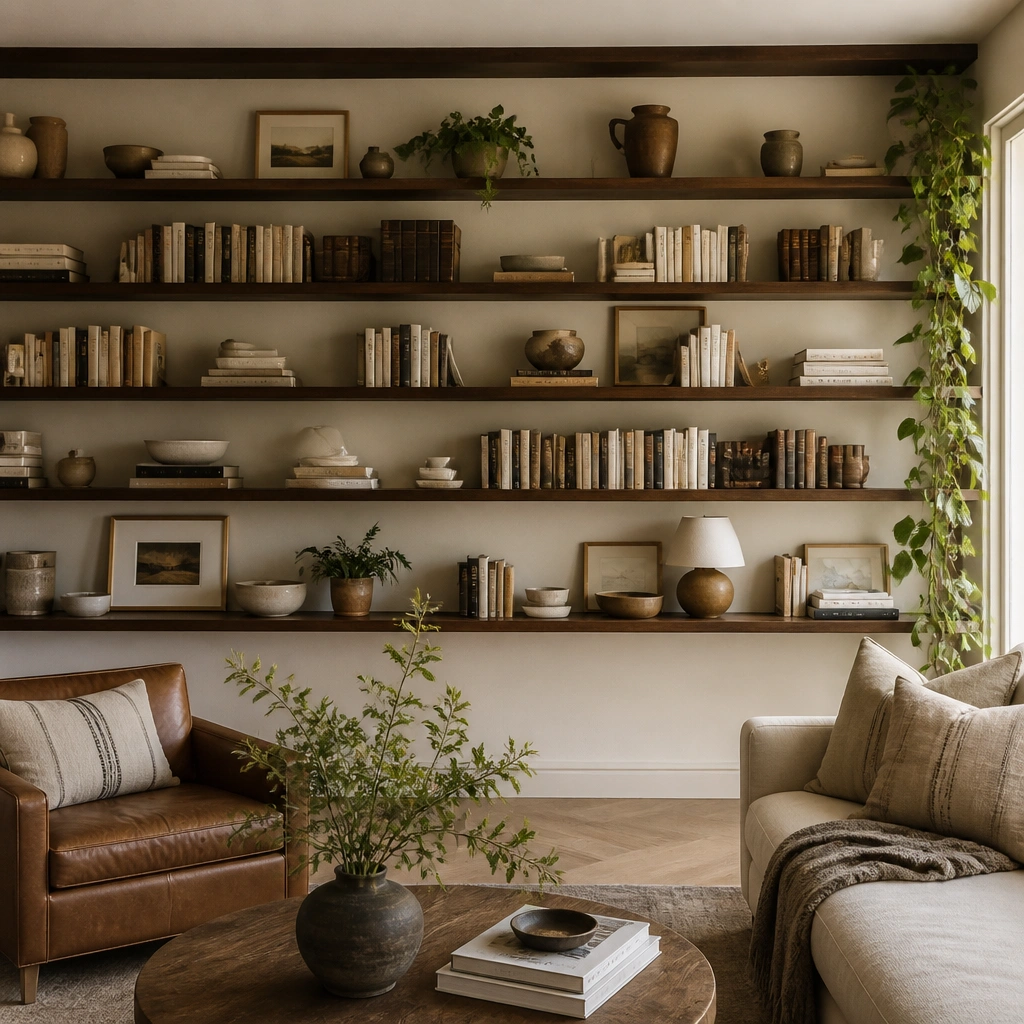
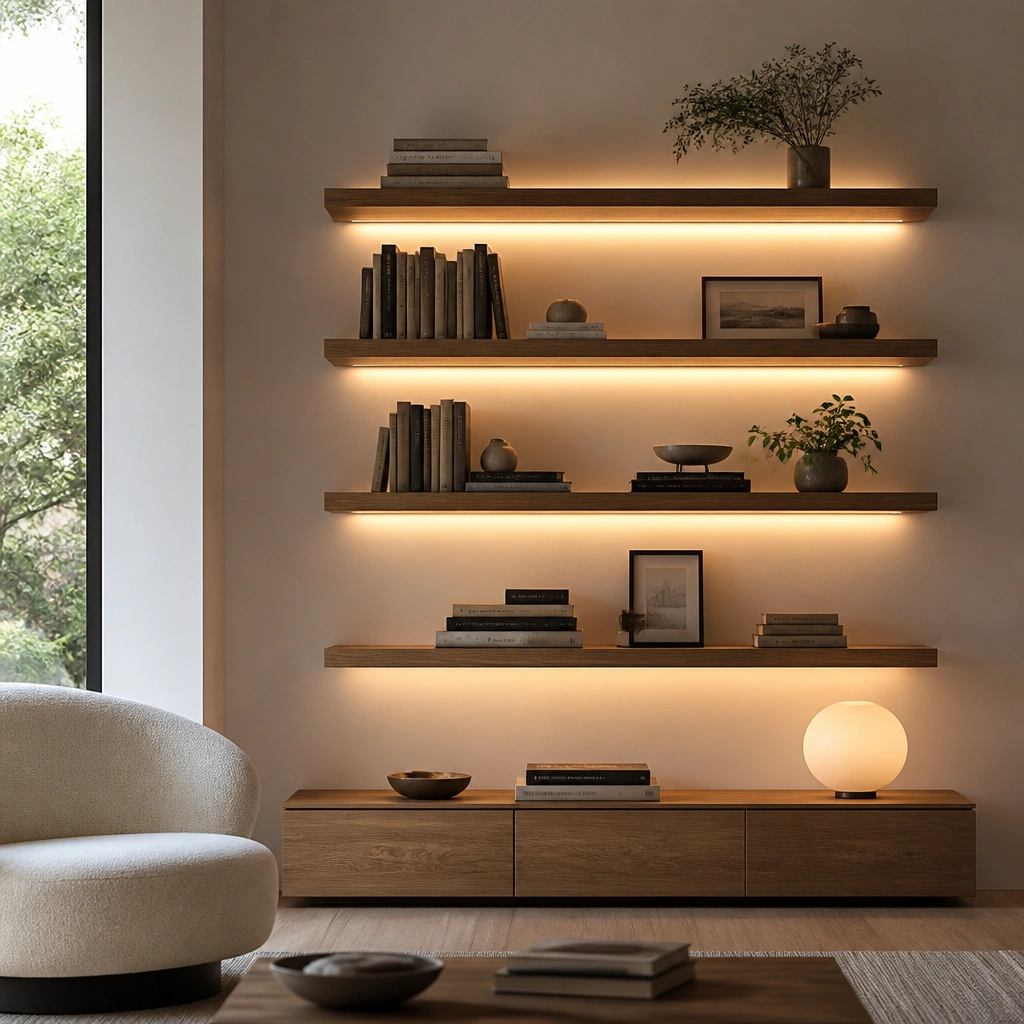
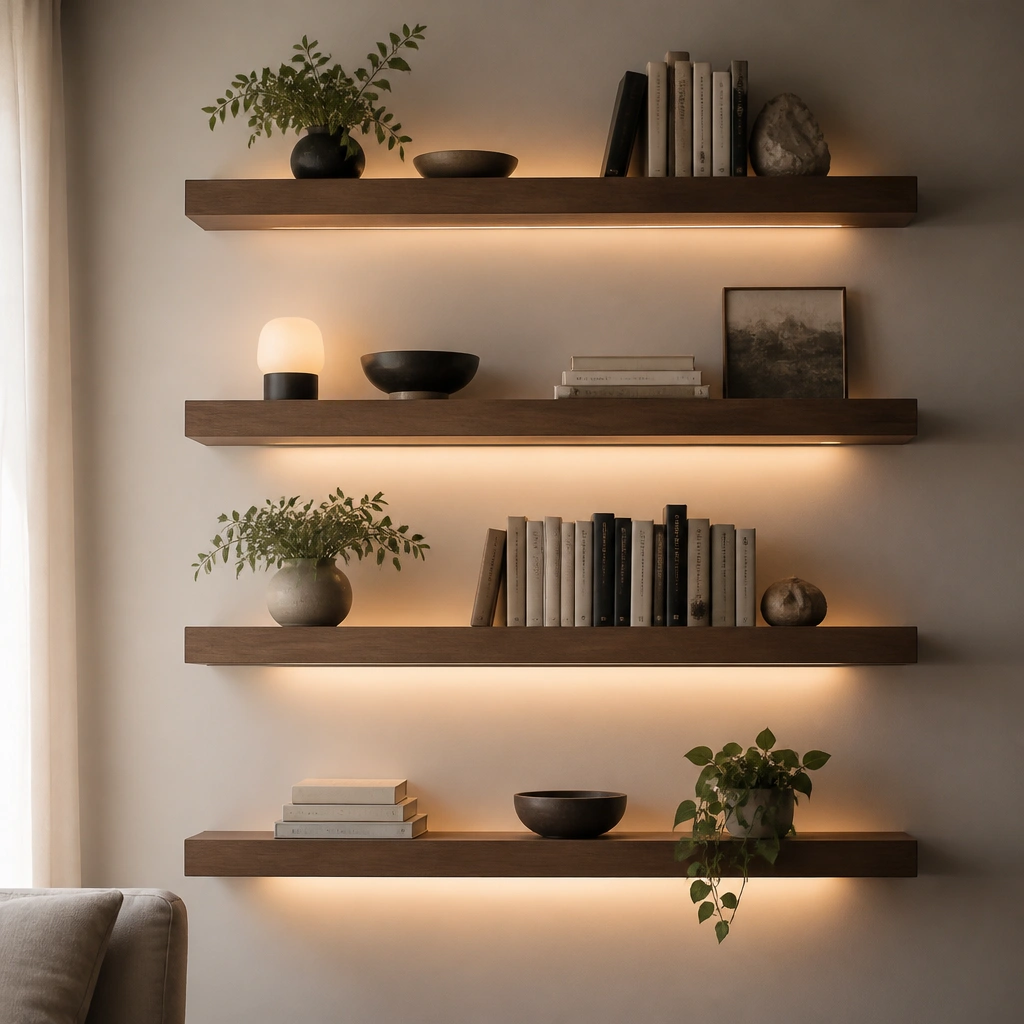
1. Warm LED Strip Under-Shelf for Cookbook Rows
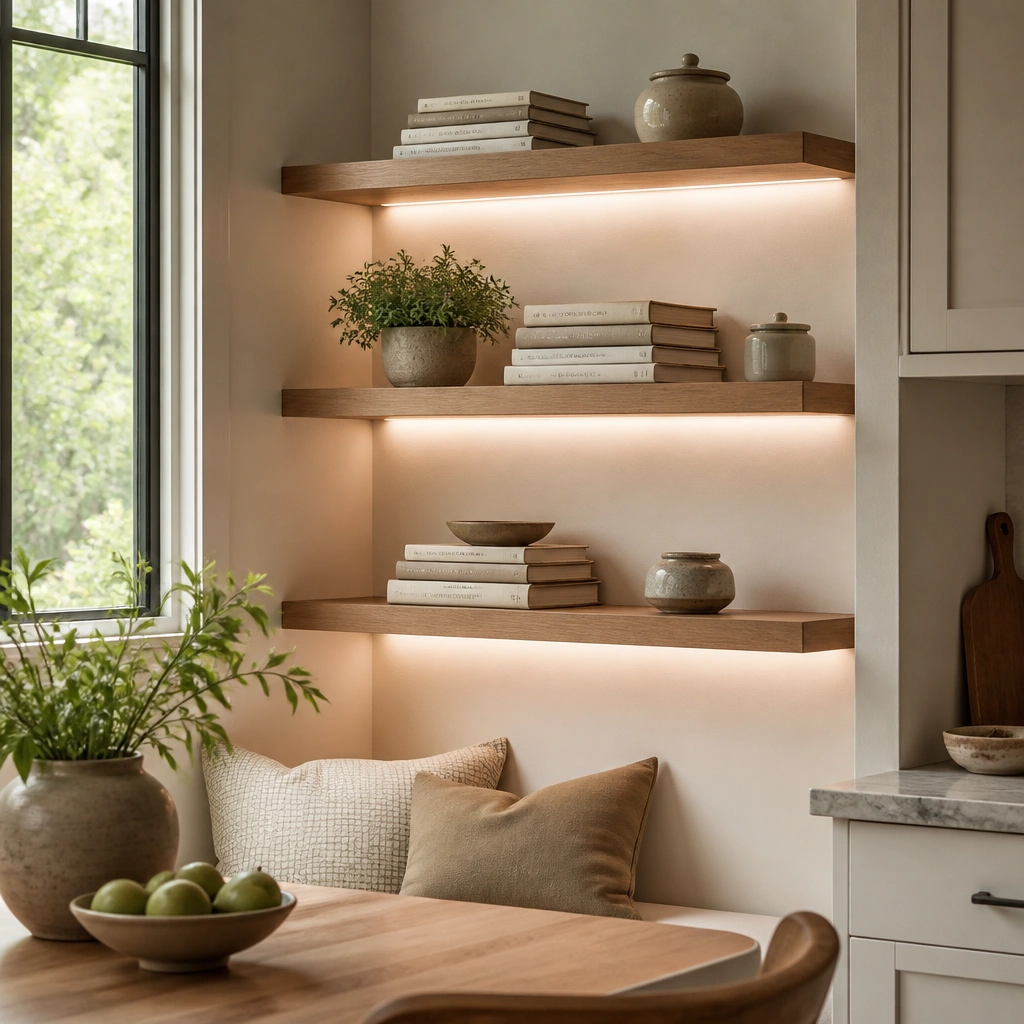
This is the easiest way to get a “floating” look because the light comes from below, not from the front. Use a 2700K or 3000K LED strip and mount it under the shelf lip so it grazes the wall behind your books. Pair with a light wood shelf (oak or ash) so the glow reads cozy instead of bluish.
Install the LED strip after you screw the shelf brackets — test the brightness with tape first, then permanent-mount the strip.
2. Backlit Glass-Shelf Cubby for Recipe Card Vibes
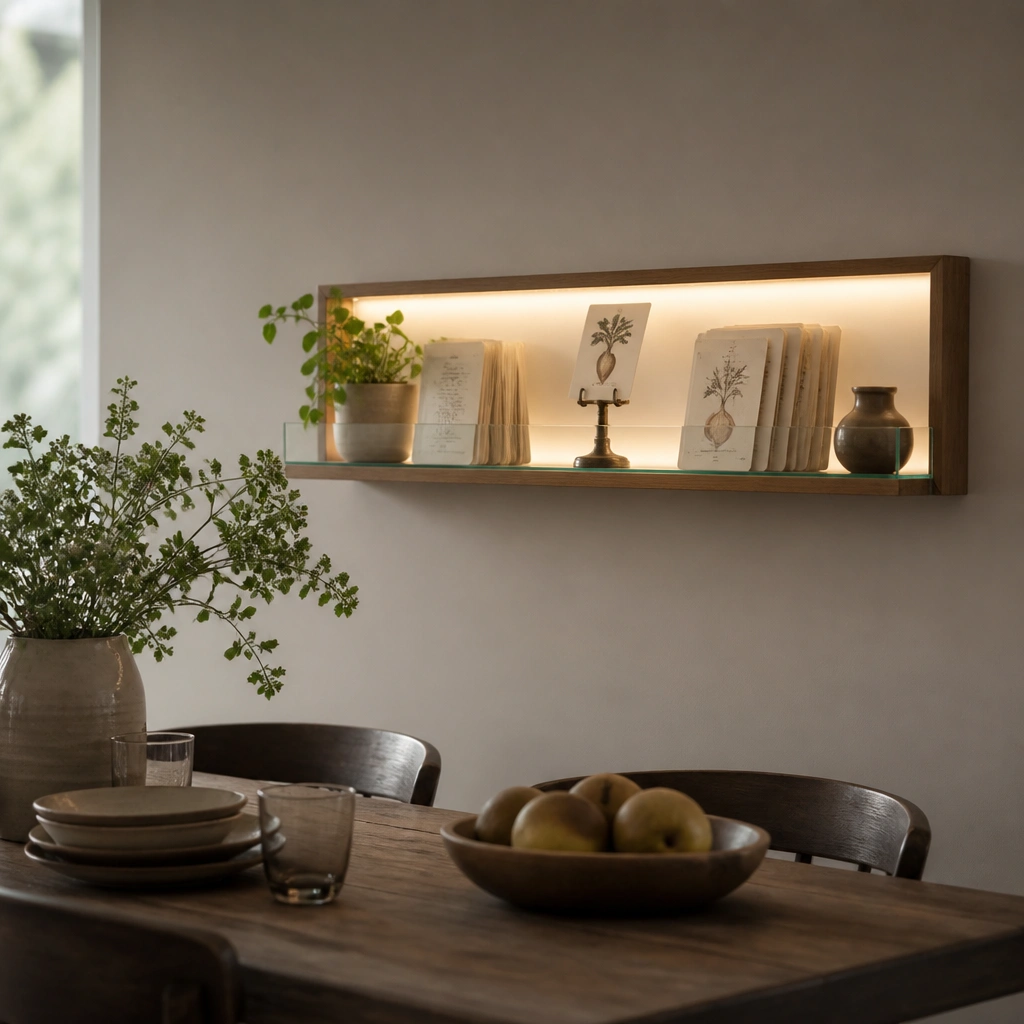
Backlighting makes ephemera look curated: recipe cards, small frames, and even spice-labeled jars. A glass shelf reduces visual bulk, which is great if your kitchen is already busy with cabinets. Keep the back panel a matte white or light gray so the light diffuses evenly.
Pro tipUse frosted or diffused LED strips (not bare chips) to avoid bright spots behind the glass.
3. Black Walnut Shelves with Puck Lights at Each End
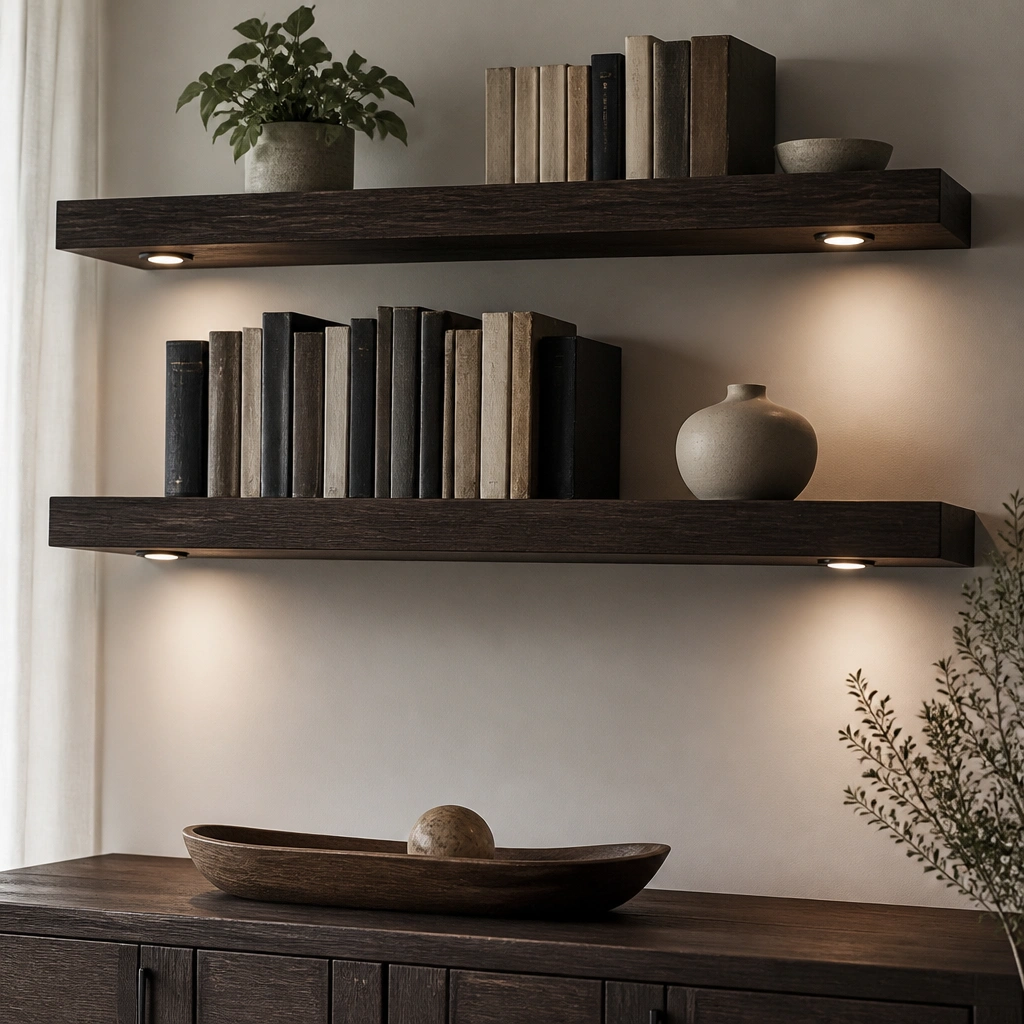
Puck lights give you controlled “spotlight” illumination, which is perfect for styling book spines like decor. Black walnut looks rich under warm lighting, and the end placement keeps shadows from pooling in the middle. This setup also works beautifully in dining rooms where you want drama, not just brightness.
Pro tipAim puck lights slightly inward (not straight down) so the beam highlights spines without bleaching them.
4. Slim Floating Shelves with Thin LED Rope Light Channel
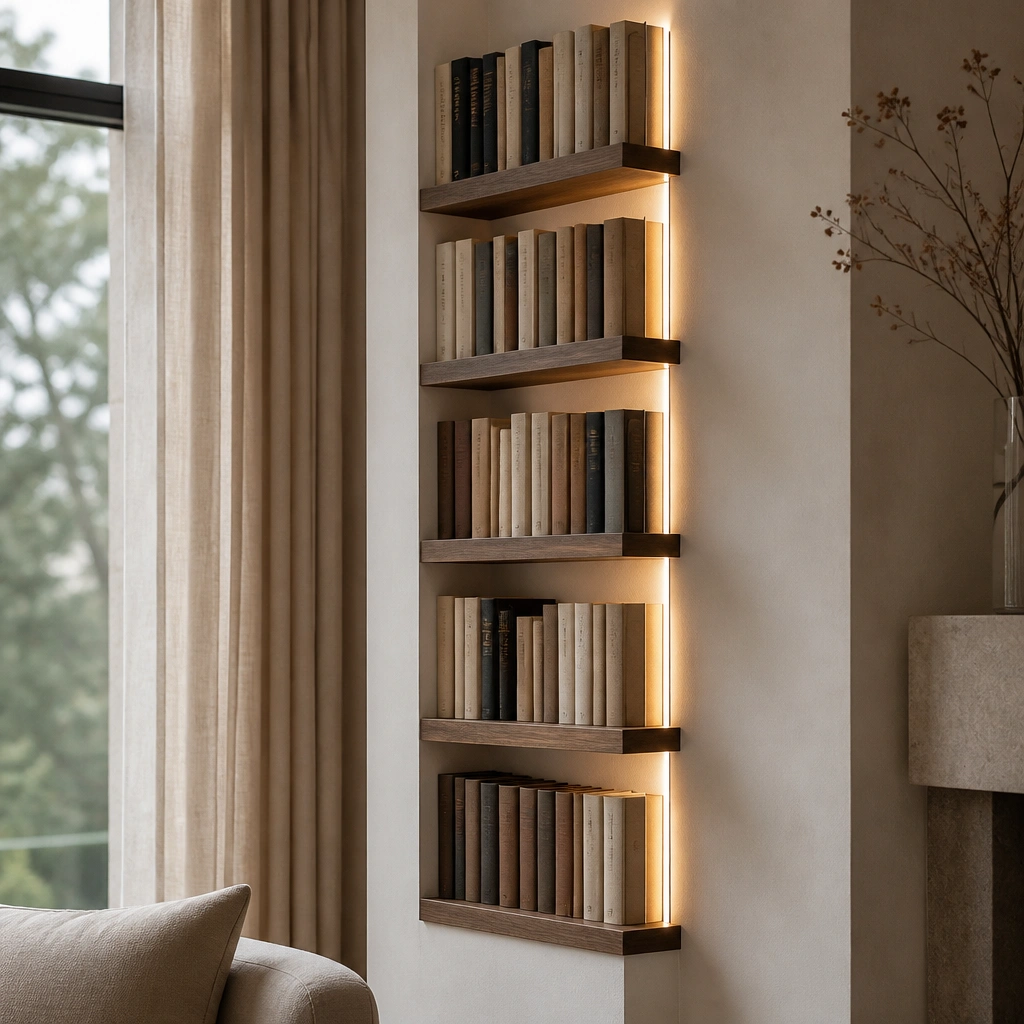
If you want a clean, modern look, recessed channels make the lighting feel built-in. Rope-style LEDs are flexible, so you can route them along the shelf underside or inside the channel for a continuous line of light. Narrow shelves work for cookbook stands, small hardcovers, and decorative book stacks.
Pro tipBefore drilling, measure your shelf depth and confirm the channel width matches your LED rope profile.
5. Corner Floating Shelves with LED Strip Along the Back Wall
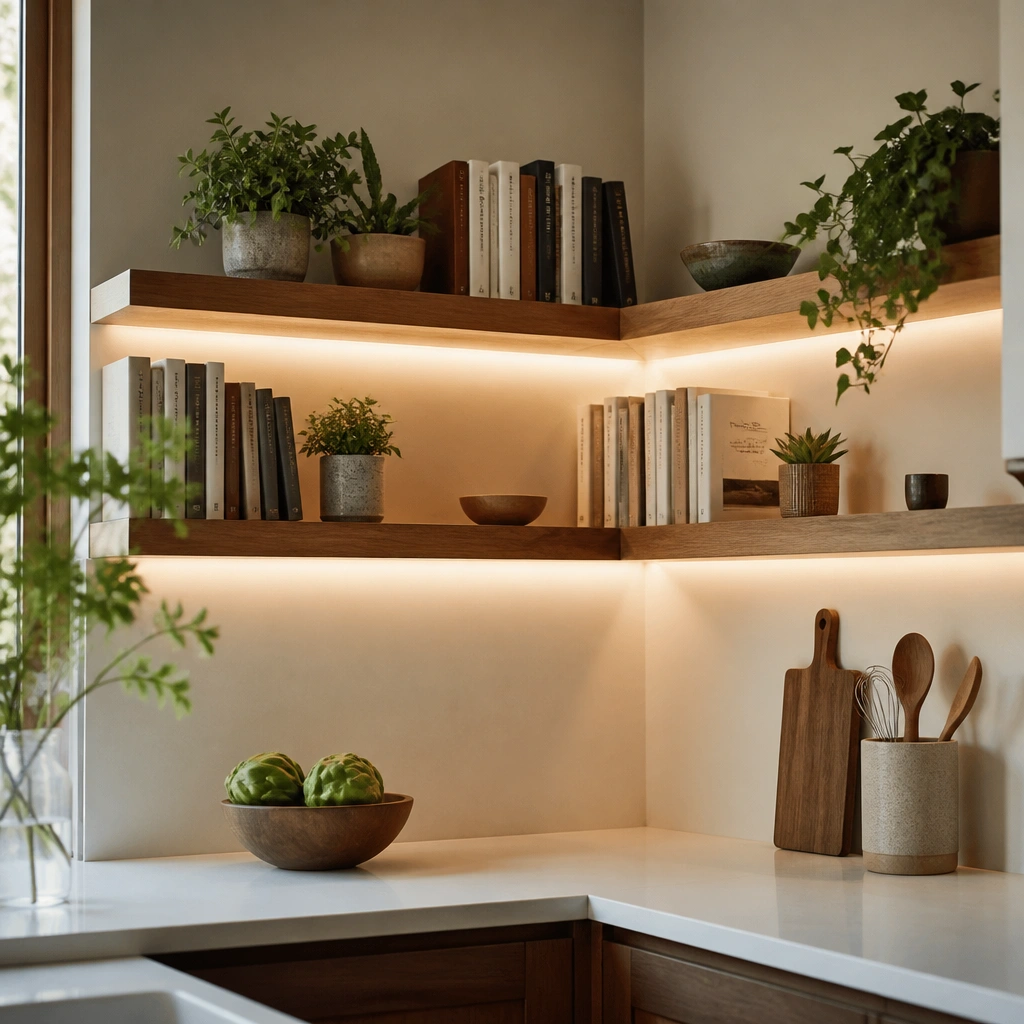
Corners are tricky, but lighting solves the “dead space” problem instantly. Run the LED strip along the corner back panel so both shelf faces get glow without glare. This arrangement is great for kitchens with open shelving nearby, because it ties the corner into the same design language.
Pro tipUse a longer LED run and a single power source so you don’t end up with two visible adapters in the corner.
6. White Floating Shelves with Color-Temperature Matching (2700K)
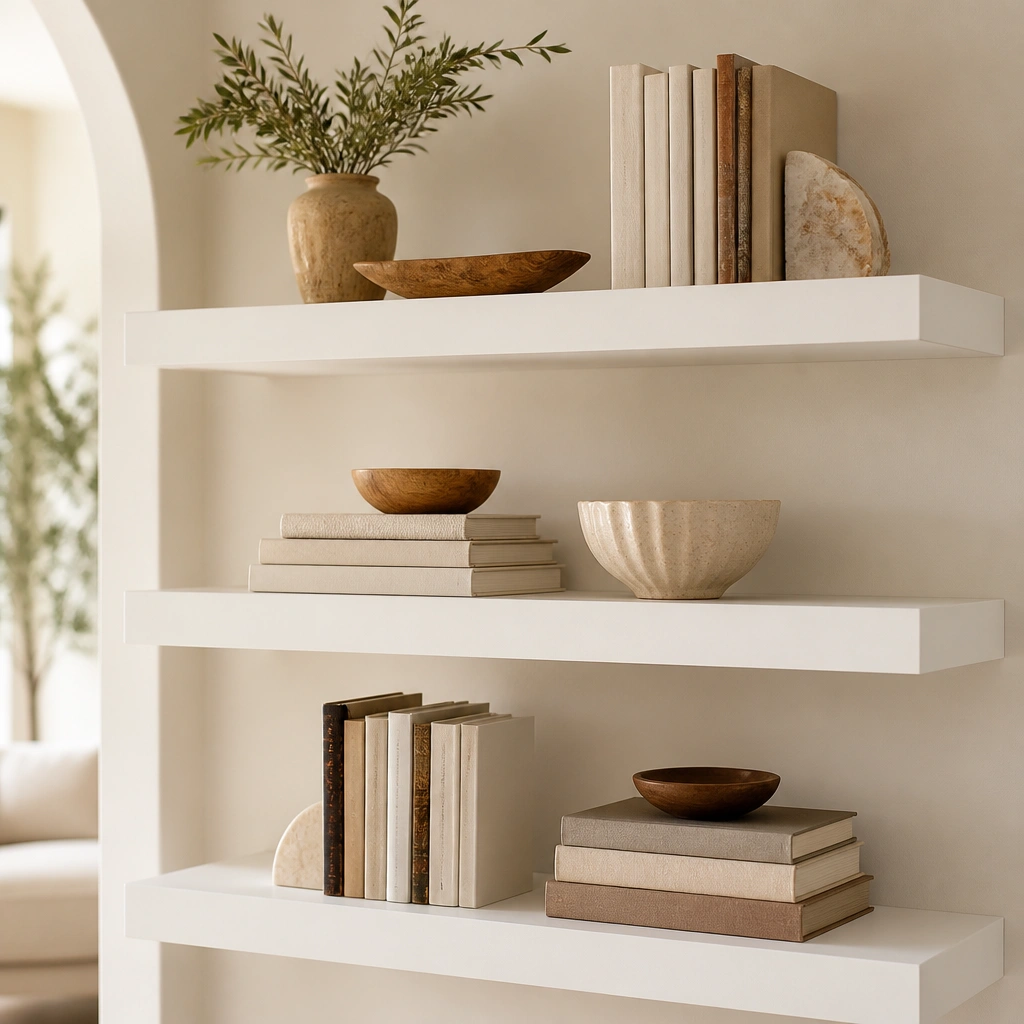
White shelves can look harsh if the lighting is cool-toned. Stick to 2700K for a softer kitchen-dining mood, especially if your ceiling lights are warm. Keep shelf styling simple: 1-2 book stacks plus a small dish or bowl so the glow reads intentional.
Pro tipCheck LED color on the wall at night — phone camera settings can lie, so use your eyes in real lighting.
7. Floating Shelf Ladder Look with Step-Down Lights
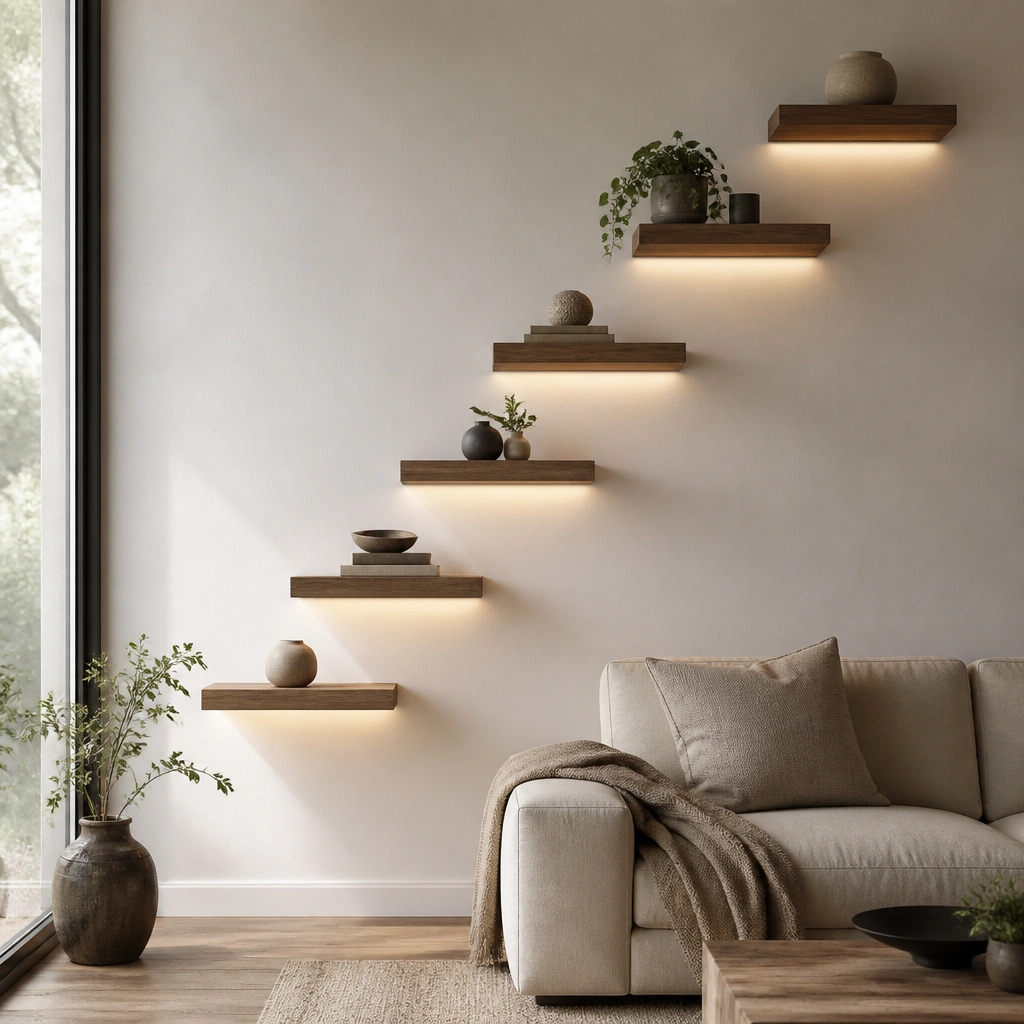
Staggered heights create movement and make your bookshelf feel like a feature wall. Under-shelf lighting on each step keeps the glow consistent while letting different book sizes show off. Use shorter shelf spans (like 18-24 inches) so the wall doesn’t look heavy.
Keep the vertical spacing around 10-12 inches so most cookbooks sit flat without crowding.
8. Floating Shelf with Integrated Dimmer for Dinner-Time Glow
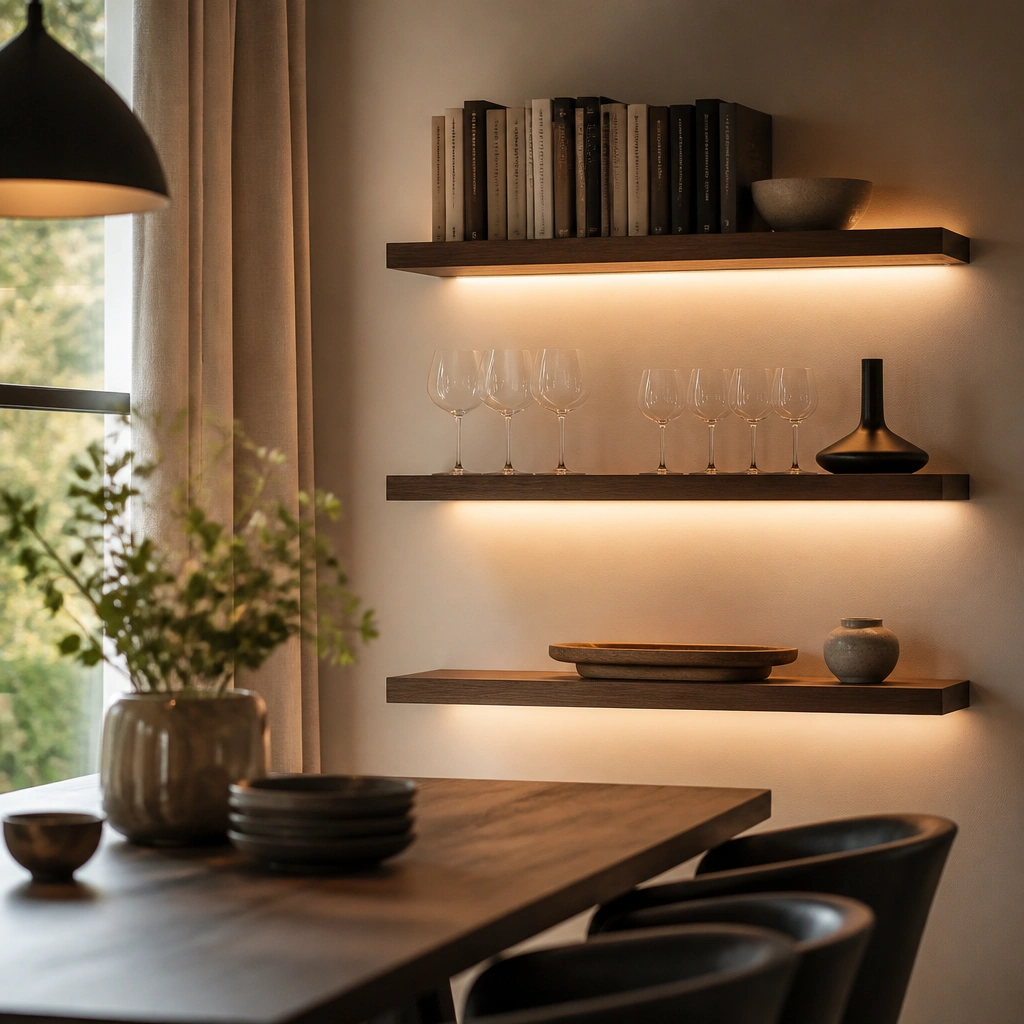
A dimmer changes everything because kitchens have different “moods” at different times. Install a dimmable LED strip system so you can go bright while reading and low for dinner ambiance. This is especially helpful if your dining area shares lighting with a task kitchen.
Choose a dimmer compatible with LED strips (check the wattage rating on the LED kit).
9. Recessed Shelf Niche with Side Lighting for Max Drama
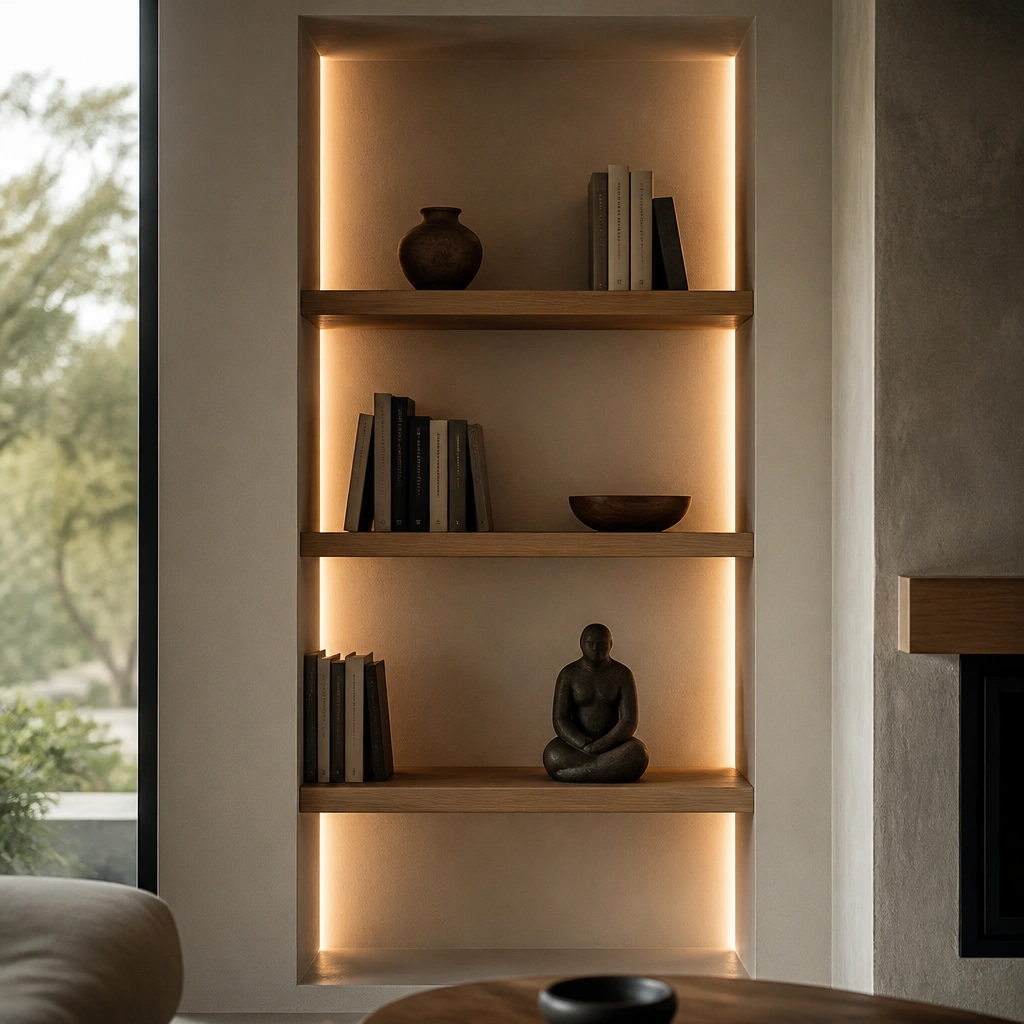
Side lighting gives you museum-style drama and makes textured covers pop. Recessed niches help control glare, which is key when you’re using stronger LED power. This works best with deeper shelf supports so the light doesn’t look like it’s floating in midair.
Use matte white paint inside the niche to bounce light evenly and reduce hotspots.