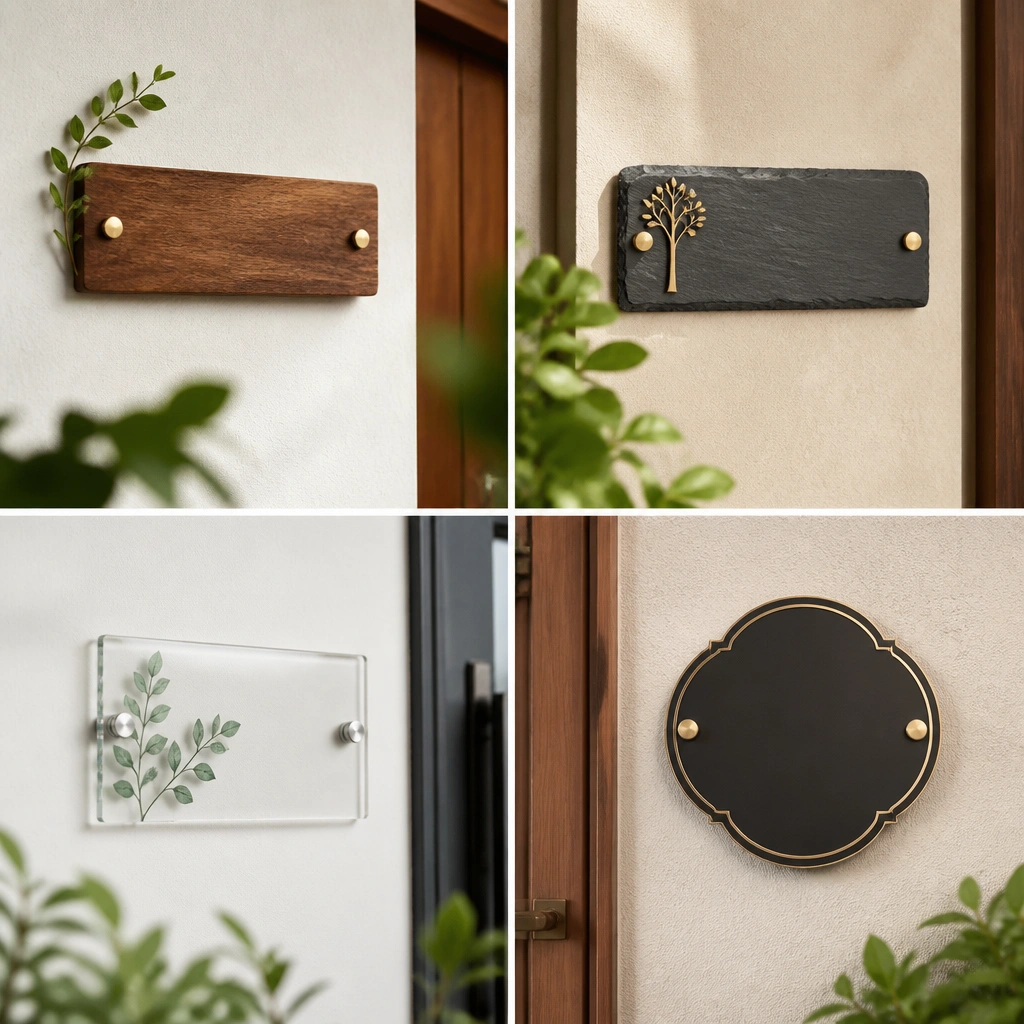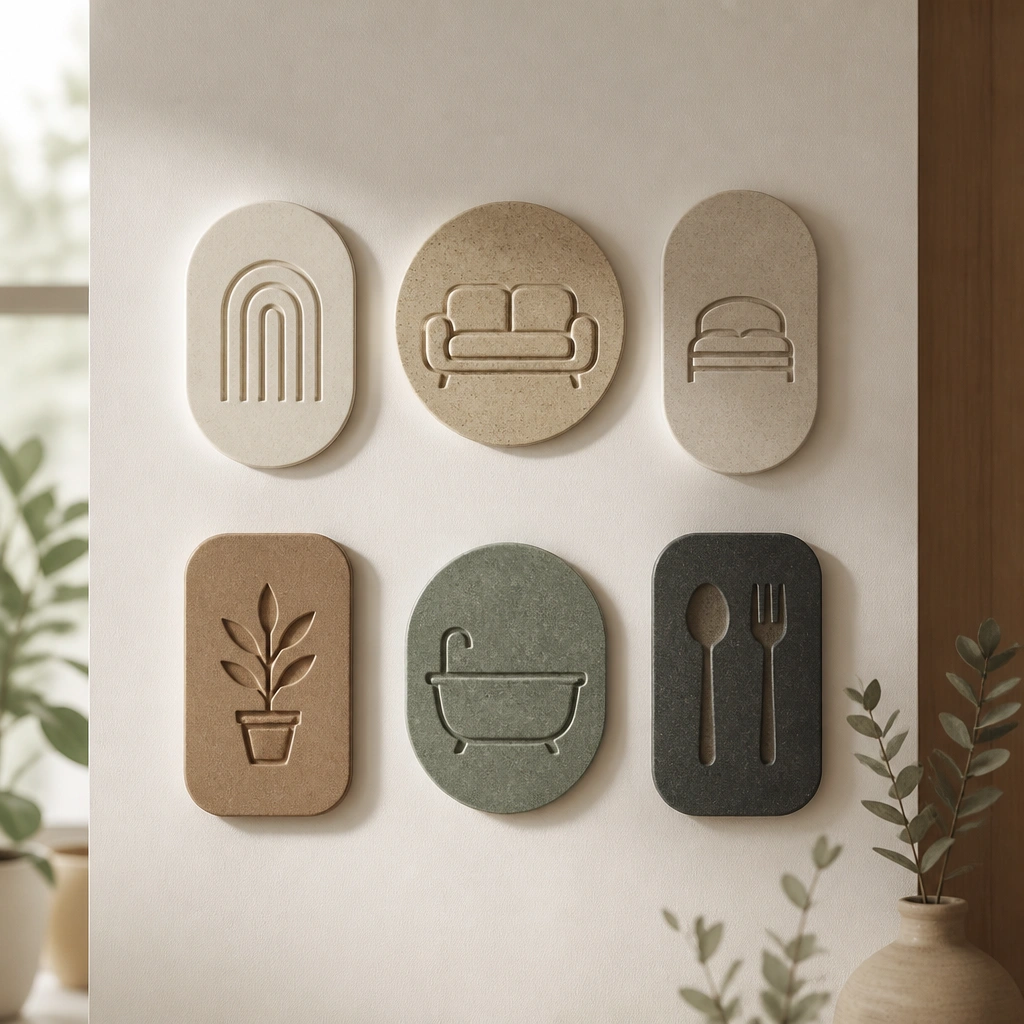
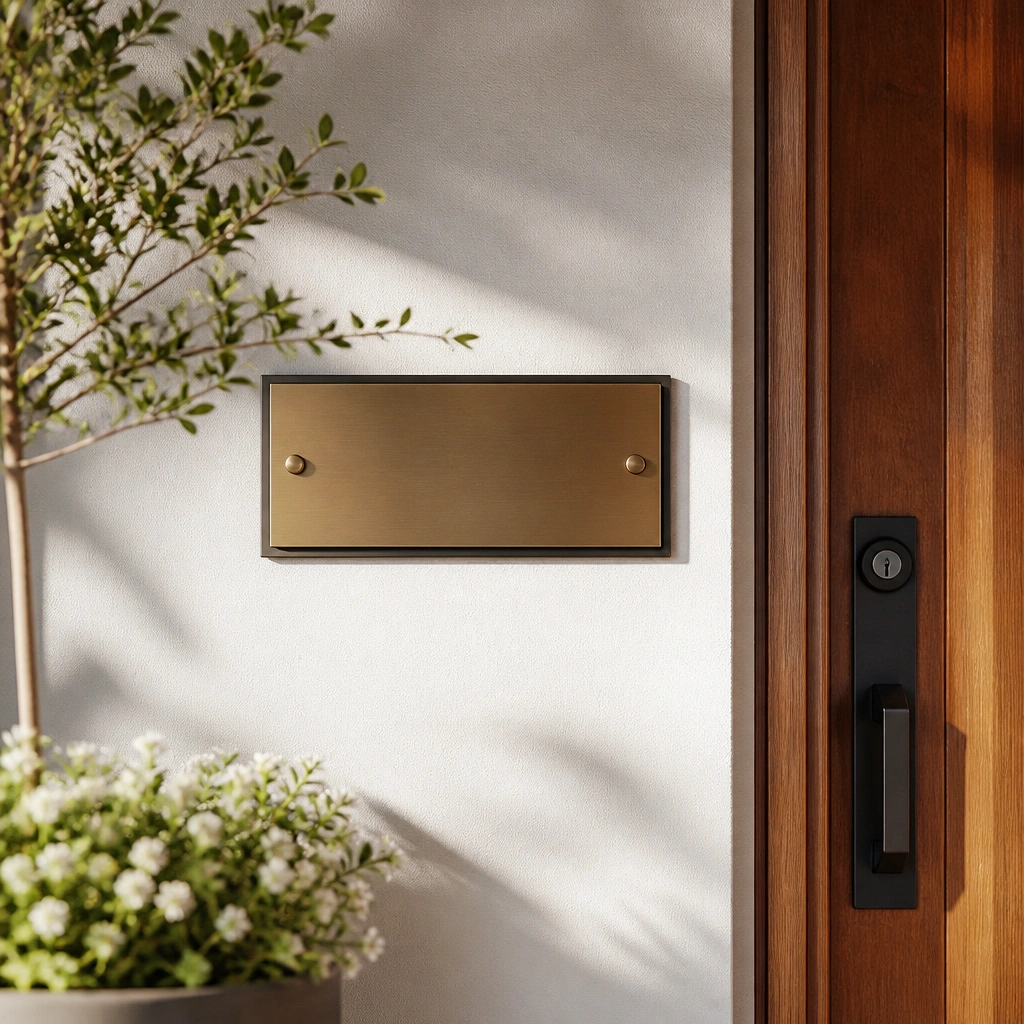
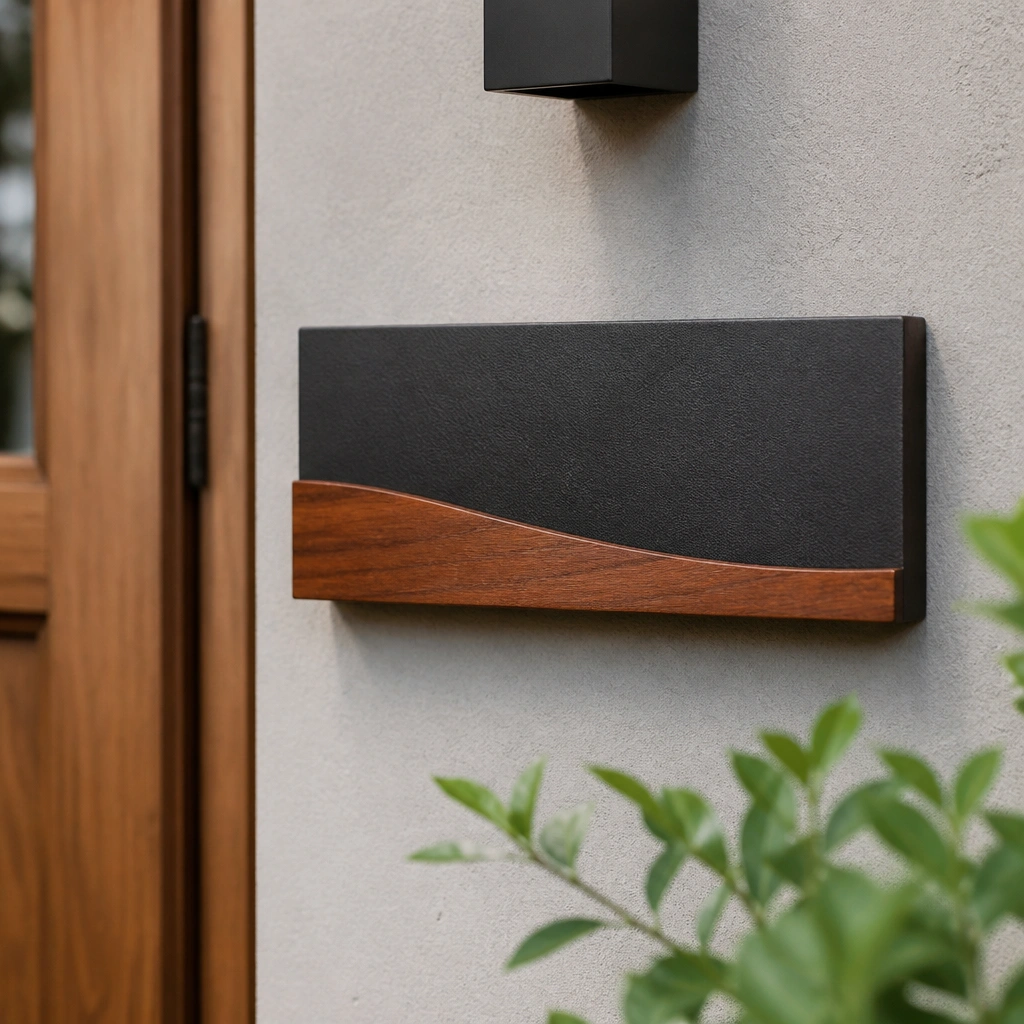
1. Brushed Brass Door Name Plate with Clear Coat
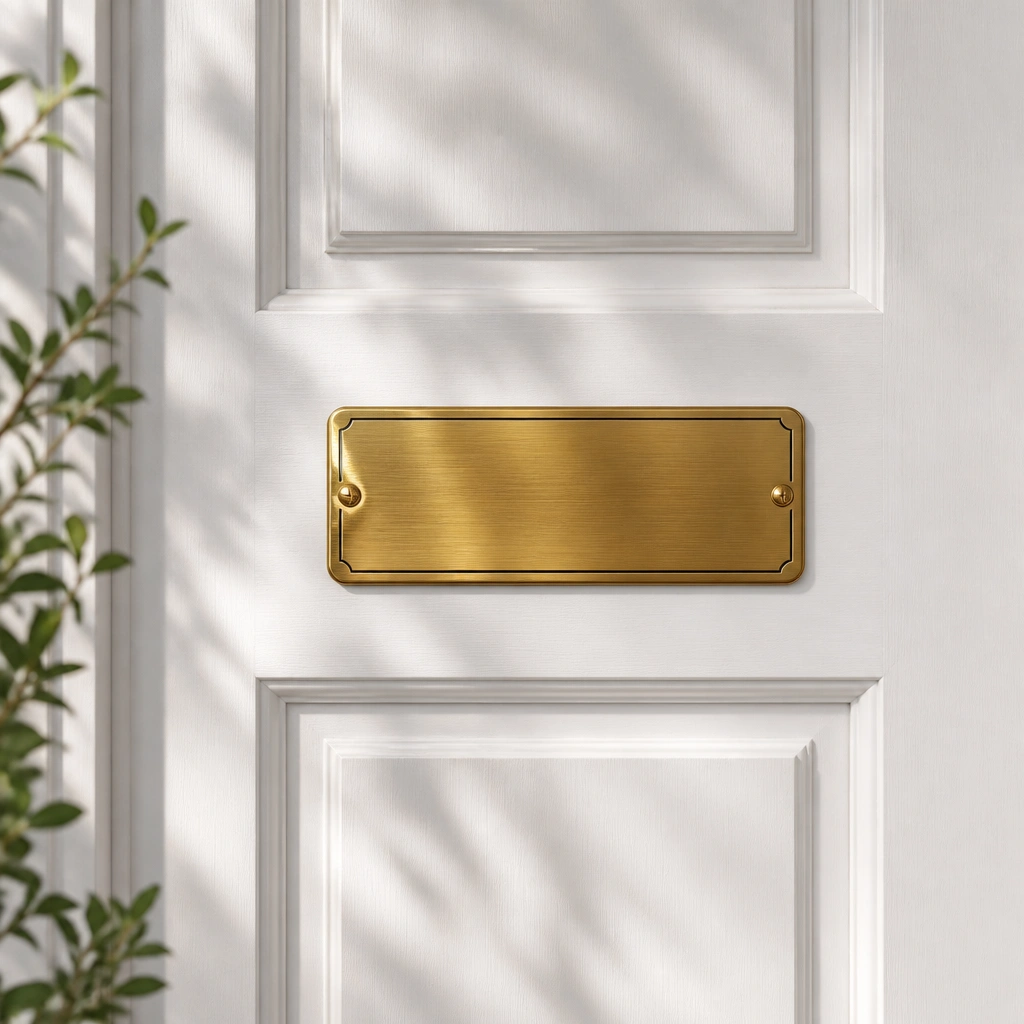
Brushed brass looks warm and expensive, but the real win is the protective clear coat that helps prevent tarnish and water spotting. Engraved or etched letters stay sharp because there’s no paint to chip. This style works especially well on entry doors, where you get fingerprints and occasional rain splashes.
Pro tipWipe with a microfiber cloth and a tiny drop of mild dish soap mixed into water, then dry immediately to prevent streaks.
2. Matte Black Powder-Coated Metal with Vinyl Lettering
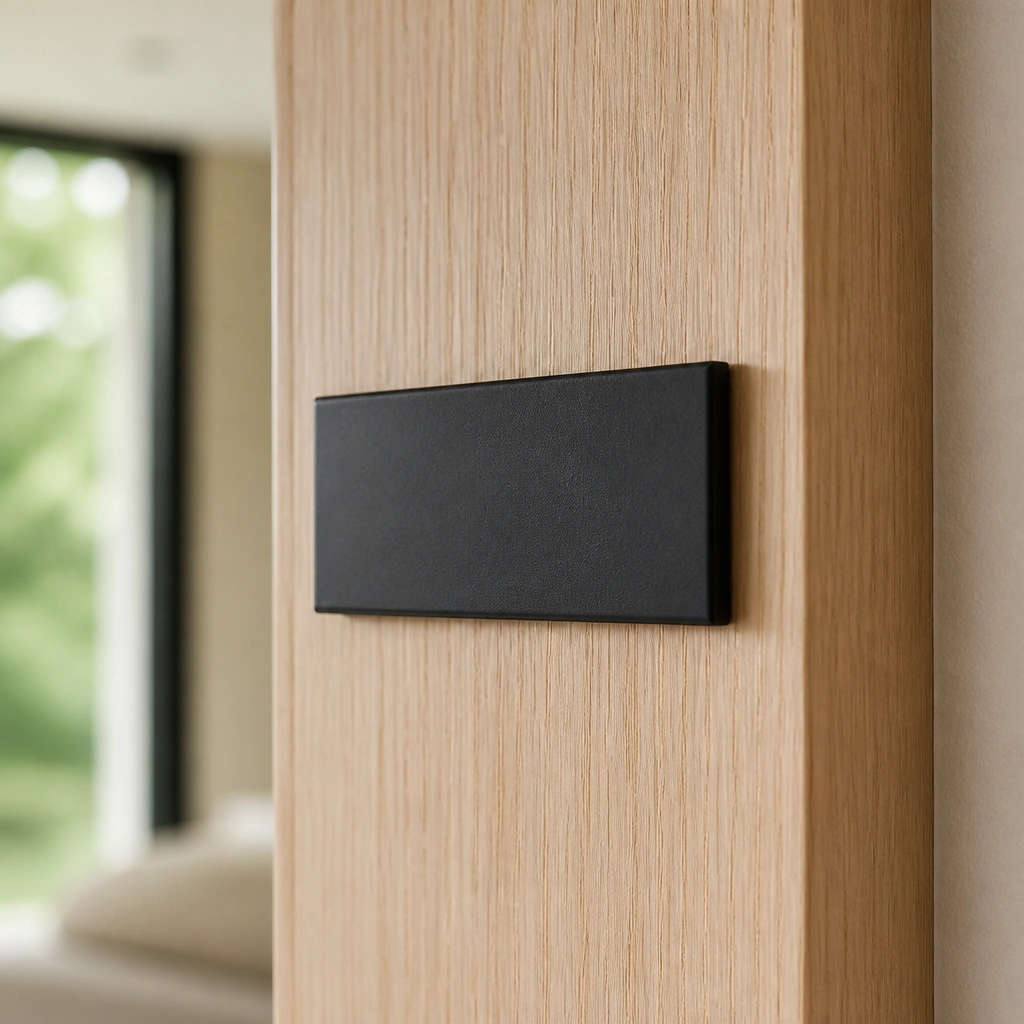
Powder-coated metal resists scratches better than painted wood or thin MDF. Pair it with high-quality outdoor vinyl lettering for readable text that doesn’t flake. The matte finish hides smudges, so it’s a great option if your entryway gets lots of hand contact.
Use an outdoor-rated vinyl (UV-resistant) and press firmly for 30 seconds across each letter edge.
3. Clear Acrylic Name Plate with Frosted Text
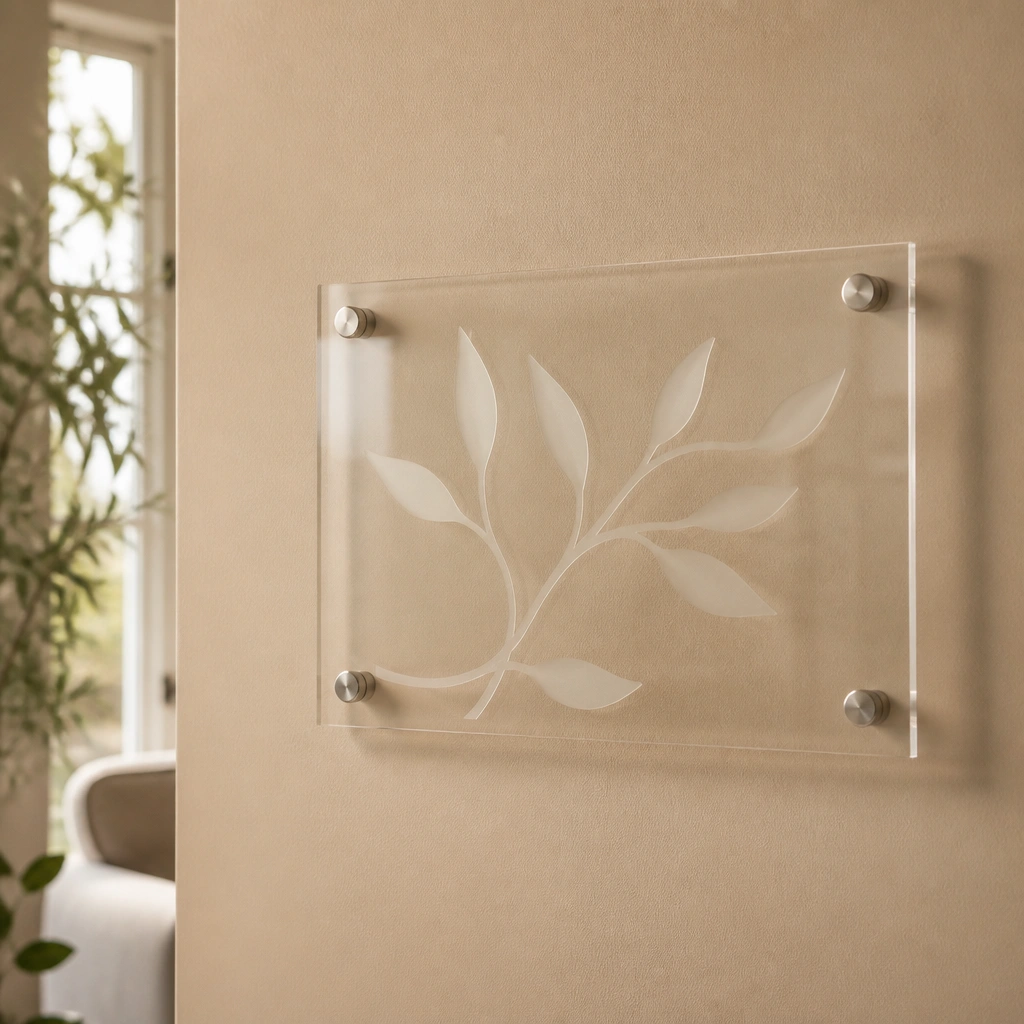
Clear acrylic feels modern and light, and frosted text is naturally low-maintenance because it won’t chip like painted lettering. It also works beautifully in small hallways because it doesn’t visually block the wall. For a clean look, keep the plate simple with one name and a consistent font.
Pro tipClean with glass cleaner on a microfiber cloth — avoid abrasive pads that can create tiny scratches.
4. Sealed Wood Plaque with Stain-and-Clear Finish
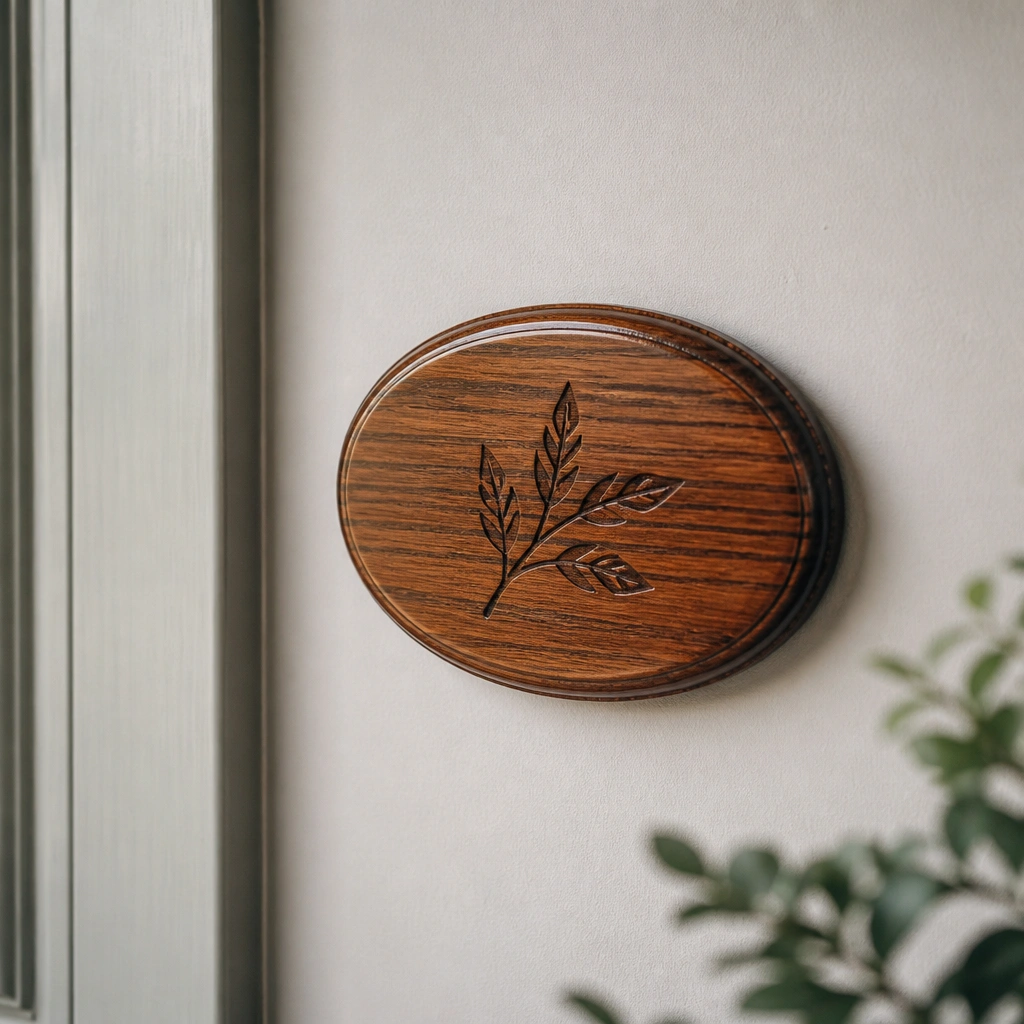
If you love warmth but hate maintenance, choose stained wood that’s fully sealed with a clear top coat. When the letters are burned/engraved and sealed, you won’t see flaking paint over time. This is perfect for bedroom doors or home offices where you want cozy character without constant touch-ups.
Reapply a fresh clear coat only if you notice dulling — test in a hidden corner first.
5. Outdoor-Rated PVC Name Plate for Front Entries
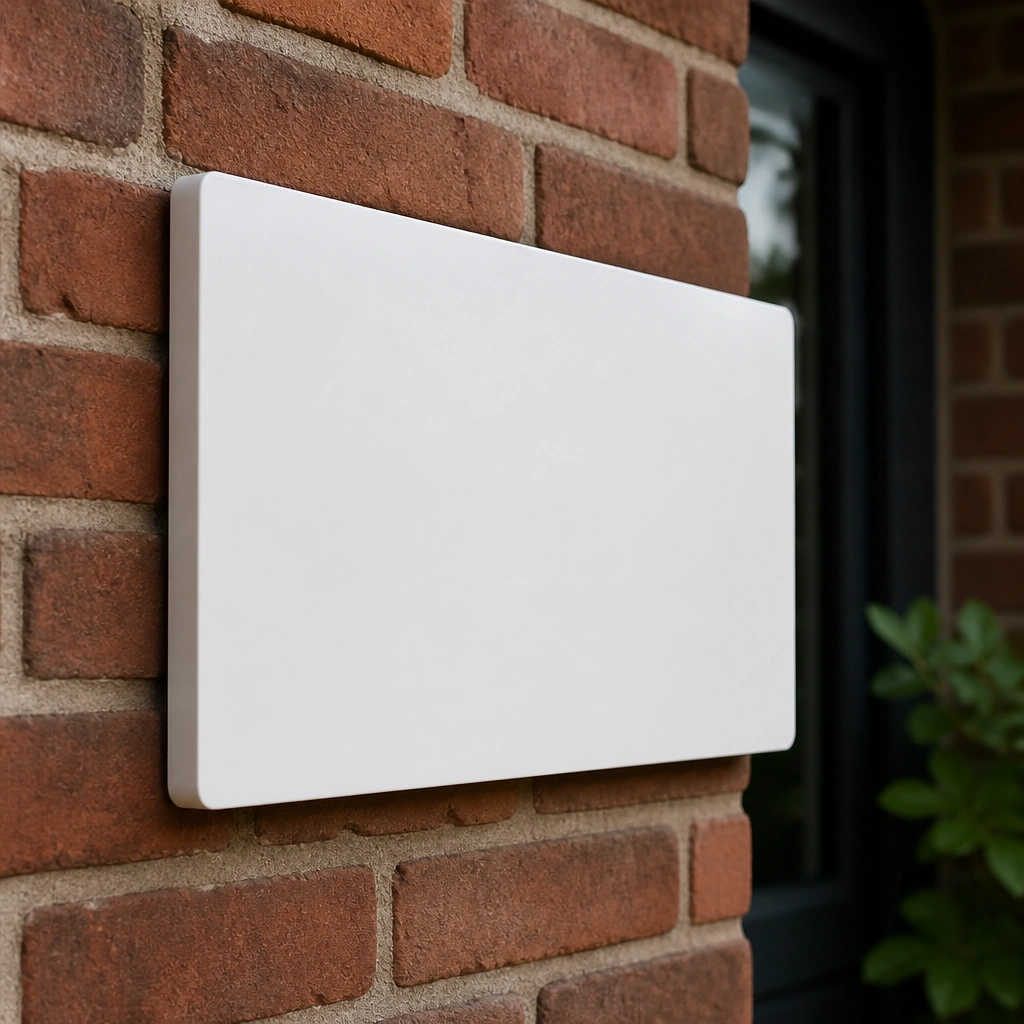
PVC holds up in sun, wind, and mist better than unfinished wood. It’s also lightweight, so installation is easier and mounting stays stable. Vinyl lettering on PVC is a solid low-maintenance combo because the base won’t warp or swell.
For brick or stucco, use exterior construction adhesive rated for PVC, not hot glue.
6. Ceramic Tile Name Plate with Waterproof Grout Lines
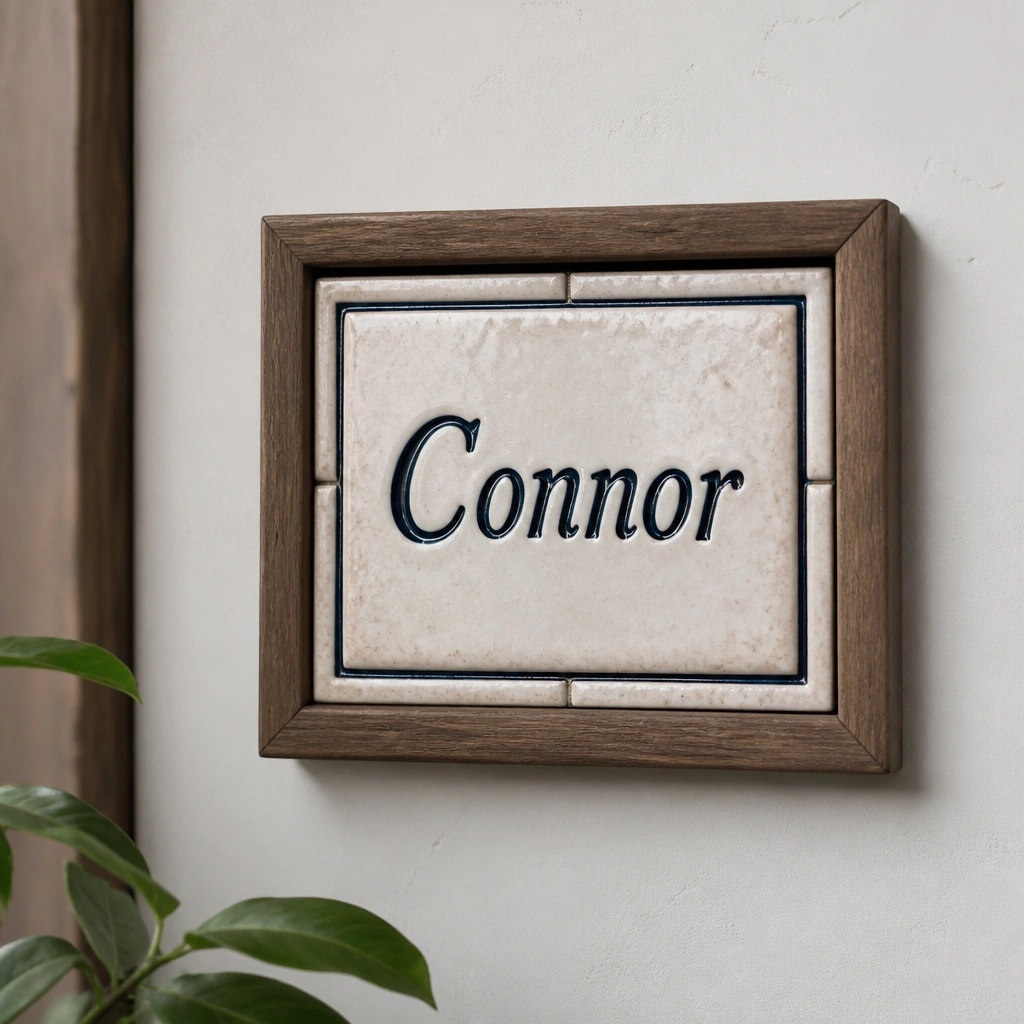
Ceramic is the ultimate wipe-clean surface. If you use a tile with sealed glaze lettering, it resists moisture and doesn’t fade the way some inks do. This style is great for mudrooms and laundry-adjacent spaces where you’re wiping hands and boots.
Pro tipSeal any exposed grout edges with a waterproof sealer once installed, then spot-clean with a damp cloth.
7. Wipe-Clean Laminate Name Plate for Cabinets and Closets
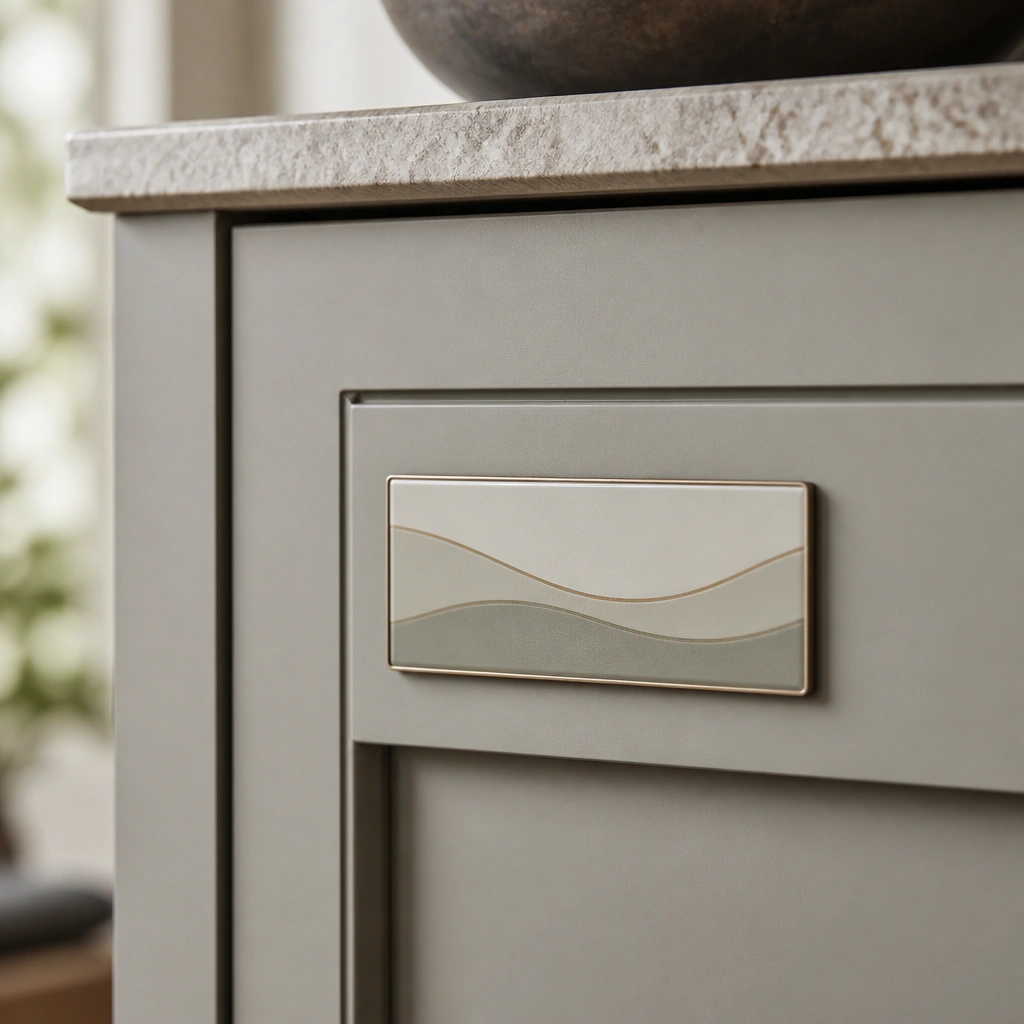
Laminate-backed labels are surprisingly practical for closets, pantries, and linen areas. The top layer protects the printed text from moisture and daily smudges, so it stays readable. This is the move if your goal is low maintenance without sacrificing a polished look.
Stick it with a removable adhesive strip first — if it’s centered and level, swap to a stronger mounting option.
8. Fabric-Edge Name Plate with Removable Insert (No Repainting)
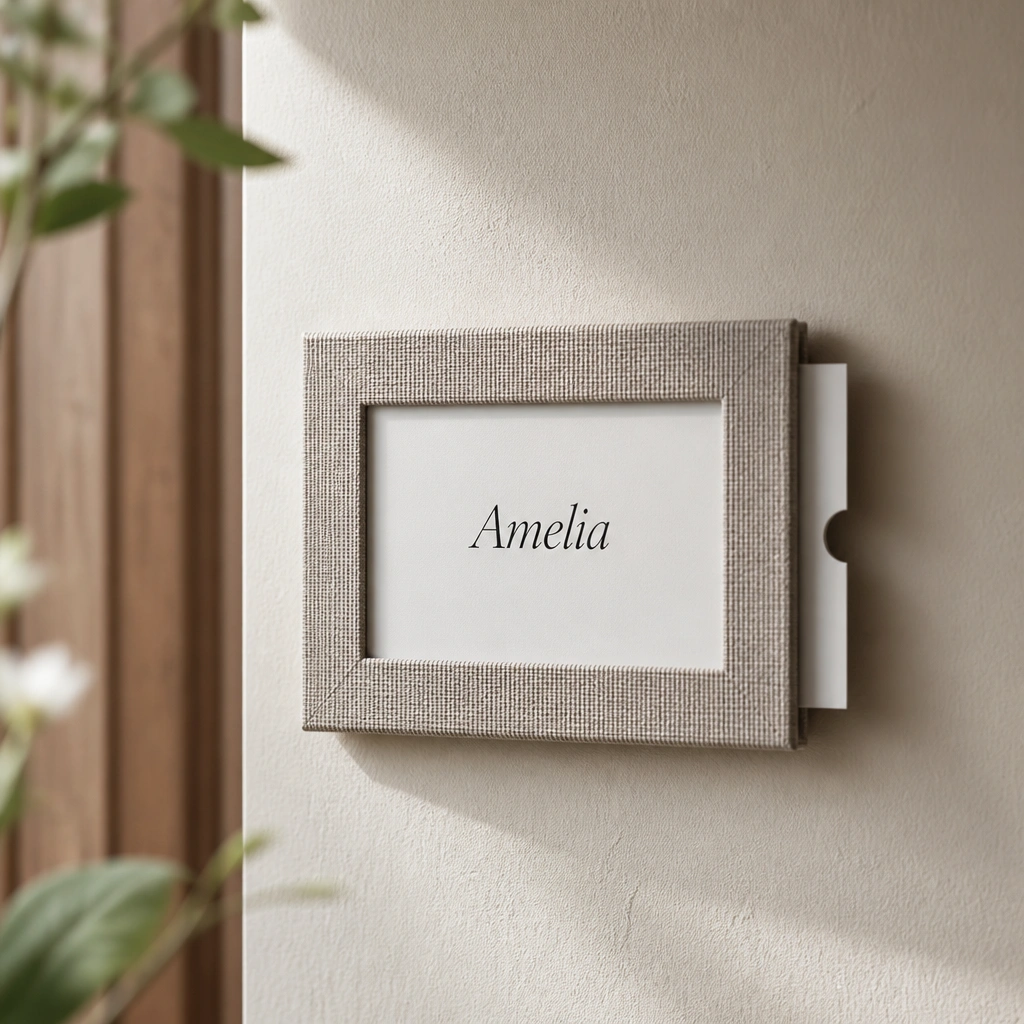
This is a low-maintenance trick: change the insert instead of repainting or re-lettering. Fabric trim gives softness, while the replaceable card keeps the letters crisp and consistent. It’s perfect for kids’ rooms where you might update a name or room label later.
Pro tipPrint inserts on cardstock and laminate them for extra durability and easy wipe-downs.
9. Magnetic Name Plate for Easy Swaps in Shared Spaces
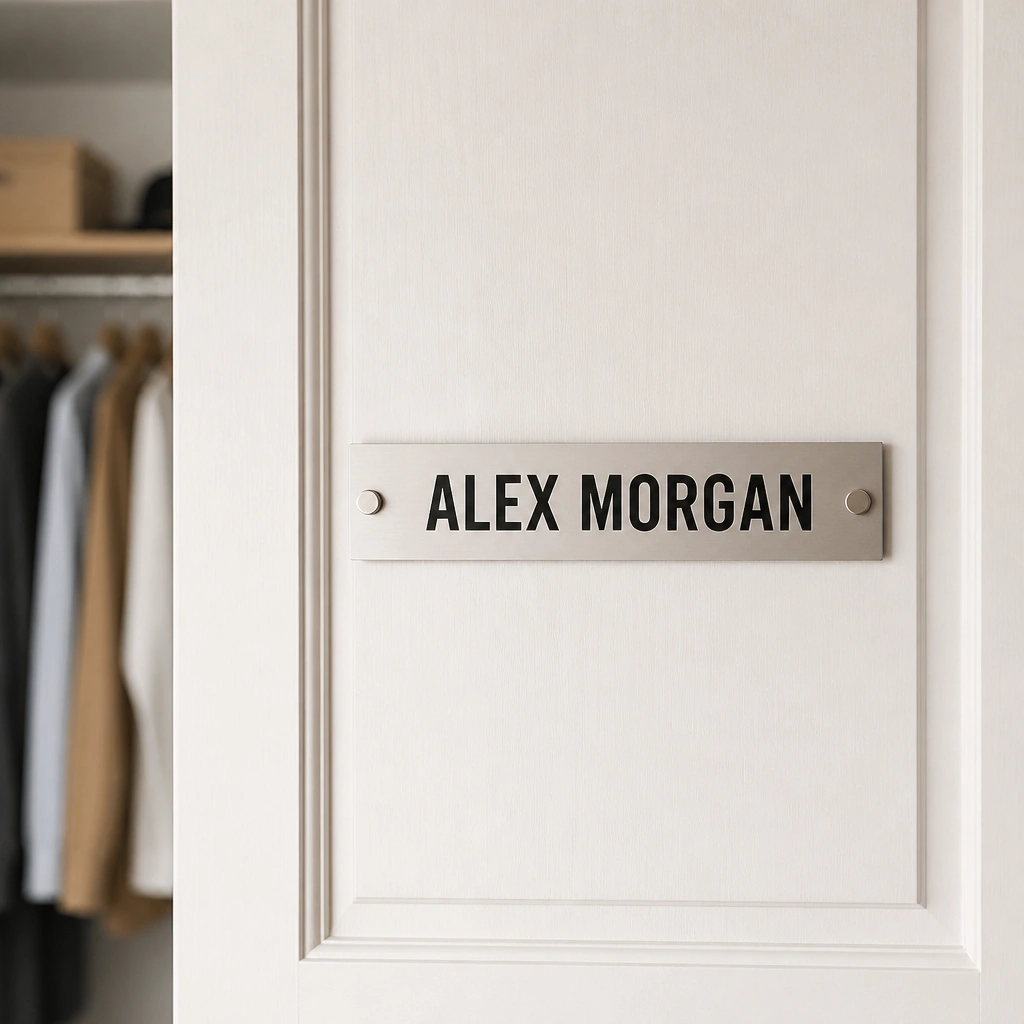
Magnetic mounting is ideal if you want to update names seasonally or swap labels when rooms change. A magnetic base avoids drilling and keeps walls looking clean. For low maintenance, choose a metal backing and a strong, high-contrast letter finish.
Test magnetic strength by gently pulling — if it shifts, add a second magnet strip line.
10. Stainless Steel Name Plate with Laser-Etched Letters
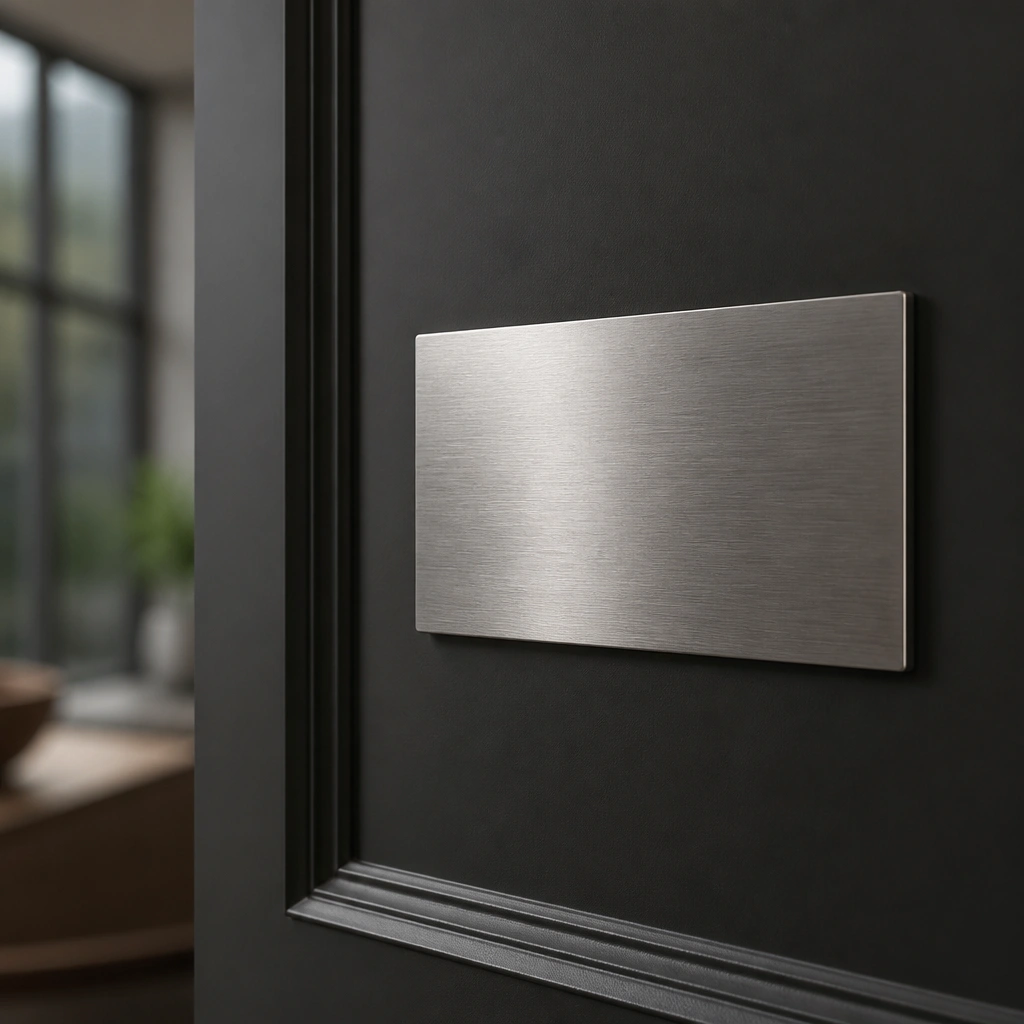
Laser-etched letters look clean and modern, and stainless steel handles fingerprints and wipe-down cleaning better than many finishes. Because the text is etched (not painted), there’s no flaking layer to worry about. This style works beautifully in contemporary homes and makes entries feel intentional.
Pro tipUse a microfiber cloth for best results — stainless can show water spots if you air-dry.