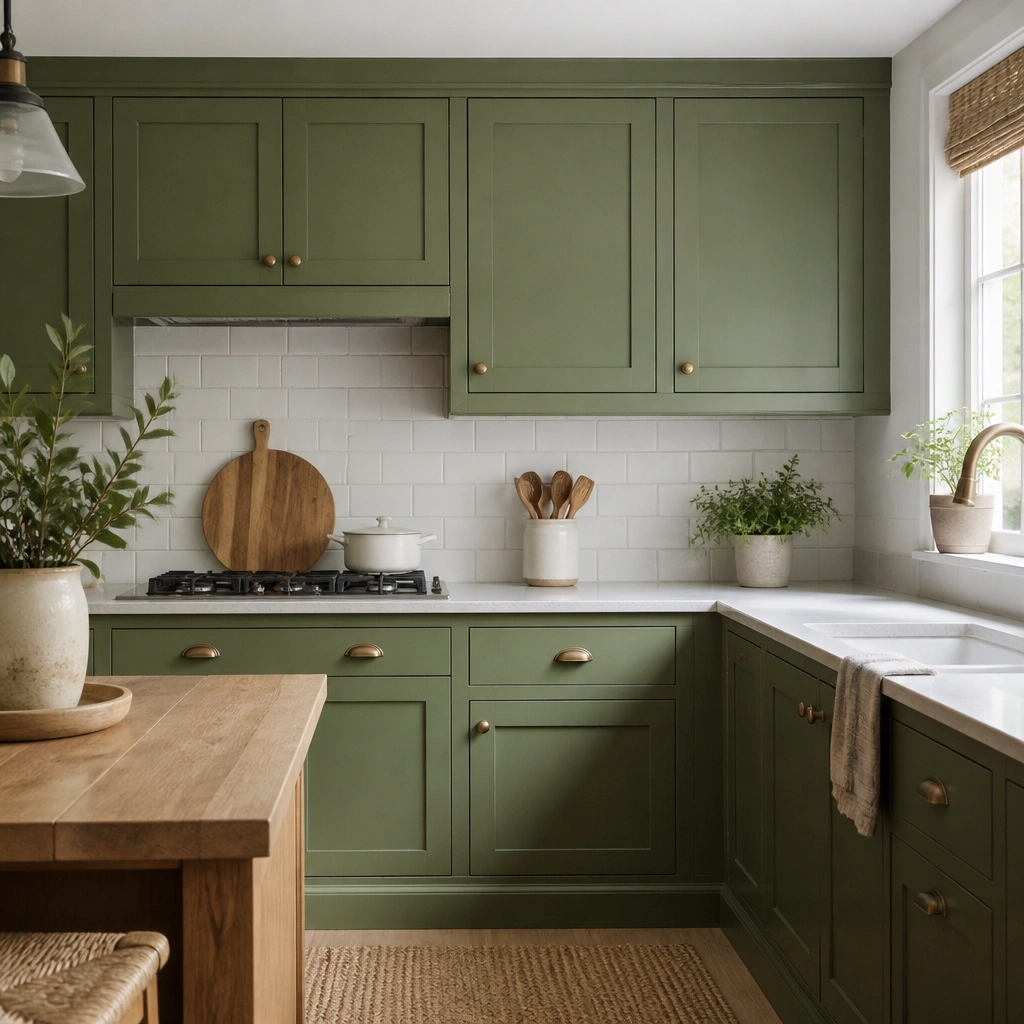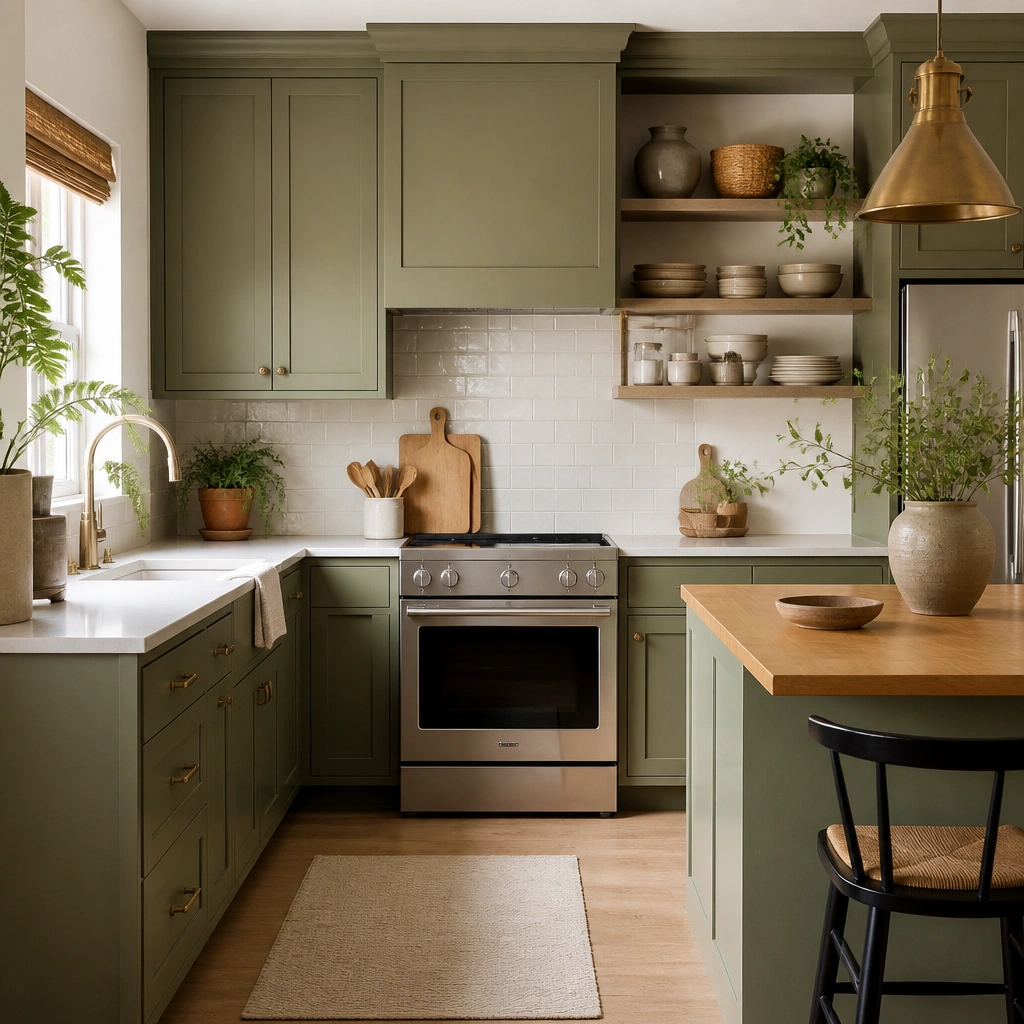
1. Sage-Forest Green Shaker + White Oak Shelving
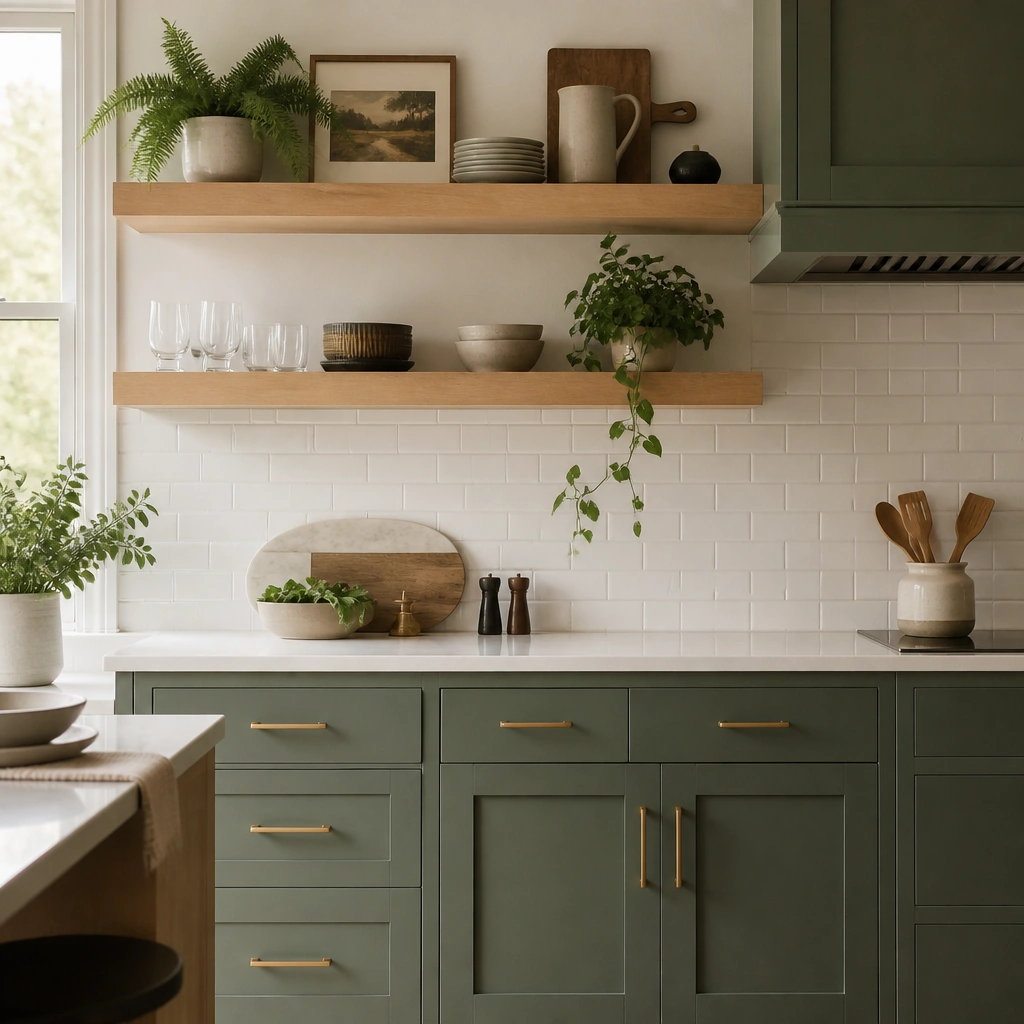
This look works because the green is slightly sage, so it reads cozy instead of dramatic. White oak shelves add warmth and visual breathing room, especially above a countertop where solid uppers can feel bulky. Brass hardware keeps the undertone sunny and complements the light tile.
Ask for a forest green paint sample in both matte and satin finishes, then compare next to your floor at morning and night lighting.
2. Deep Forest Green Slab Doors + Warm Greige Countertops
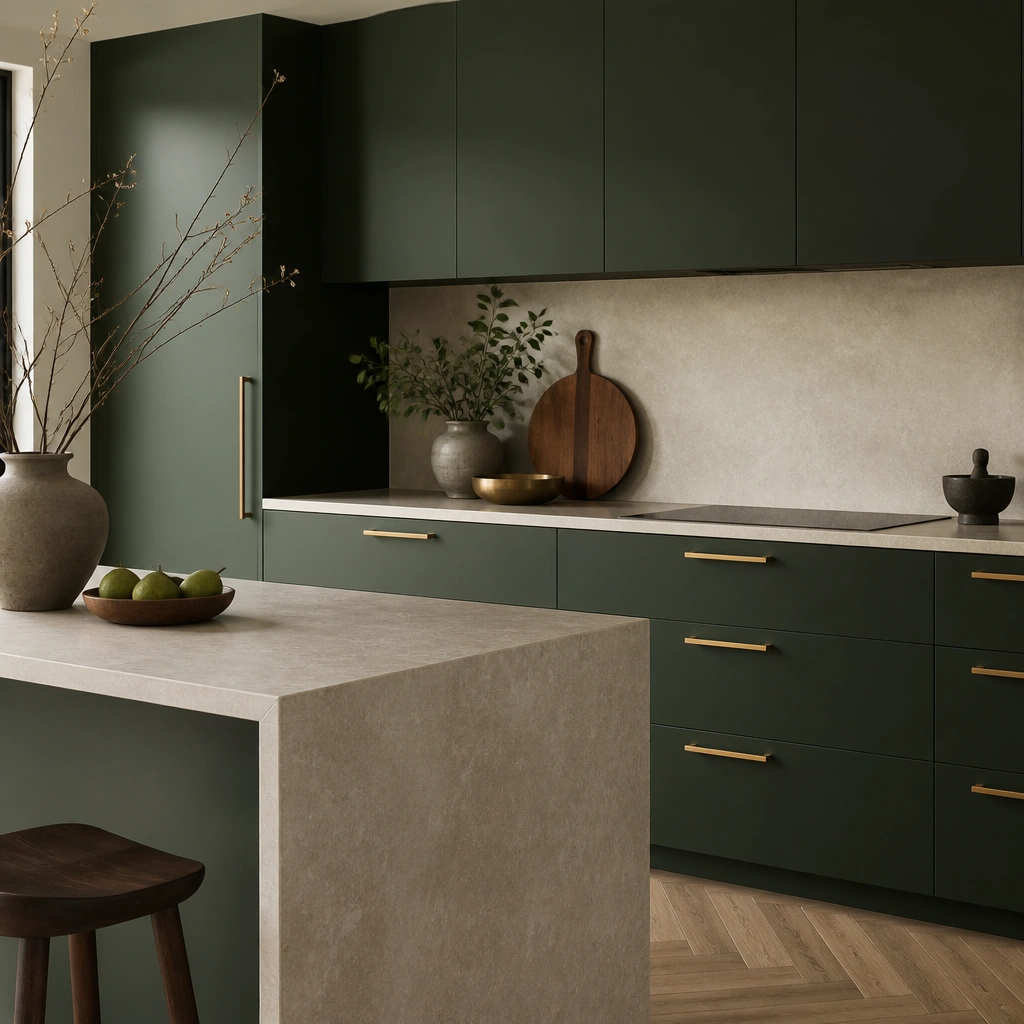
Slab doors make the color feel tailored and expensive, but the greige counters stop it from feeling cold. The waterfall edge creates a continuous color block that looks intentional, not dark-for-dark’s-sake. Keep the backsplash light (cream or warm white) so the green stays the star.
For slab cabinets, choose hardware with a slightly rounded profile (not razor-thin) so the look stays soft and cozy.
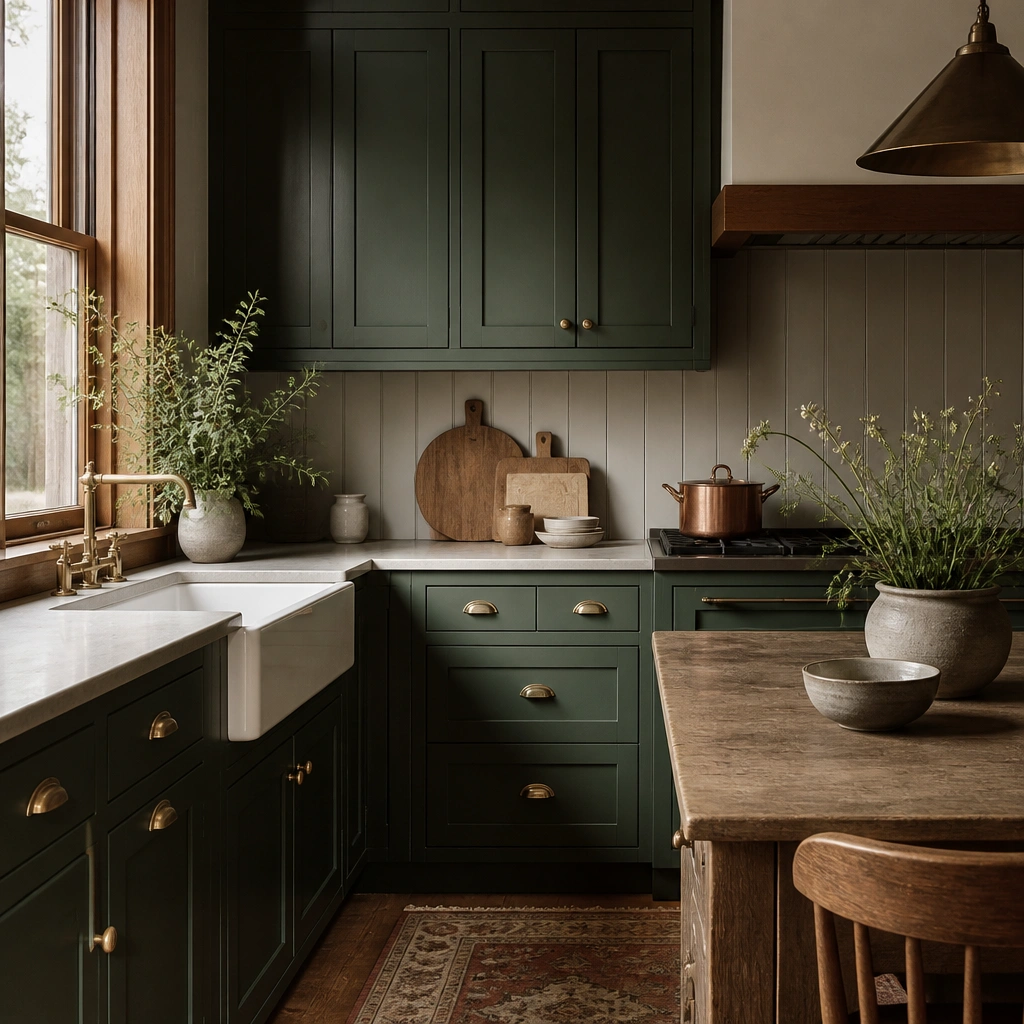
3. Forest Green Cabinets + Creamy Off-White Tile Herringbone
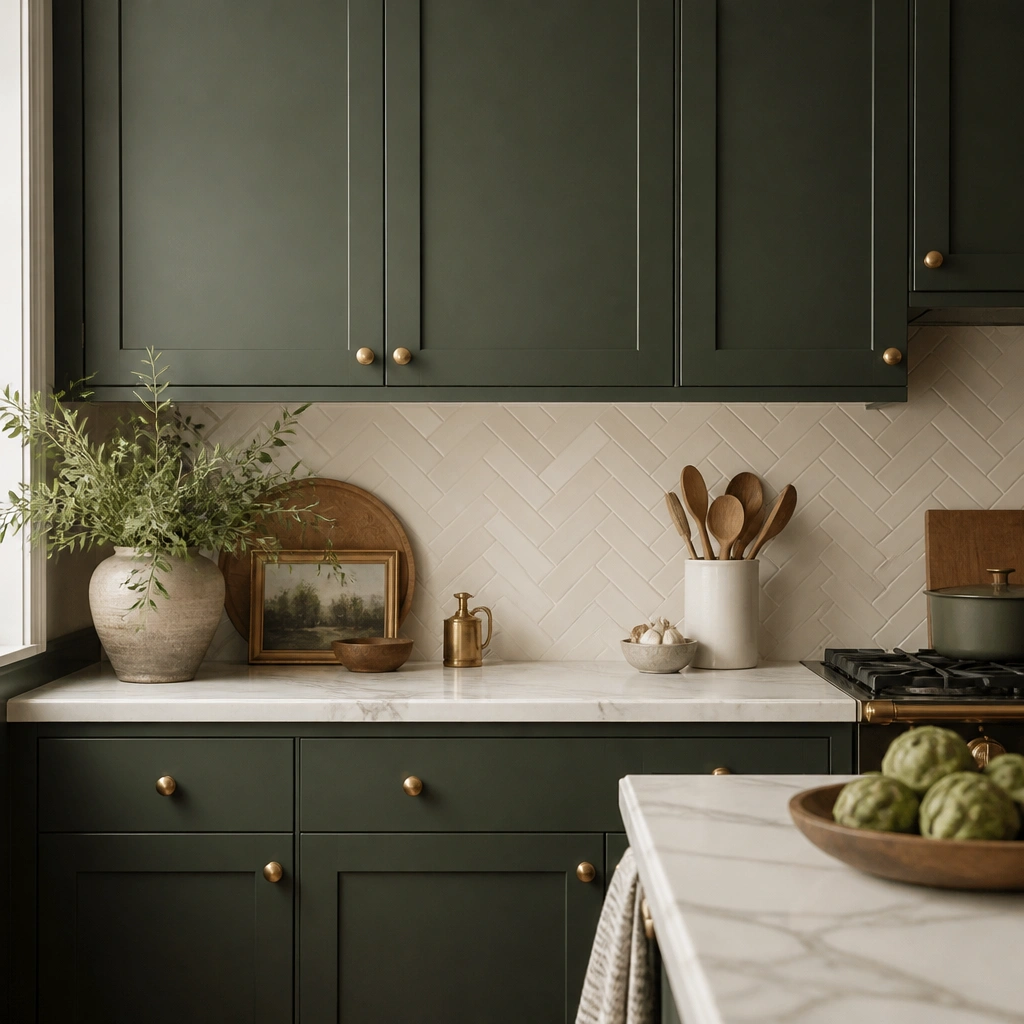
Herringbone adds movement behind the green, which makes the whole kitchen feel more textured and inviting. The creamy tone (not bright white) prevents the green from looking harsh. Antique brass pulls bring a slightly aged glow that pairs beautifully with the warm tile pattern.
Pro tipUse a grout color that matches the tile warmth (cream grout) to keep the herringbone soft instead of high-contrast.
4. Forest Green Lower Cabinets + Light Upper Cabinets (Two-Tone Cozy)
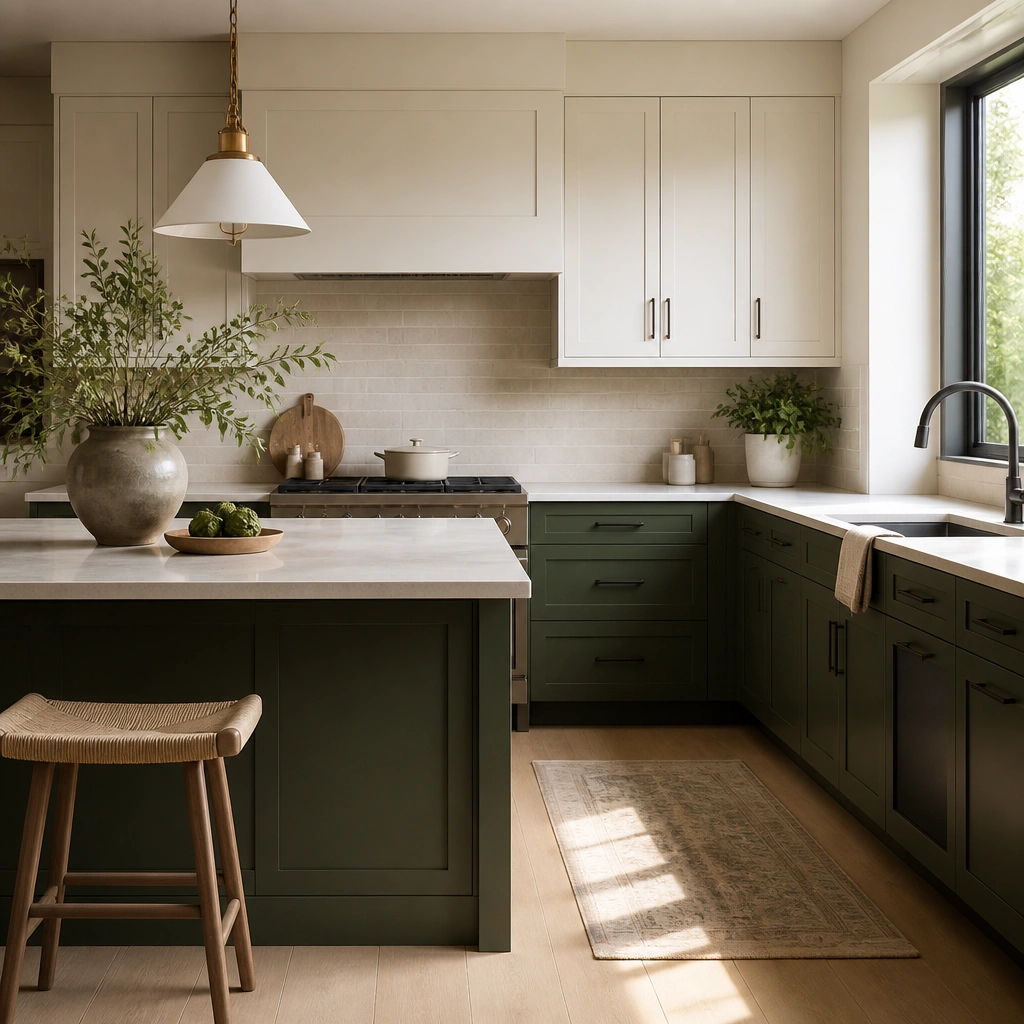
Two-tone design is a cheat code for cozy forest green kitchen cabinets because it keeps the room brighter while still giving you that rich green grounding. Light uppers reflect light upward, so the green feels like depth, not shadow. Blackened bronze hardware adds contrast without swinging the palette too modern-cold.
If your kitchen lacks natural light, keep the uppers closer to eggshell white and go satin on the green lowers for extra bounce.
5. Forest Green Cabinets + Natural Rattan Counter Stools and Pendant Lighting
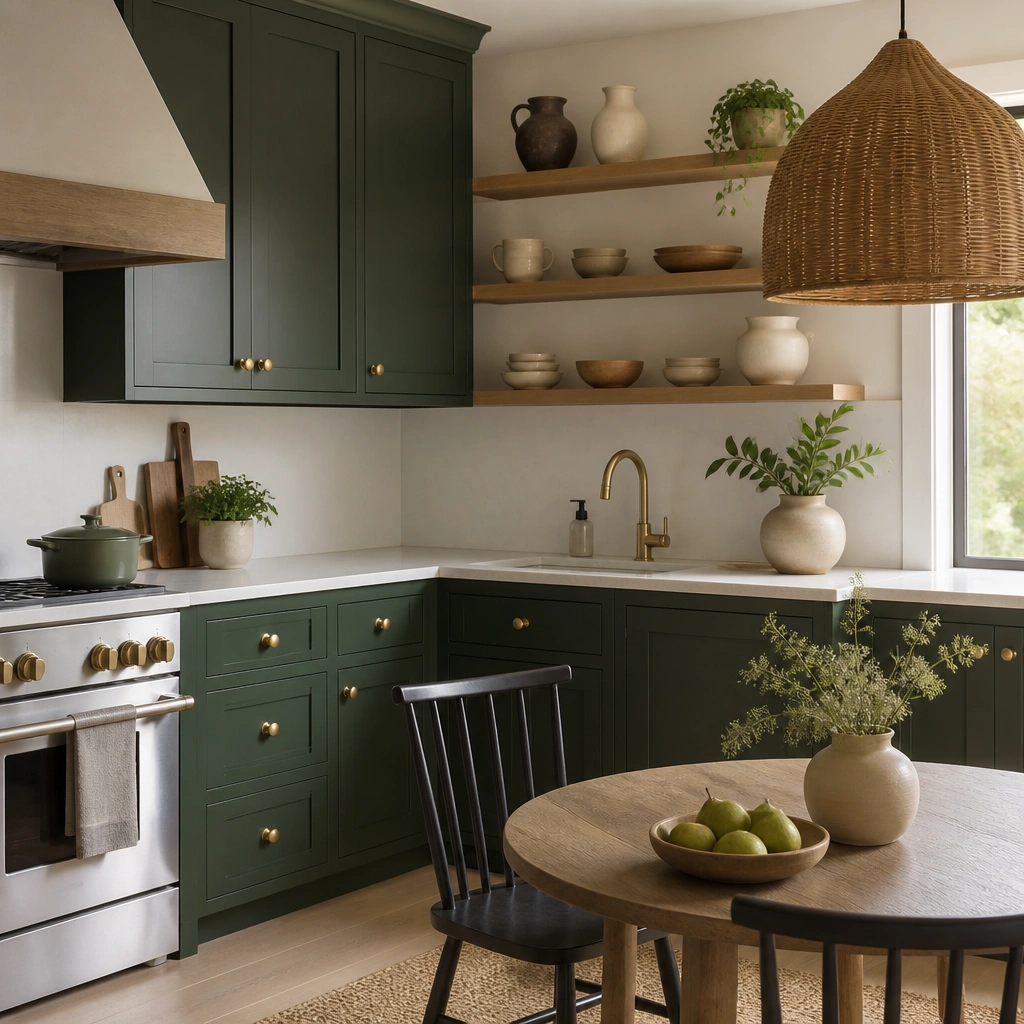
This look is cozy because it mixes smooth painted cabinetry with woven texture. Rattan and light wood soften the visual weight of forest green, especially near seating areas. Pendant lighting with a warm bulb temperature (around 2700K) makes the green appear richer and more welcoming.
Swap to warm 2700K bulbs in the kitchen before changing anything else — it can transform how the green reads.
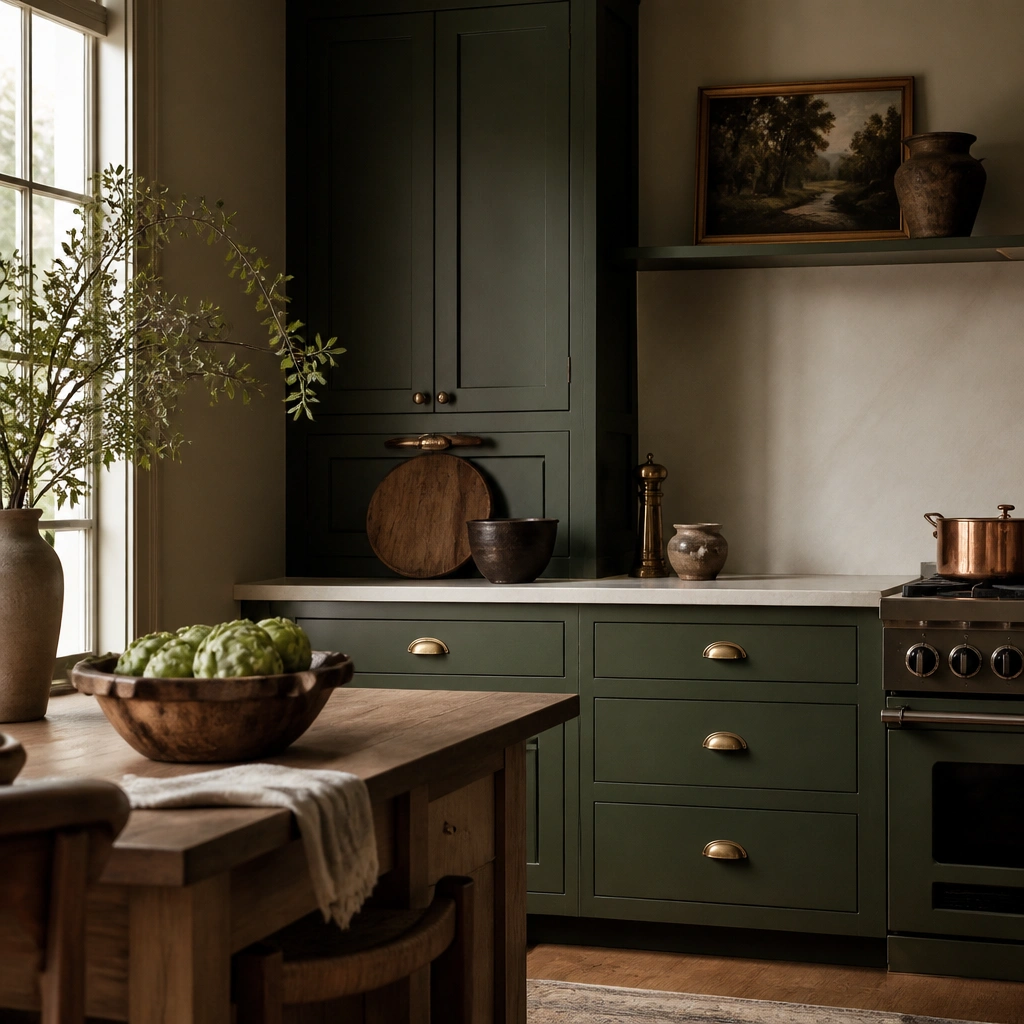
6. Matte Forest Green Cabinets + Antique Brass + Linen-Soft Textiles
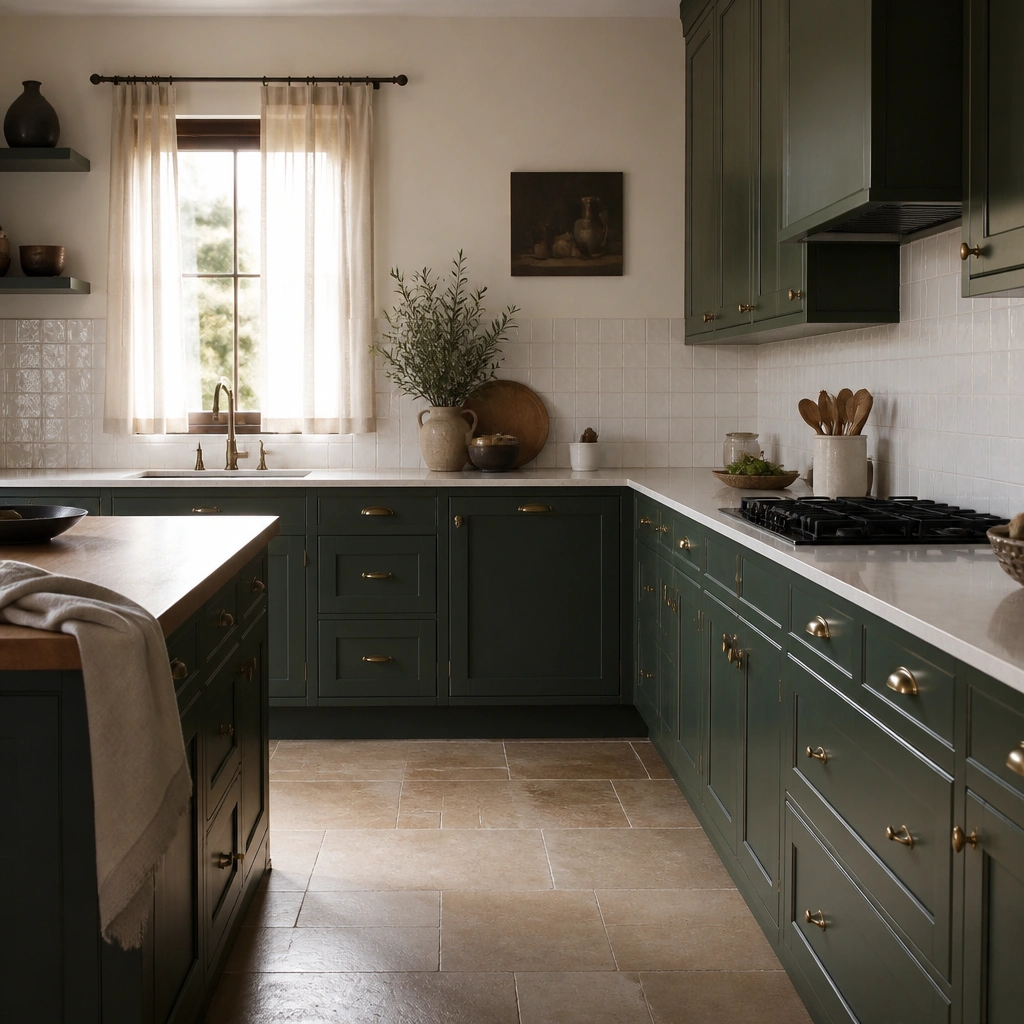
Matte finishes are cozy because they absorb glare, so the green looks velvety instead of glossy. Antique brass adds a gentle golden warmth that pairs with linen textures and subtle backsplash texture. This combination feels lived-in and calm, not shiny or sterile.
If you choose matte paint, plan for gentle cleaning — use a damp microfiber cloth, not abrasive pads.
7. Forest Green Cabinets with Glass-Front Upper Doors (Candlelight Friendly)
Glass-front uppers keep the green from dominating the entire sightline. When you fill the shelves with white or cream dishware, the cabinets glow around the edges, which makes the kitchen feel curated and cozy. Clear or lightly tinted glass helps reflect warm light without making the space look busy.
Use only one dish color family (white, cream, or a single stoneware tone) so the glass compartments look cohesive.
8. Two-Tone Island: Forest Green with Wood-Front Details
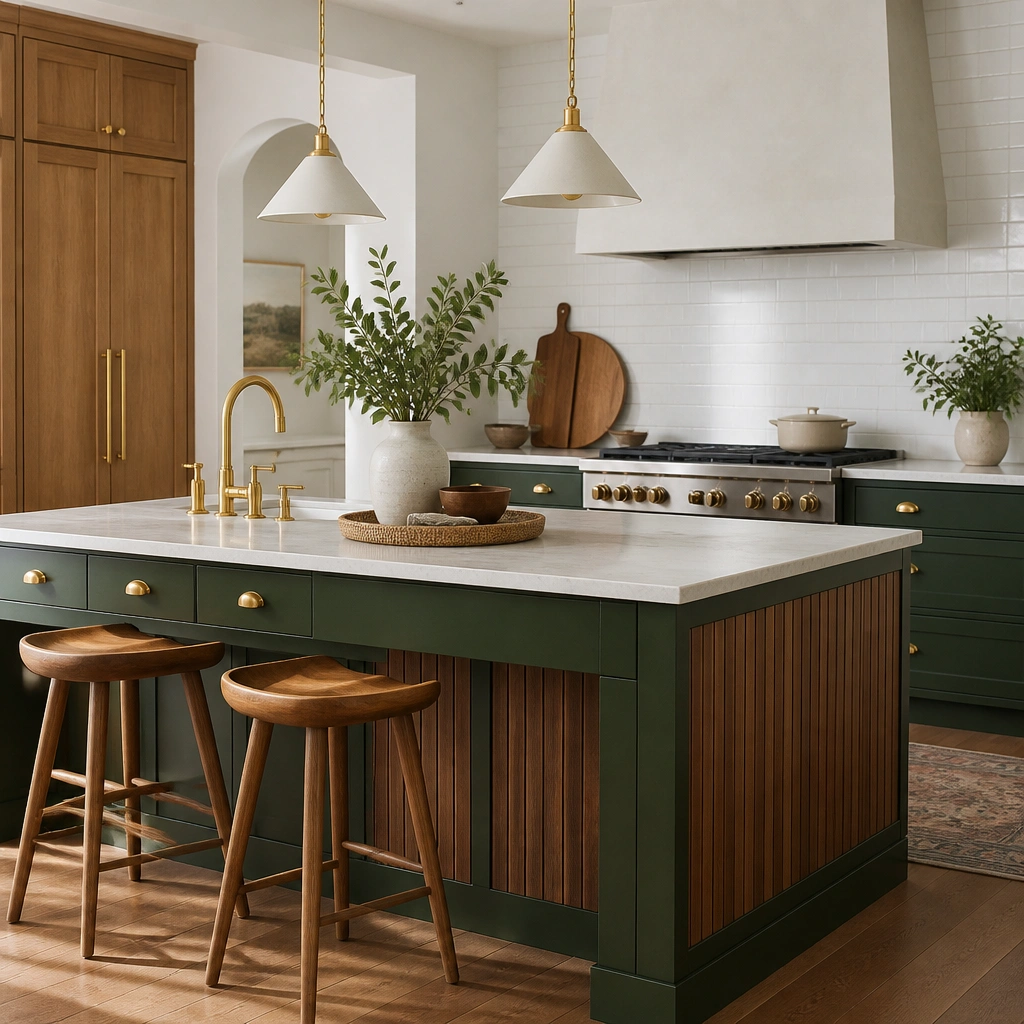
Wood-front details add a natural cabin feel that makes cozy forest green kitchen cabinets look intentional and soft. The island becomes the focal point without requiring full kitchen painting, which is great if you want a big impact with less work. Brass pulls tie the painted green and wood together so the palette doesn’t split.
If you’re doing a DIY update, consider painting only the island first to test the undertone of the green against your countertop.