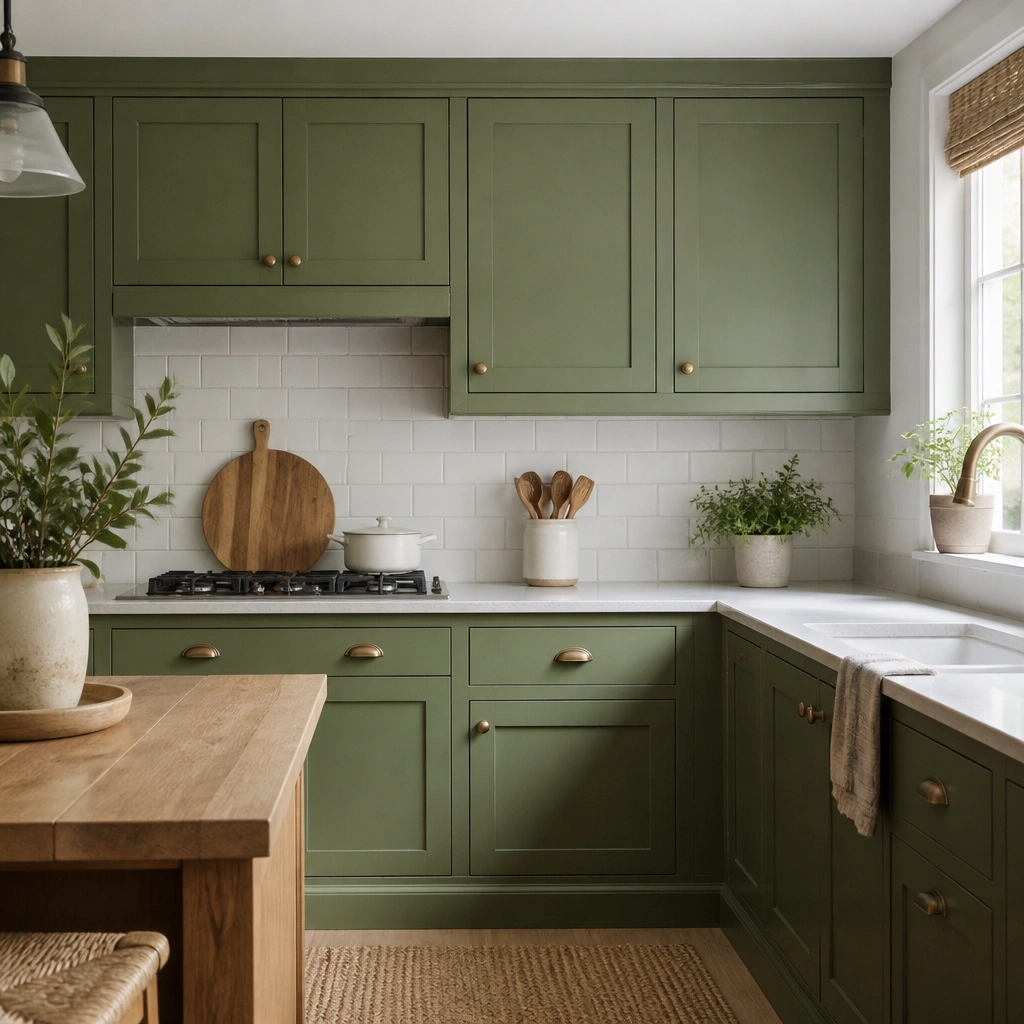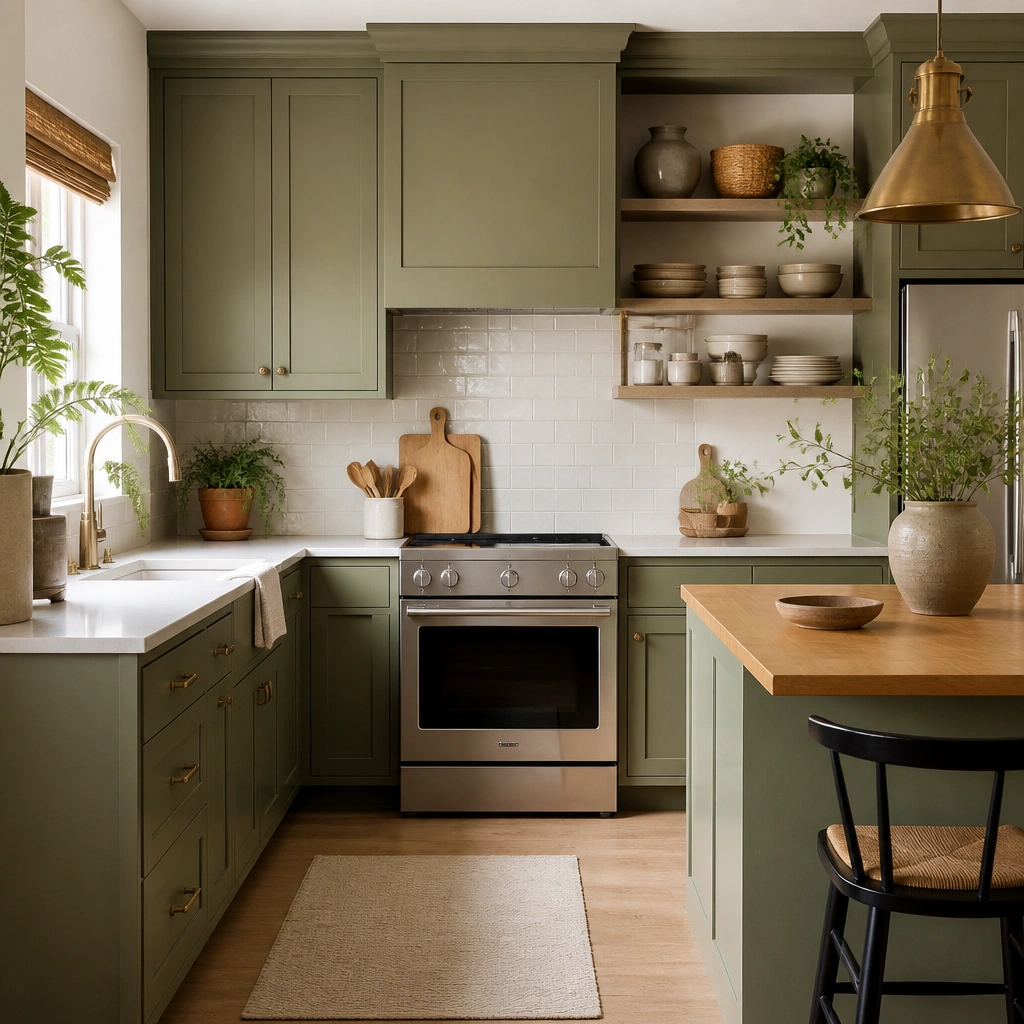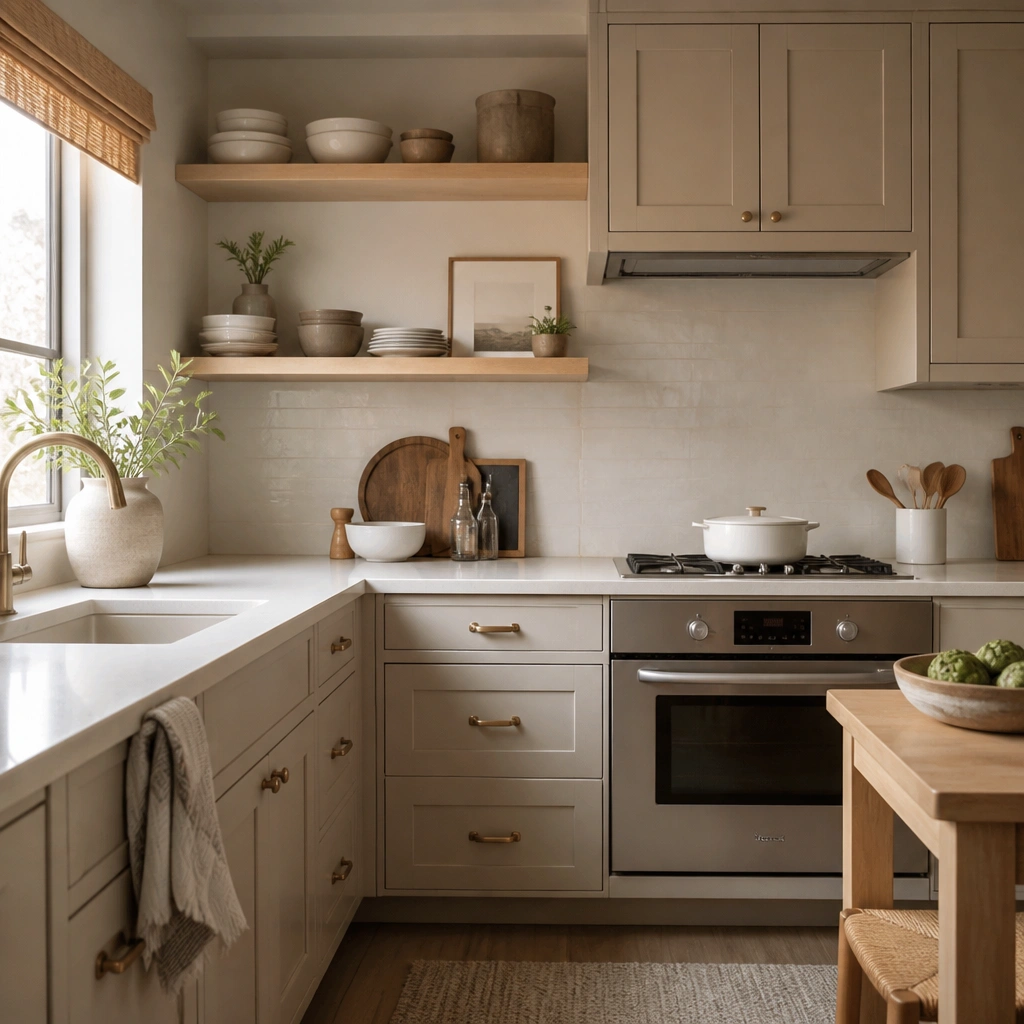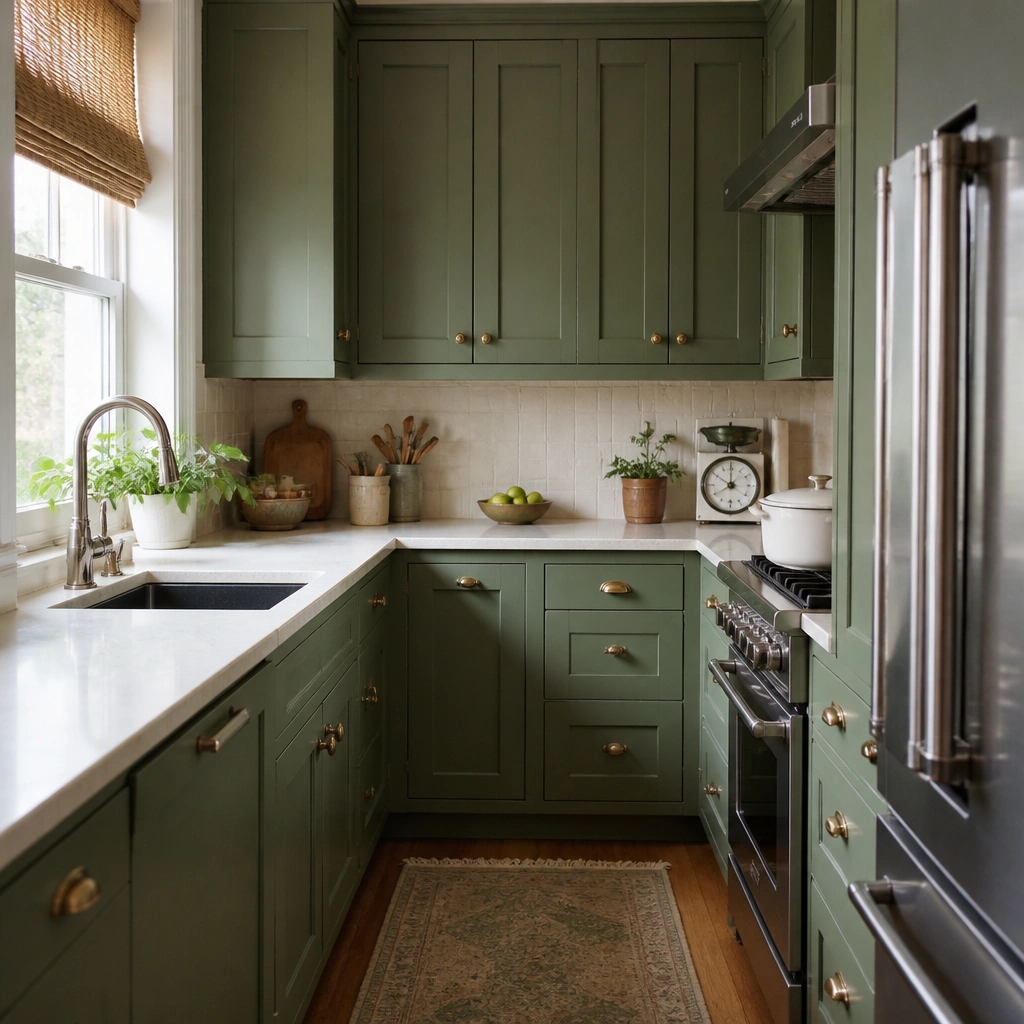
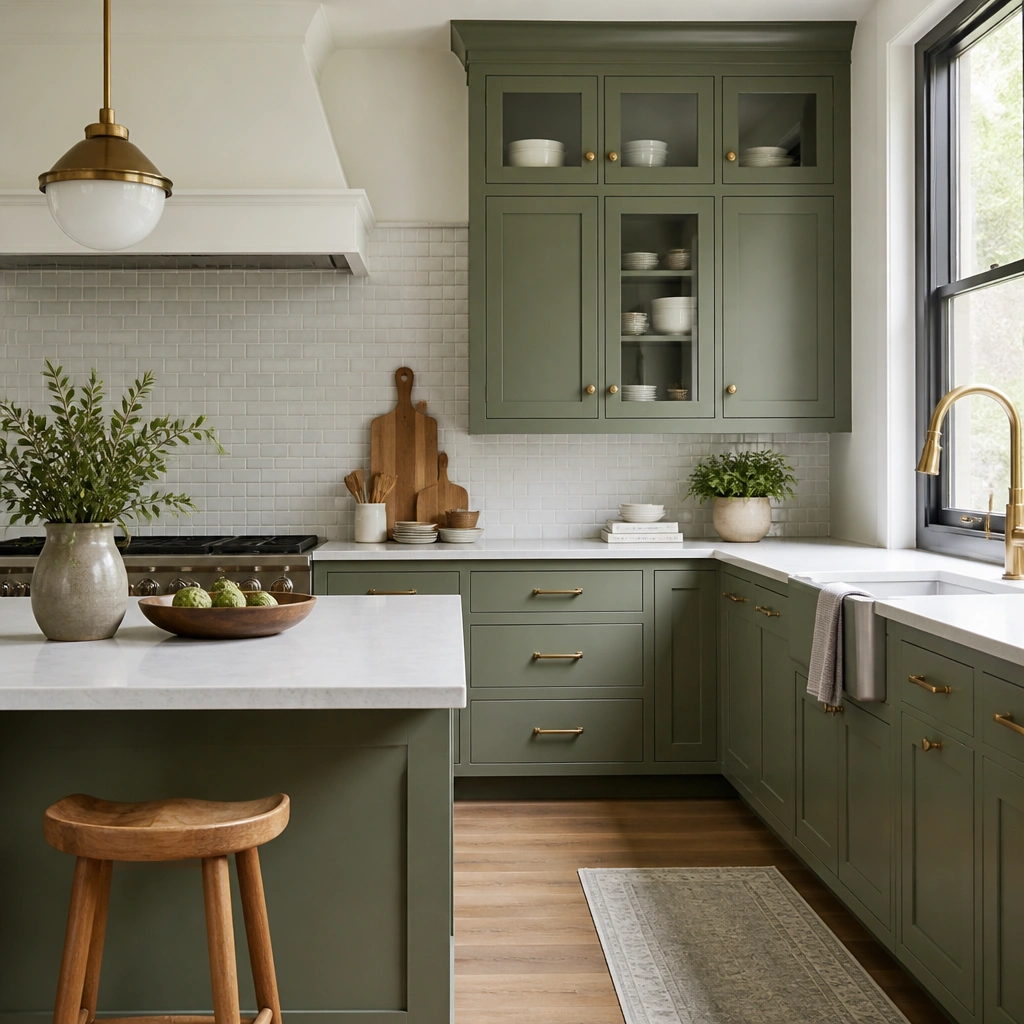
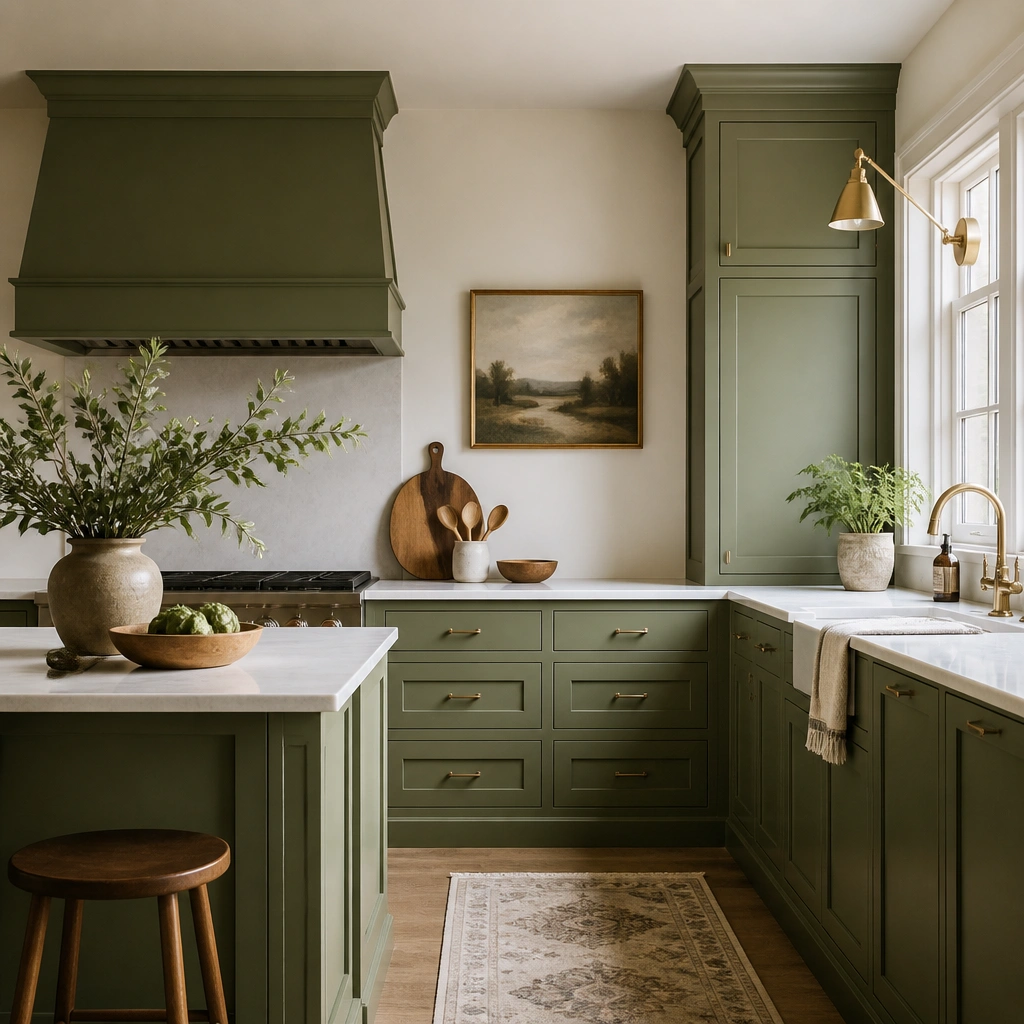
1. Sage Green Cabinets + Warm White Trim
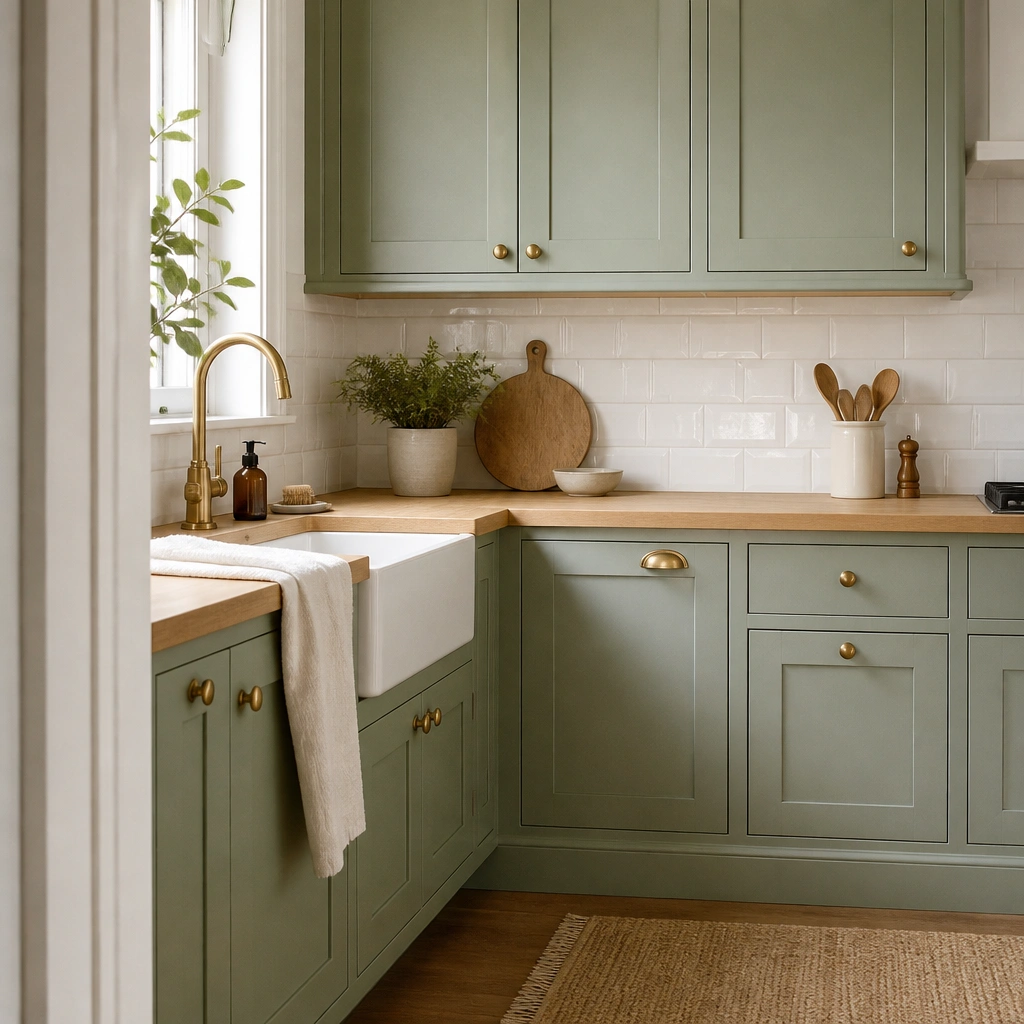
Sage green reads soft and forgiving, which is perfect if you’re worried about choosing the wrong shade. Pair it with warm white trim (not icy white) so the green looks balanced and cozy, not loud. This combination also hides minor brush marks better than deep greens because the color is lighter and more muted.
Test your green on two cabinet panels and compare them in morning and evening light before committing to the whole run.
2. Olive Green Lower Cabinets for a Two-Tone Start
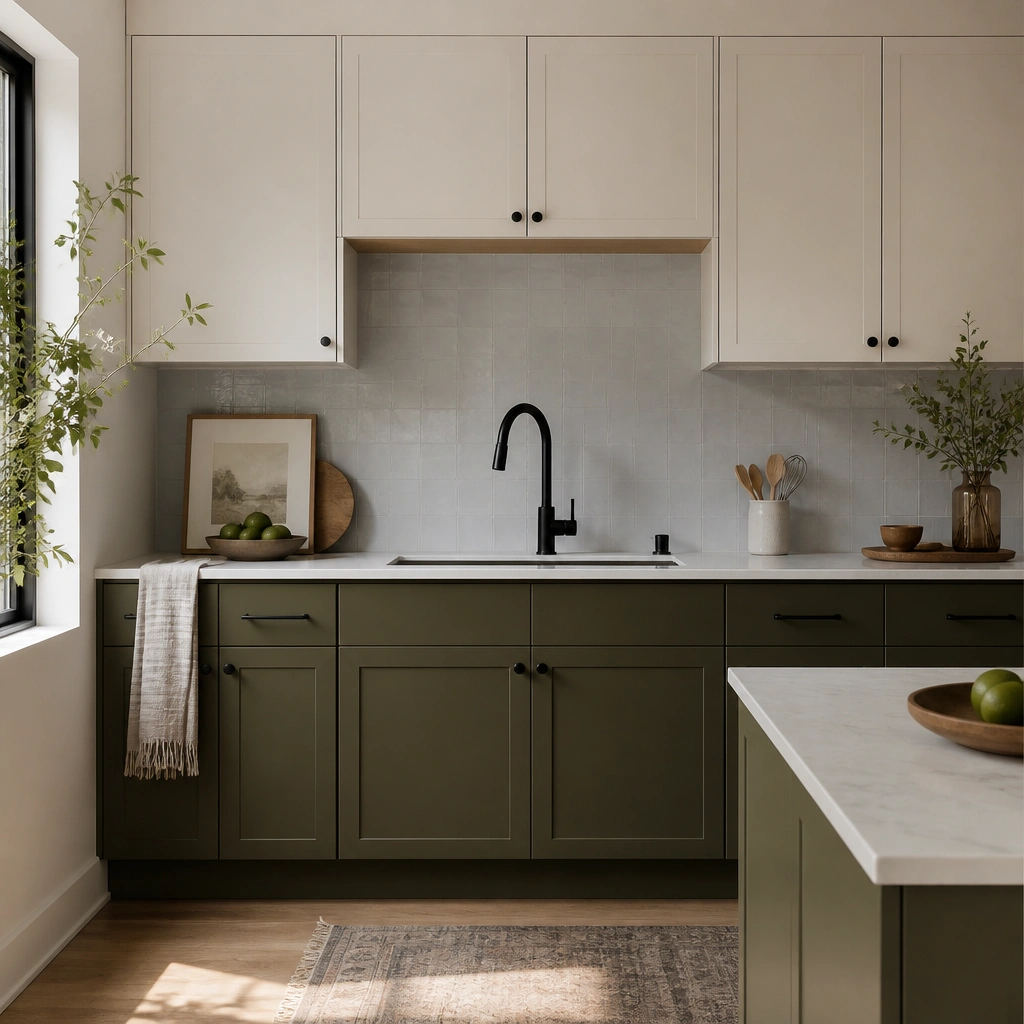
Two-tone kitchens are beginner-friendly because you don’t have to repaint everything at once. Olive green on lowers anchors the room, while neutral uppers keep the space bright. The darker lower color also helps prevent visible scuffs compared to lighter paint tones.
Pro tipMask the line between uppers and lowers with painter’s tape and use a small angled brush to cut in before rolling.
3. Teal-Shift Green with Brass Hardware
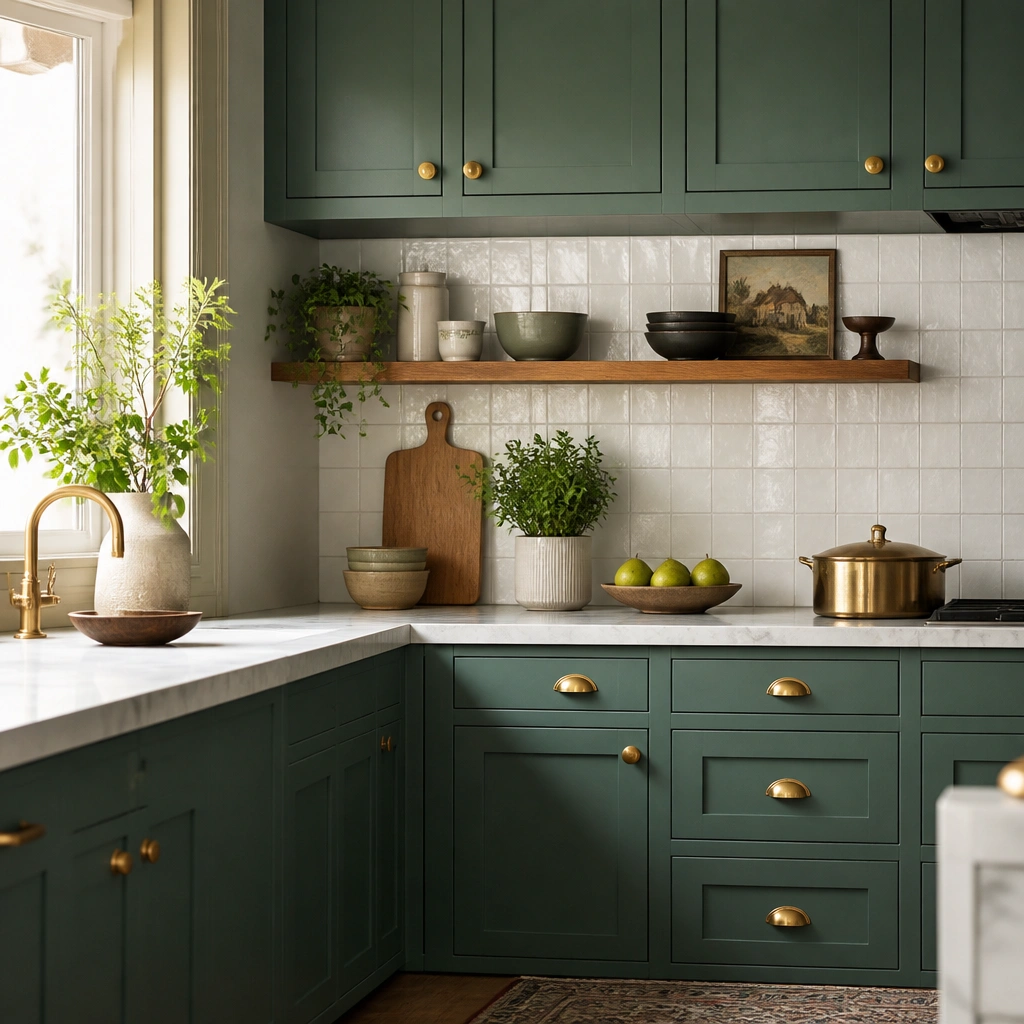
Teal-leaning greens look fresh and modern, especially when you add brass hardware. The warm metal tones make the green feel intentional instead of “random dye” green. This look also works well if your kitchen has warm lighting (2700K) because the undertones stay rich.
Swap in brass hardware first (or at least match it) before you paint, so your green selection can match the metal tone.
4. Chalky Matte Green for a Cottage Feel
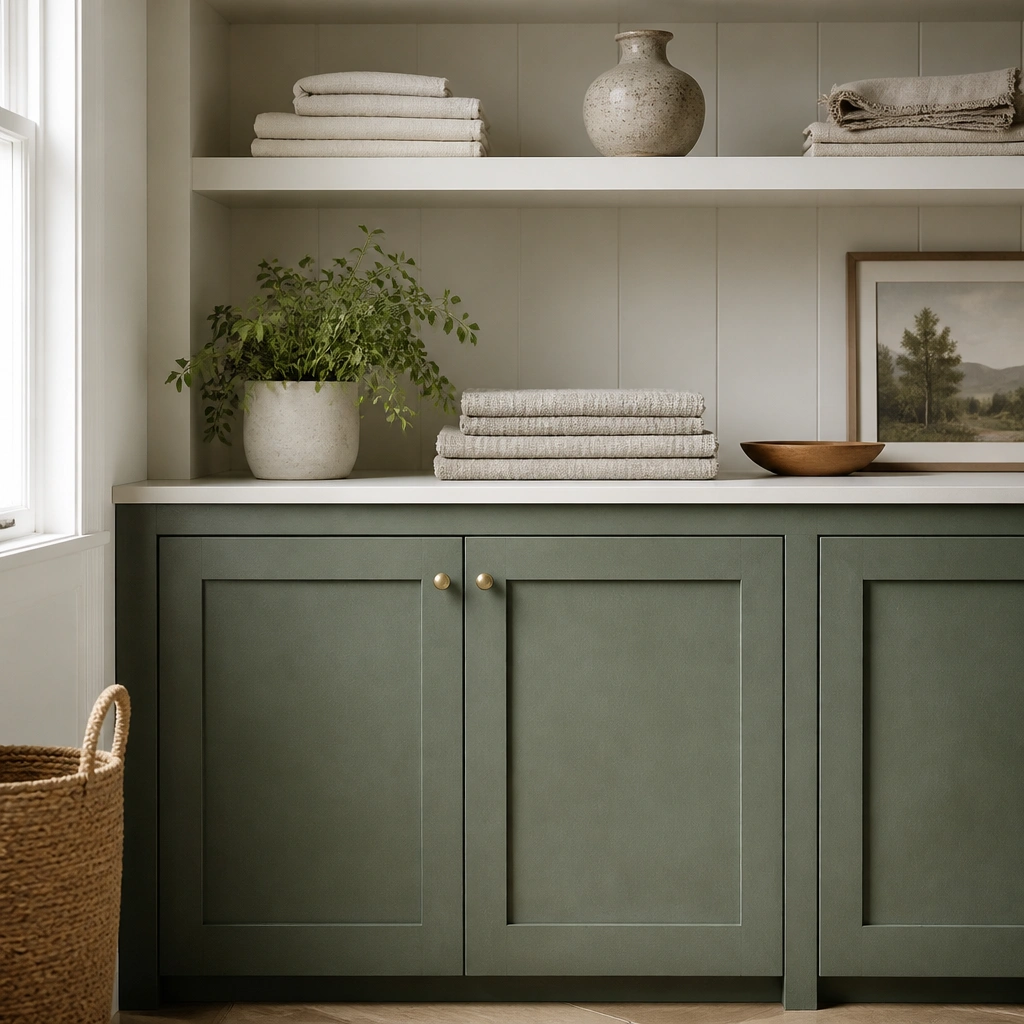
A chalky matte finish gives a cottage or farmhouse vibe and hides tiny surface imperfections. Matte also reduces glare, which is helpful if you have overhead lighting that creates reflections. The tradeoff is that matte finishes can show fingerprints more than satin, so it’s best for kitchens where you wipe down regularly.
Pro tipApply a furniture wax topcoat only if the product label says it’s allowed — otherwise use the recommended clear coat for kitchen durability.
5. Satin Green Cabinets for Everyday Wipe-Down
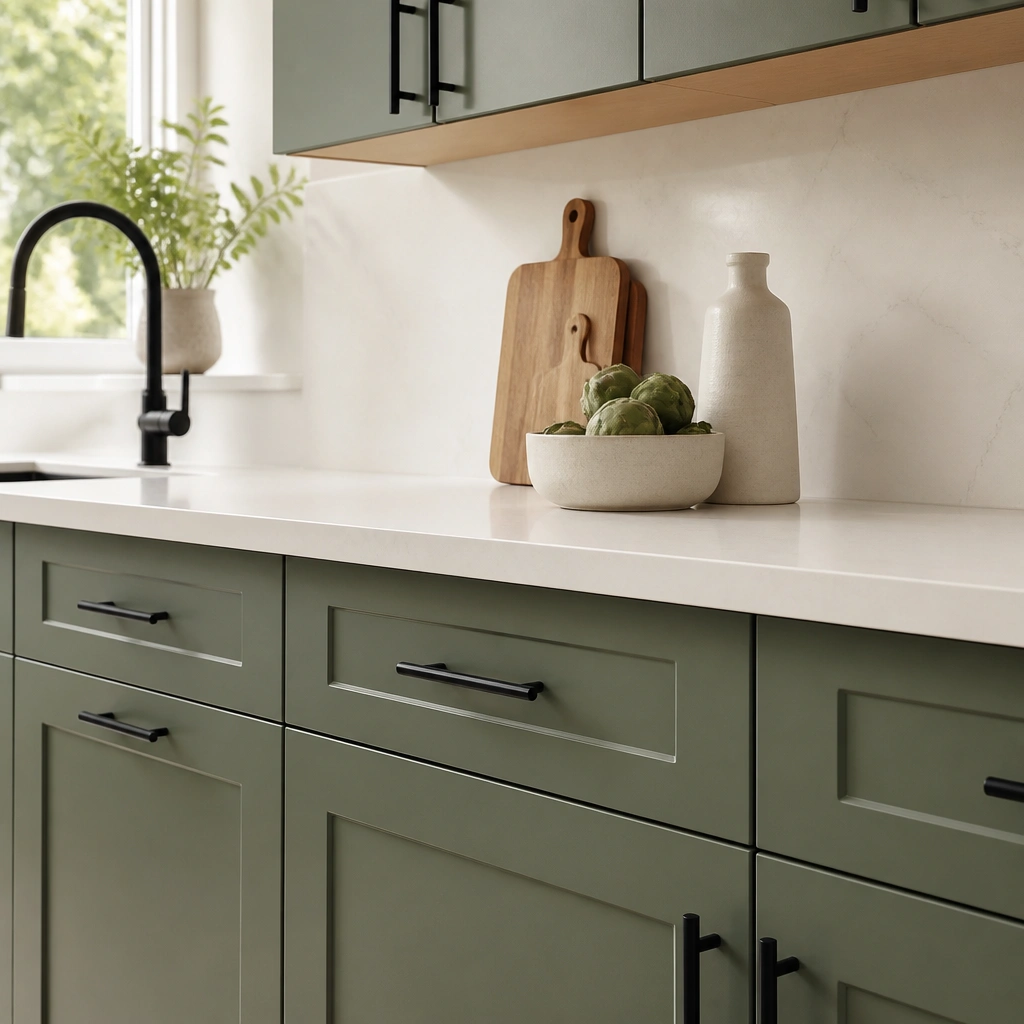
Satin is the sweet spot for beginners because it looks smooth and is easier to clean than matte. It also tends to show fewer streaks than high-gloss when you roll and brush properly. If your kitchen sees daily cooking, satin helps the cabinets stay presentable between deep cleans.
Use a foam roller for the flat areas and a high-quality angled brush for edges to reduce texture lines.
6. One-Drawer Front Accent in Deep Green
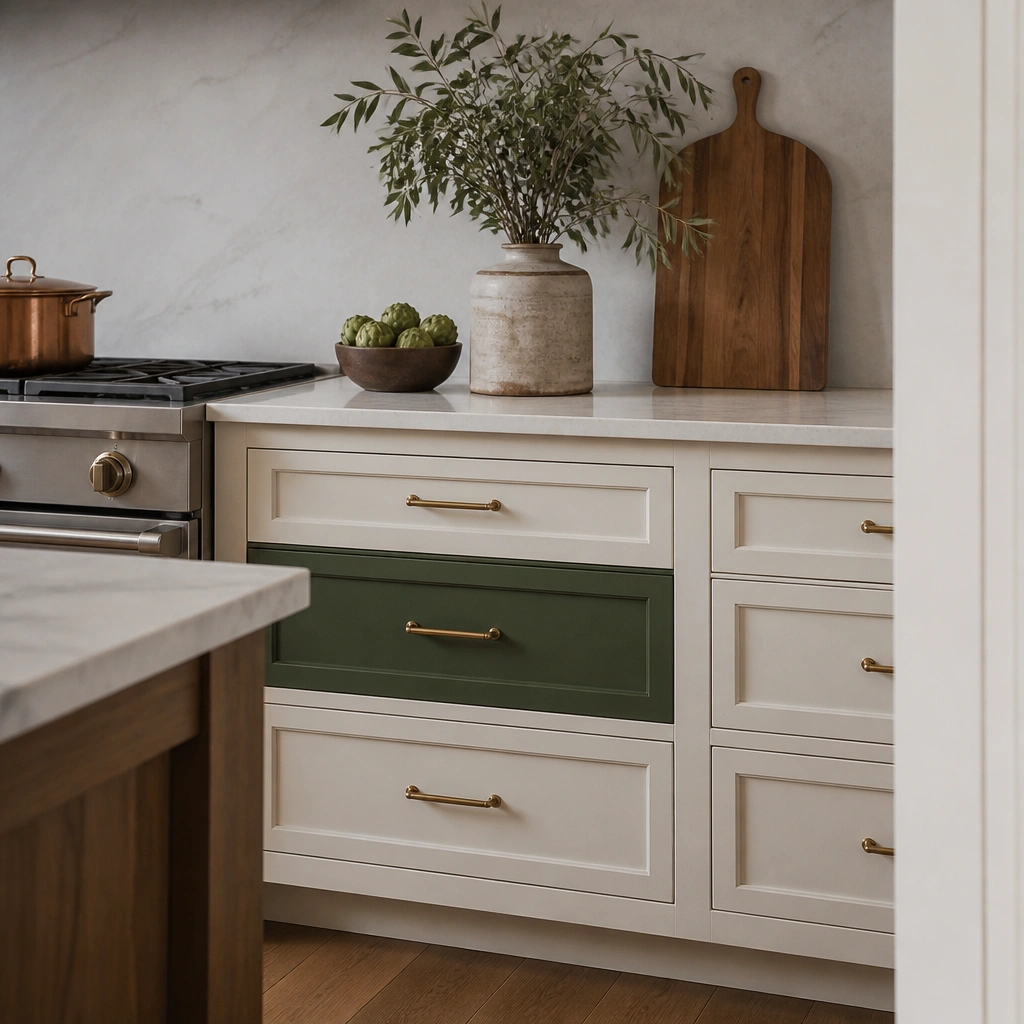
If you’re nervous, paint just one drawer front or a single cabinet section. Deep green makes a strong statement without changing the whole room, and it’s a fast way to learn your prep and finish technique. Once you love the accent, you can scale up confidently.
Pro tipKeep the same primer and clear coat you plan to use later, so the test is truly representative of the final look.
7. Green Cabinets + White and Wood Open Shelving
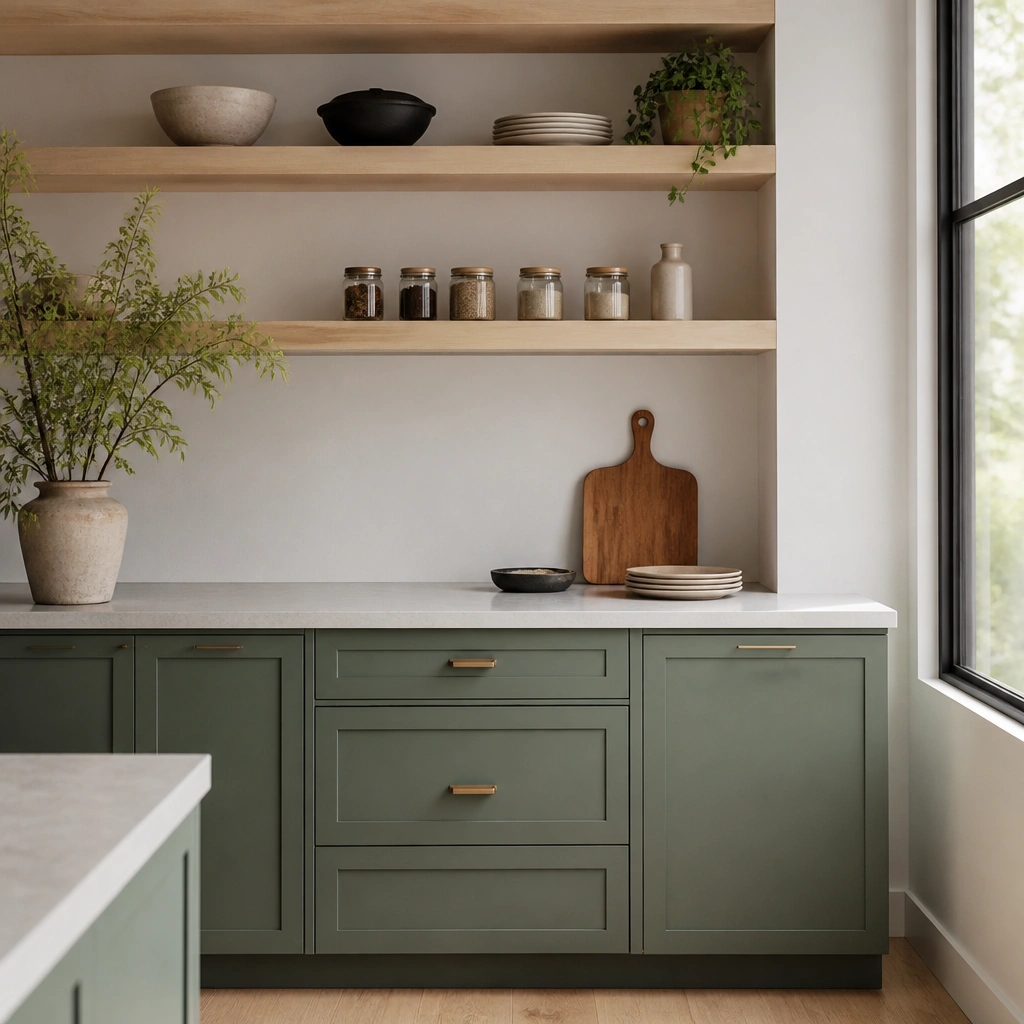
Open shelving lets the green feel lighter and less heavy, especially in smaller kitchens. White shelf backing keeps the space bright, while wood shelves add warmth to balance the cool green. This look also gives you a place to add texture — like ceramic canisters — that makes the color feel designed, not painted over.
Before painting, label each shelf board and remove hardware so you can paint behind and around fixtures cleanly.
8. Two-Coat Green Color-Block on Cabinet Frames
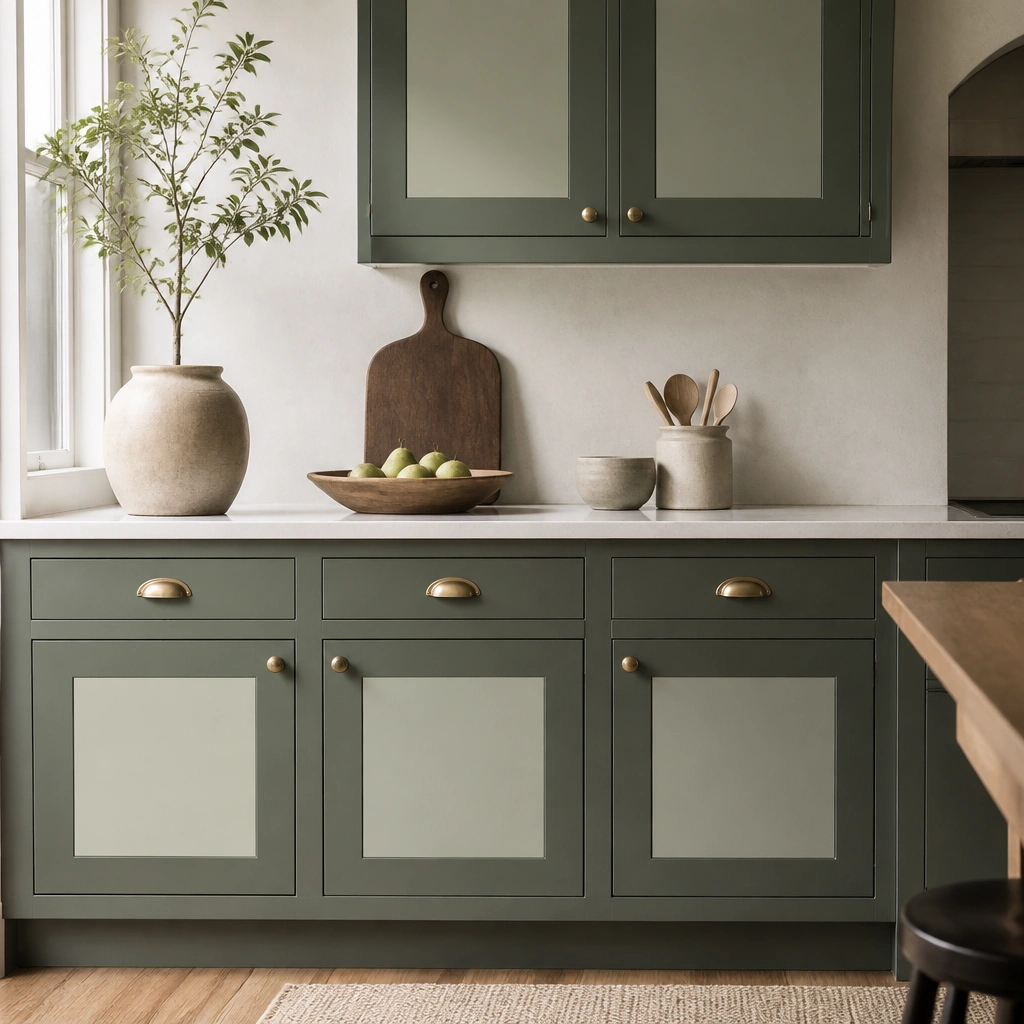
Color-blocking is beginner-friendly if you focus on frames and panel edges, not complicated gradients. Using two shades of green (one lighter, one deeper) keeps the look cohesive even if your brush skills aren’t perfect yet. Crisp tape lines make the whole project look professional.
Pro tipPress tape down firmly along edges, then remove it at a slight angle while the paint is still tacky for cleaner borders.
9. Green Cabinets with Black Hardware and Matte Countertops
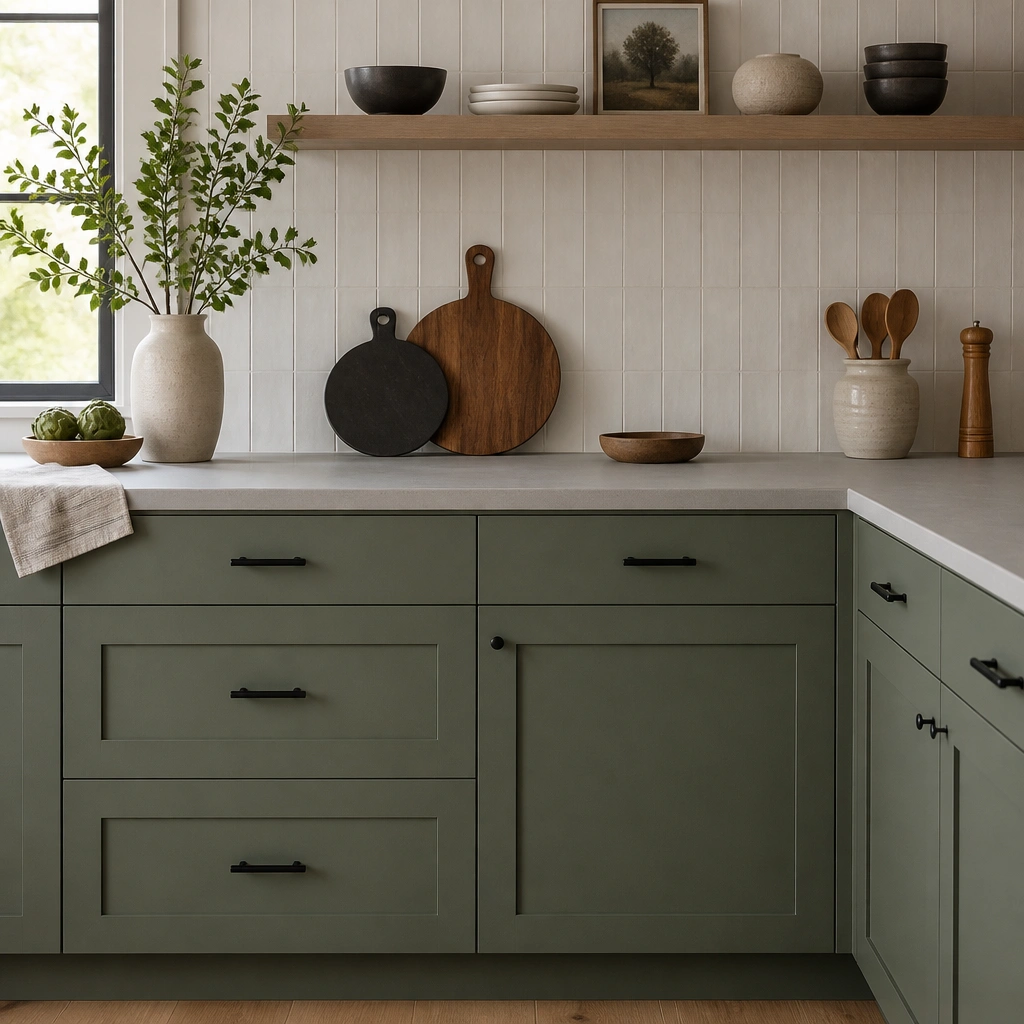
Black hardware pulls green into a modern lane, especially when your countertops are matte or low-sheen. The contrast helps the cabinet color read clearly without needing extra bold decor. This combo also works if you have a black faucet or black lighting already.
Choose one black finish (matte or satin) and match it across faucet, pulls, and lighting so the palette feels intentional.
10. Vintage-Inspired Green with Distressed Edges
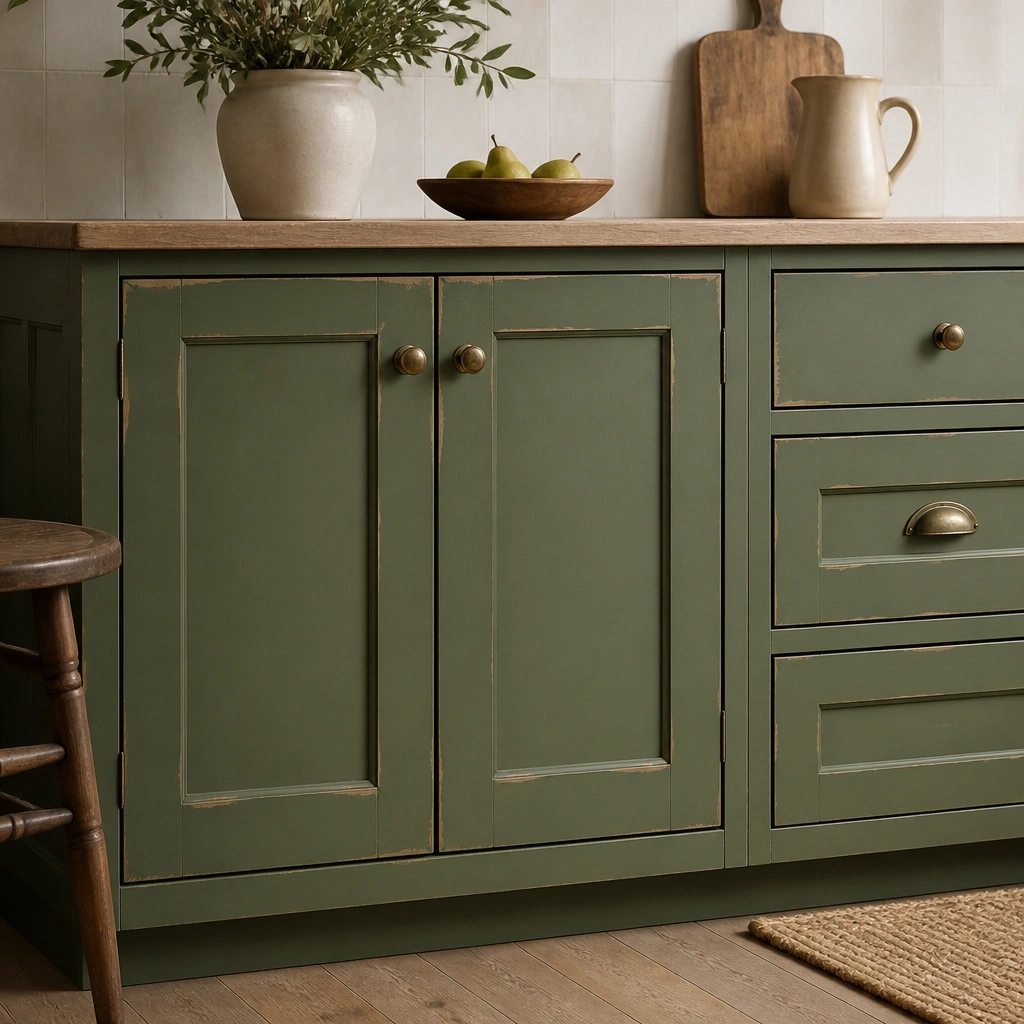
Distressing is a controlled way to add character to fresh paint. Focus on high-touch edges and corners so it looks like lived-in wood, not random scraping. This style looks best with warm undertones (olive or sage) because they blend nicely with the “aged” effect.
Pro tipDistress after the base coat cures fully, then seal with the clear coat your paint recommends to keep the edges from rubbing off.