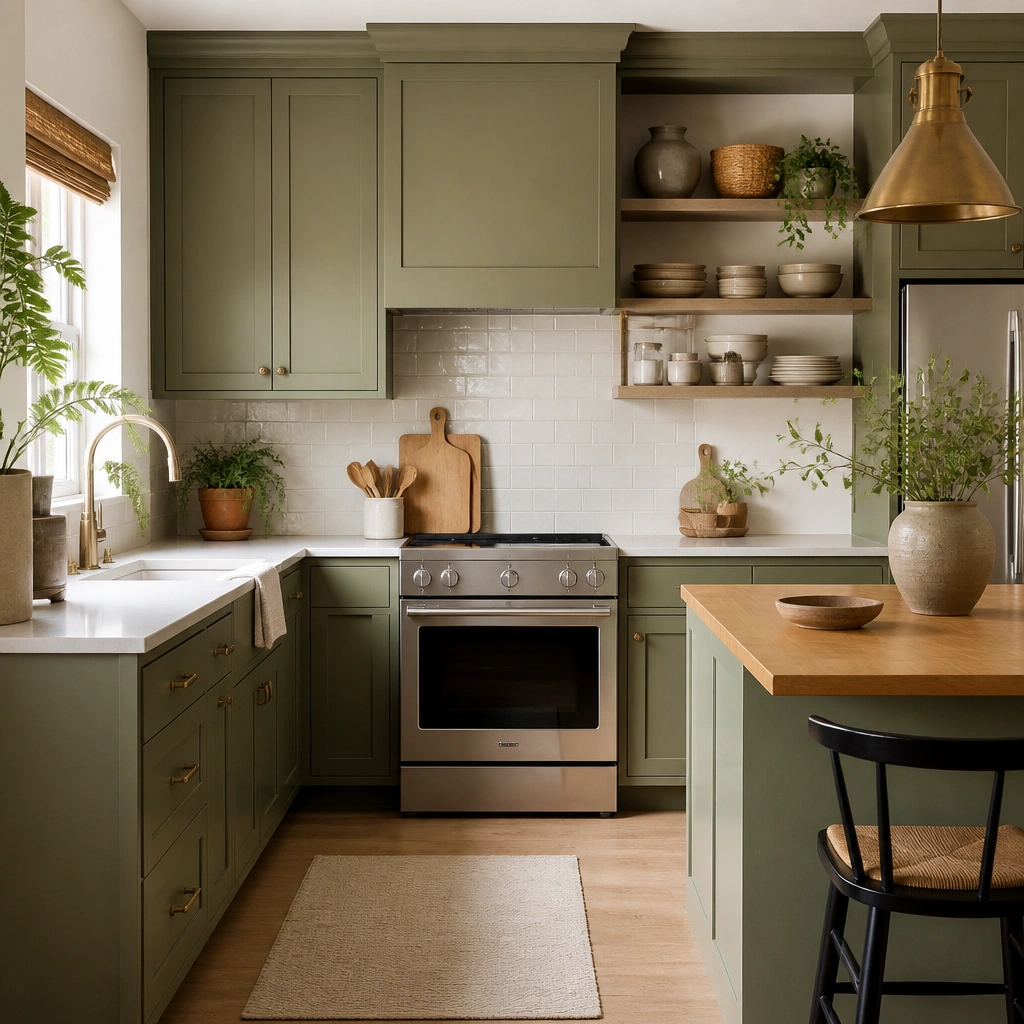
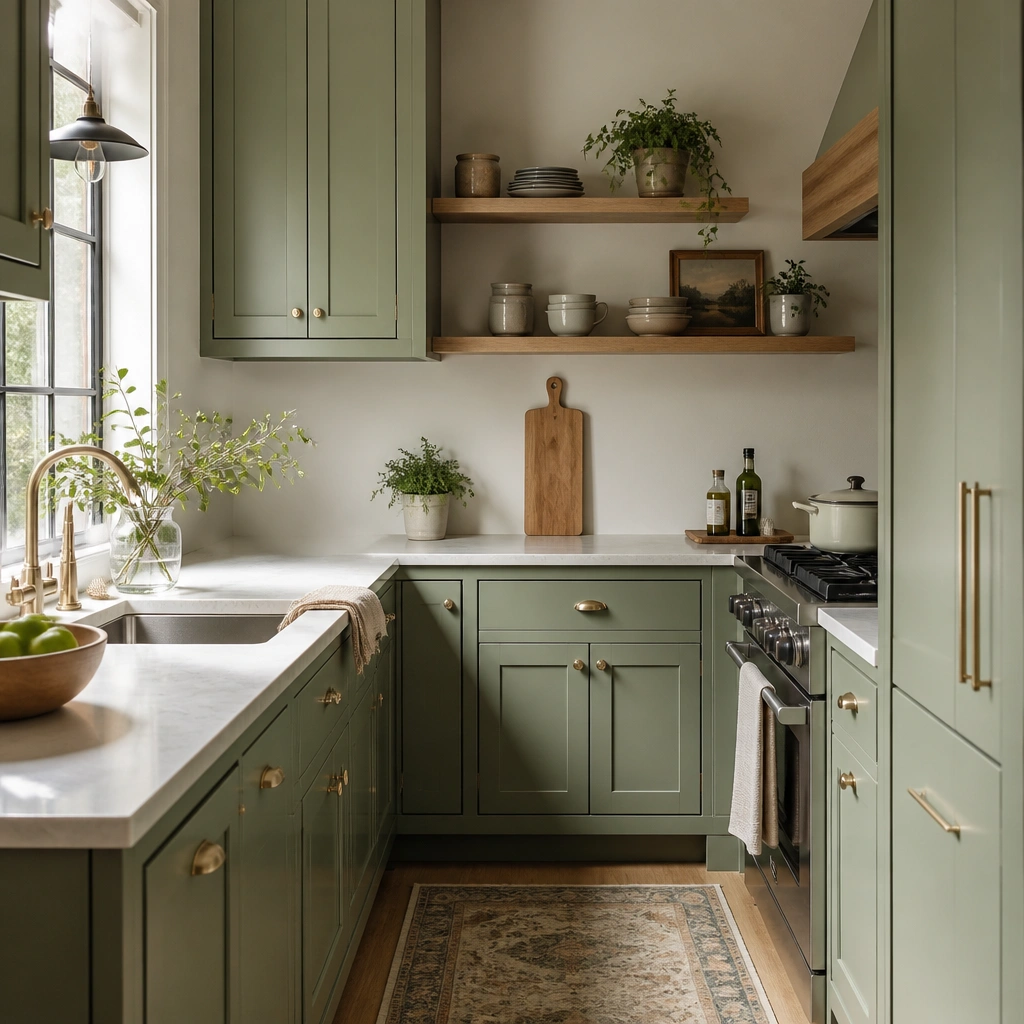
1. Sage Green Shaker in a 24-Inch Base + Tall Pantry Tower
This setup works because the green stays mostly in the lower line and the pantry tower pulls storage up where it doesn’t crowd the walkway. Sage reads airy in small kitchens, especially with light oak or quartz countertops. Shaker doors add structure, which keeps the green from looking flat. Satin or matte paint helps minimize the look of scuffs and fingerprints on daily-use cabinet fronts.
Pro tipMeasure your pantry wall and aim for a tower that’s at least 84 inches tall so you gain storage without adding width. Pair with a light backsplash to keep the room feeling open.
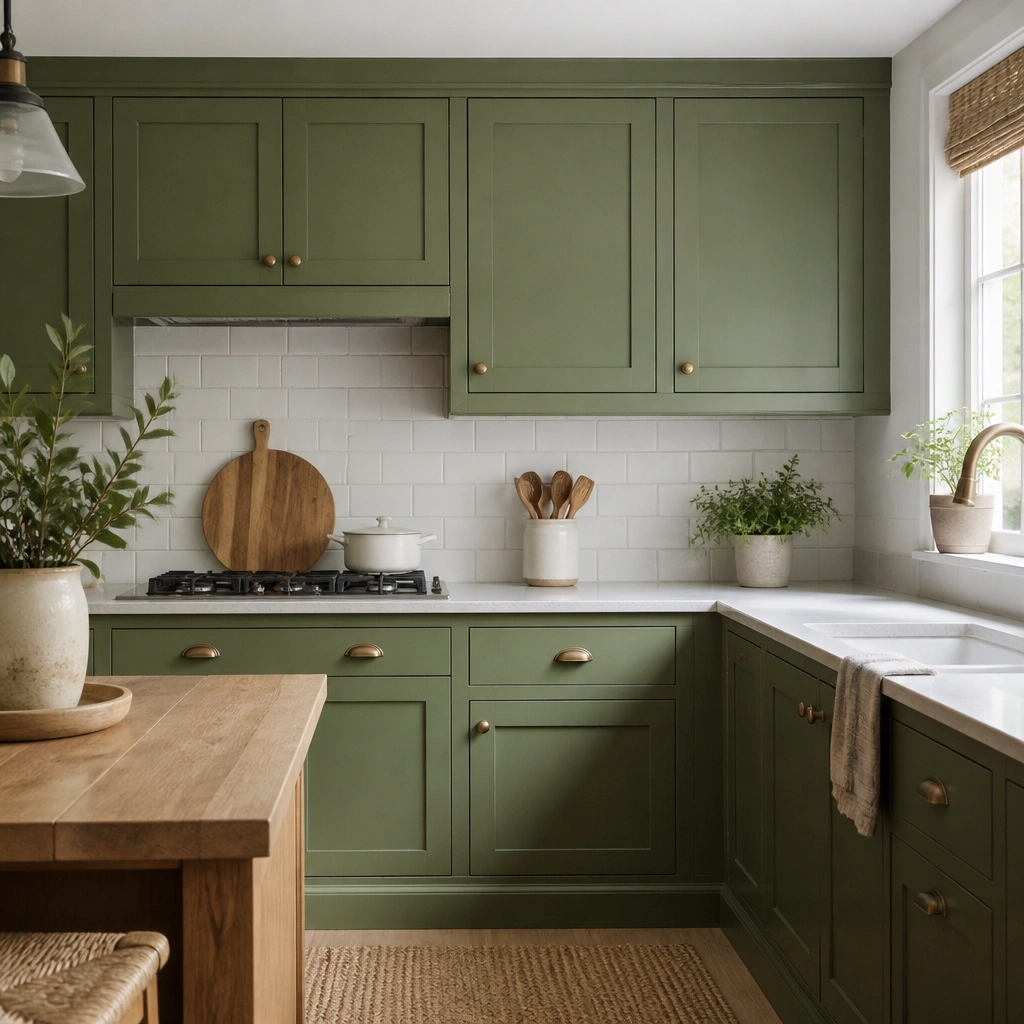
2. Deep Hunter Green Cabinets with White Quartz Counter + Slim Backsplash Line
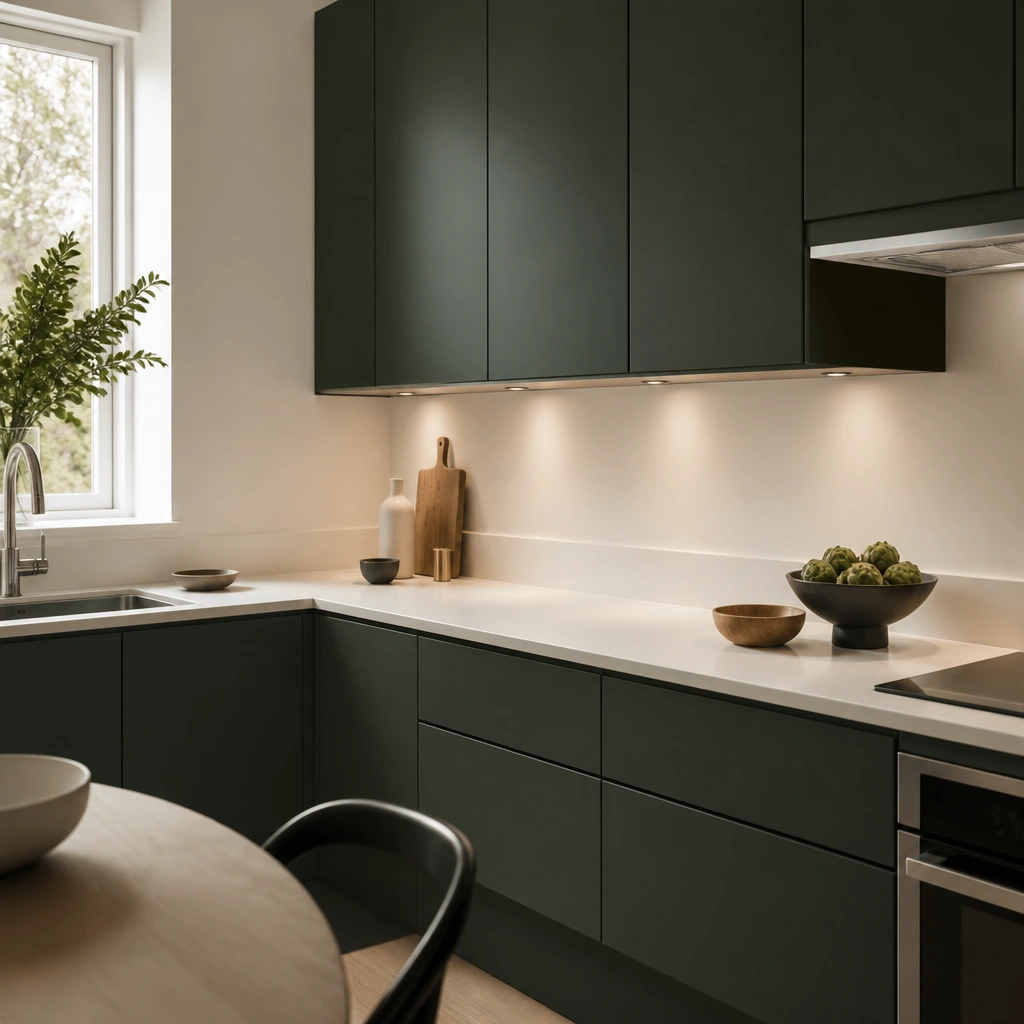
Deep green can feel dramatic, but in a compact kitchen it shines when you keep the lines crisp and the countertop bright. Flat-panel doors with minimal seams make the cabinets look custom-built, which helps the space feel intentional instead of cramped. A slim, high-contrast backsplash line (instead of a full busy tile field) prevents visual clutter and keeps attention on the cabinet color.
If you choose deep green, add under-cabinet lighting. LED strips placed 2-3 inches from the front edge reduce shadowing and make the color look richer, not darker.
3. Olive Green Upper Cabinets Only (Lower Cabinets Stay Light)
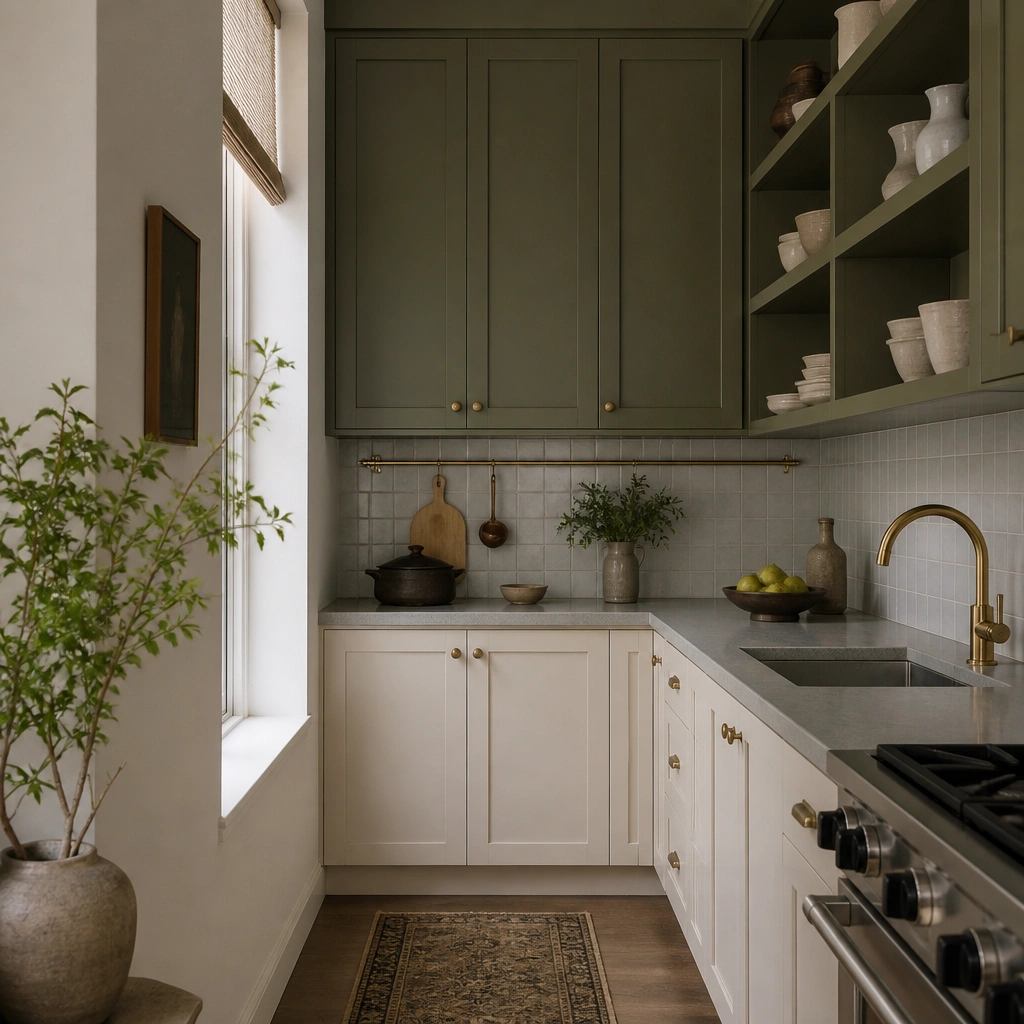
Painting only the uppers is one of the easiest ways to get the look of compact small space green kitchen cabinets without making the room feel smaller. Olive is warm and forgiving, and it visually frames your counters. Keeping lowers light also makes food prep areas feel clean and bright. Open shelves in olive add character while still keeping the sightlines lighter than full uppers everywhere.
Use the same green on uppers and shelves, but keep the lower base color a creamy white. This creates a “height lift” effect that’s great for small kitchens.
4. Two-Tone Green: Sage Lower + Emerald Upper for a Corner Layout
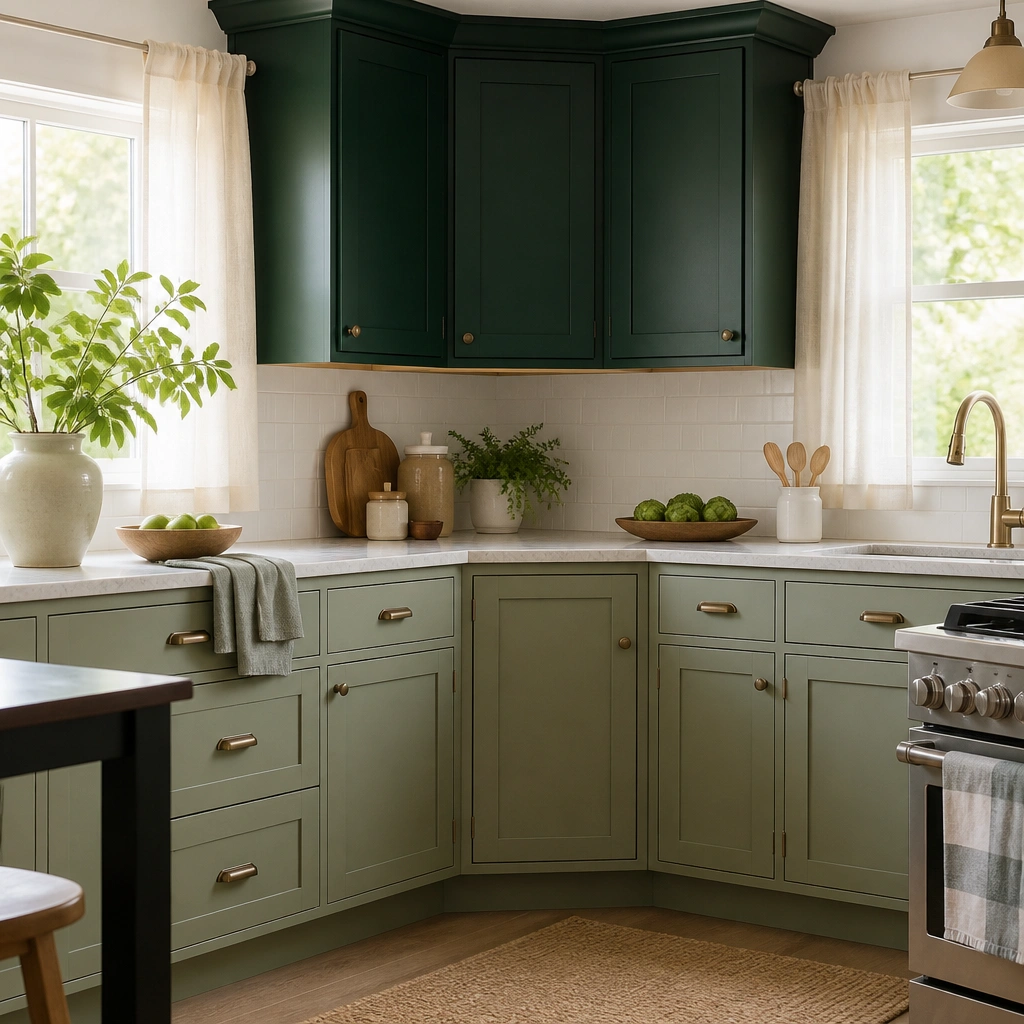
Two-tone green is a trick for corner kitchens because it separates zones: the sage grounds the countertop area while the emerald pulls the eye upward. The diagonal corner cabinet door helps you keep storage functional without wasting space. This combo looks cohesive when you match undertones — both greens should lean slightly warm or slightly cool, not one warm and one neon-cool.
Pro tipChoose greens from the same paint brand family (or swatch the exact undertone) so the colors don’t fight. Start with a swatch on your actual wall lighting before committing.
5. Matte Moss Green Cabinets with Glass-Front Accent Panels
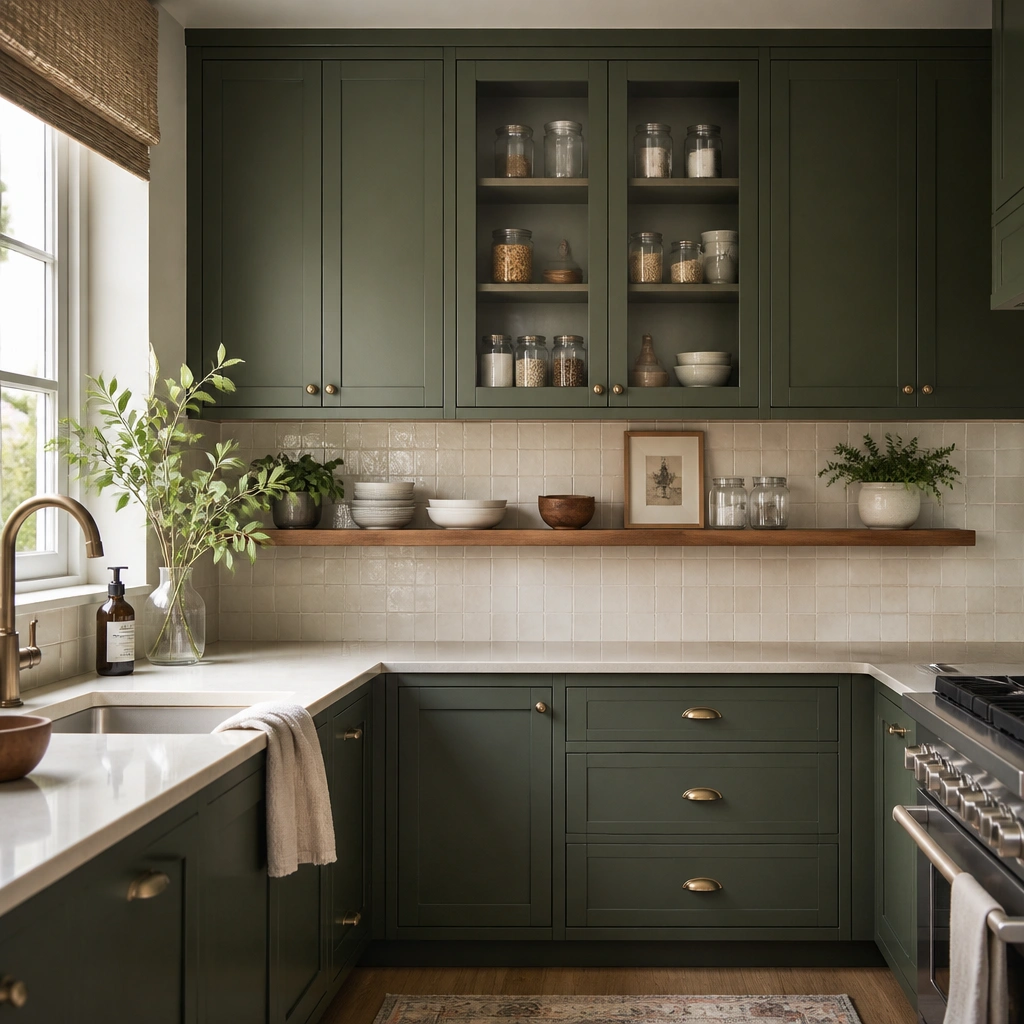
Glass-front panels break up solid blocks of green, which makes a small kitchen feel less boxed-in. Matte moss green is also great at hiding everyday fingerprints compared to high-gloss. For a real-life look, keep items inside glass-front cabinets visually tidy — matching canisters and a limited color palette makes the display feel curated, not cluttered.
Pro tipUse glass-front doors only on the “most visible” cabinet section (often the left or center span). Too many glass panels can make the space feel busy.
6. Green Cabinets with Open Counter Shelving Instead of One Upper Run
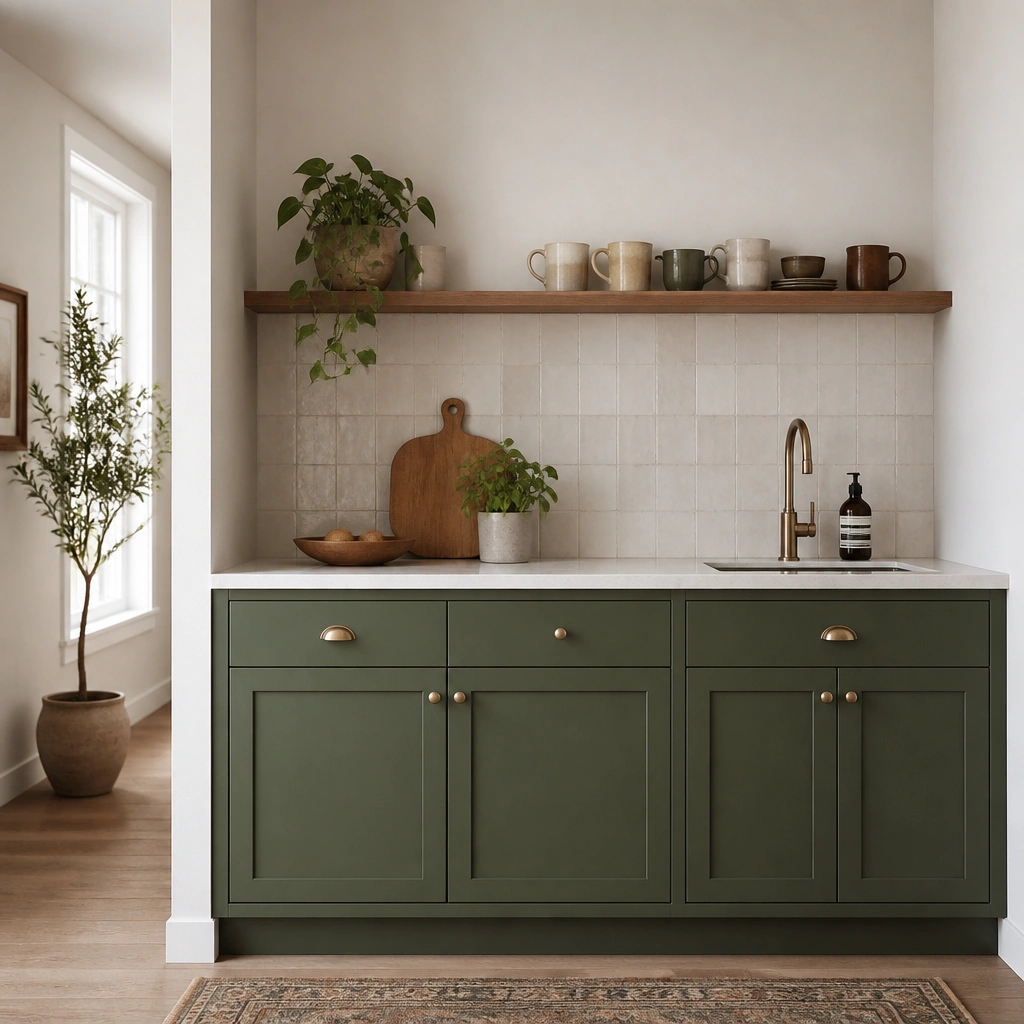
When you’re working with a compact small space, full upper cabinets can visually compress the room. Swapping part of the upper run for open shelving keeps the vertical structure but reduces the heavy block effect. The key is spacing: keep shelves at consistent height and style your display with a few repeating items (like same-shape mugs). That way, the openness still looks intentional.
Install open shelves 15-18 inches above the counter for a usable reach. Keep the shelf depth around 8-10 inches so items don’t feel crowded.
7. Color-Blocked Green: Tall Fridge Cabinet in Green, Surrounding Wall in White
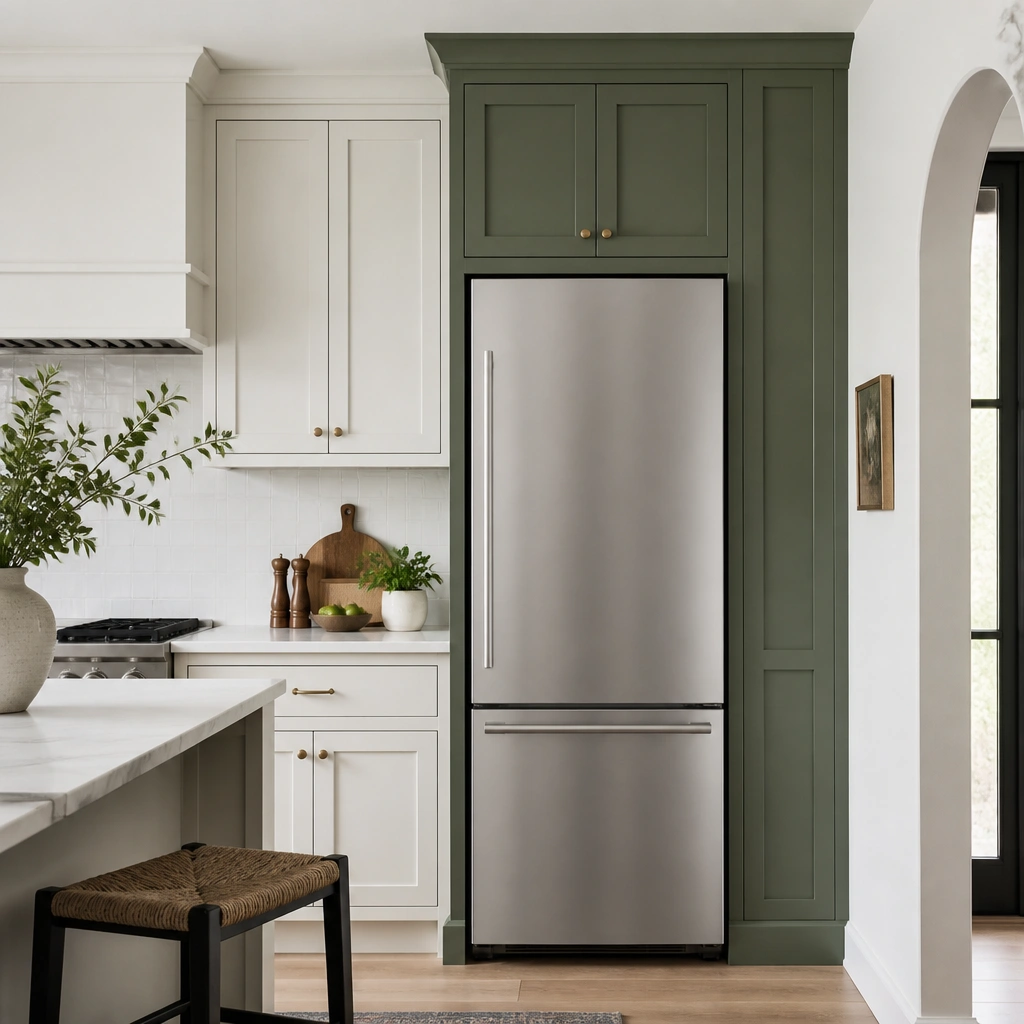
This is a smart way to use green in a small kitchen without coating everything. By limiting green to a tall “anchor” zone (like the fridge surround), you get visual interest and more defined storage. The white surrounding wall prevents the green from swallowing the room. The result feels like built-in cabinetry rather than a makeover that left leftover wall space.
If your kitchen feels tight, start with the tallest element first (fridge surround or pantry). Choose one green focal zone and keep the rest light.
8. Retro-Inspired Green Cabinets with Brass Hardware on Narrow Galley Counters
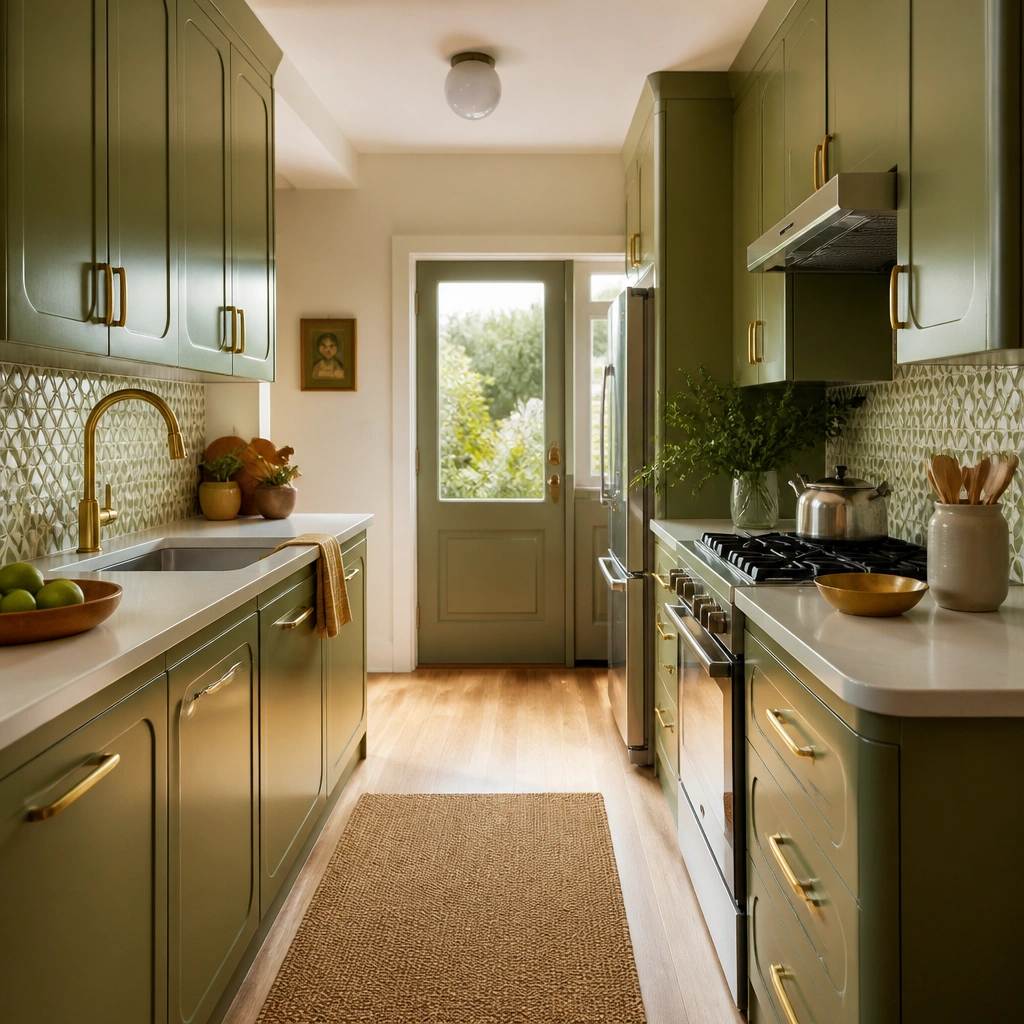
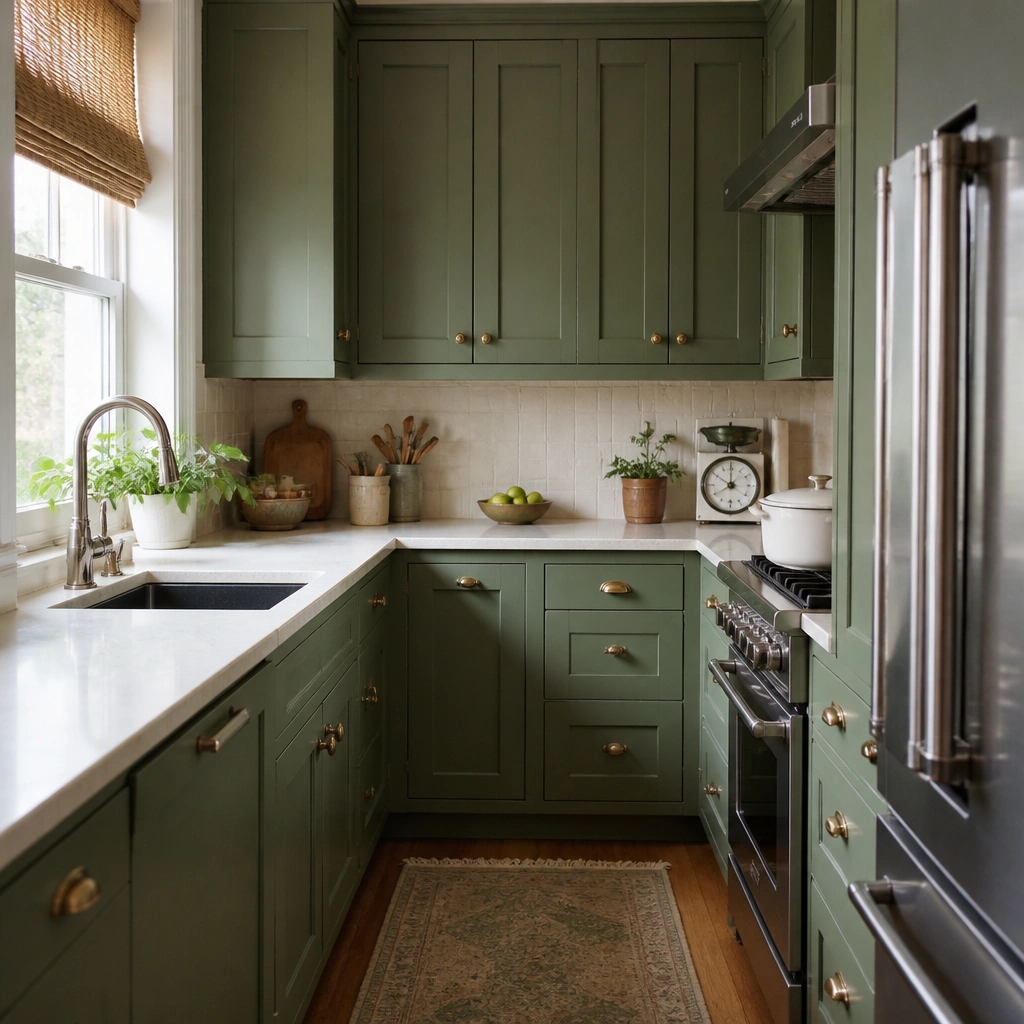
Hardware finishes matter more in small spaces than people think. Warm brass against green adds a glow that makes the cabinets feel less heavy, especially under warm lighting. A satin finish is slightly reflective, which can bounce light and visually expand tight kitchens. Just keep the sheen consistent across doors to avoid patchy reflections.
Stick to one hardware style and one metal tone across all cabinet fronts. In a small space, mixed metals read “busy” fast.
9. Compact Green Base Cabinets on One Wall with a Floating Shelf Above
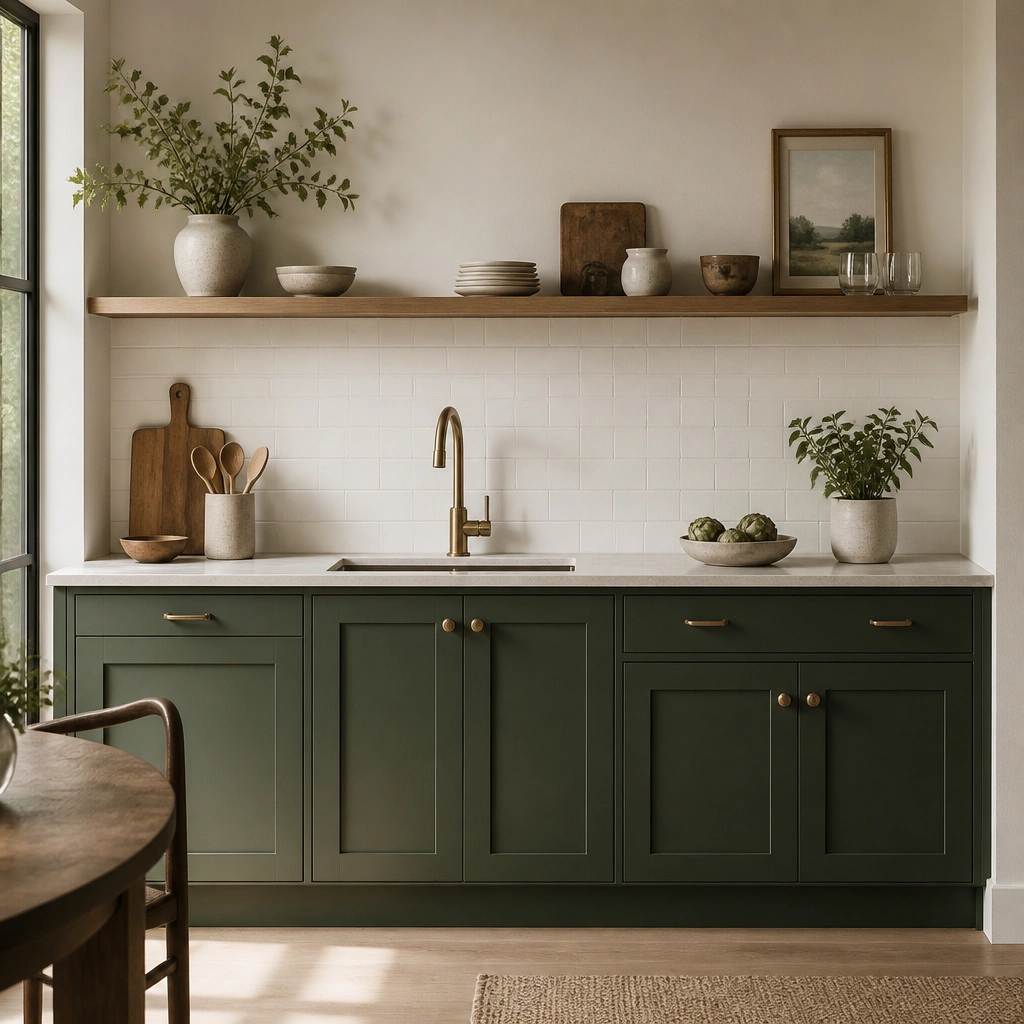
If your kitchen is truly tight, a one-wall layout with base cabinets only is often the most comfortable. A floating shelf adds storage for everyday items without blocking light like uppers can. Green works here because it visually connects the cabinetry line and makes the wall feel cohesive. Keep the shelf items minimal — think 3-5 items max in small kitchens.
Choose floating shelves that match your countertop undertone (warm wood with warm counters, cool wood with cool counters). It keeps the whole room looking “designed,” not mismatched.
10. Green Cabinets with Light-Wood Slat Backing Inside Open Nooks
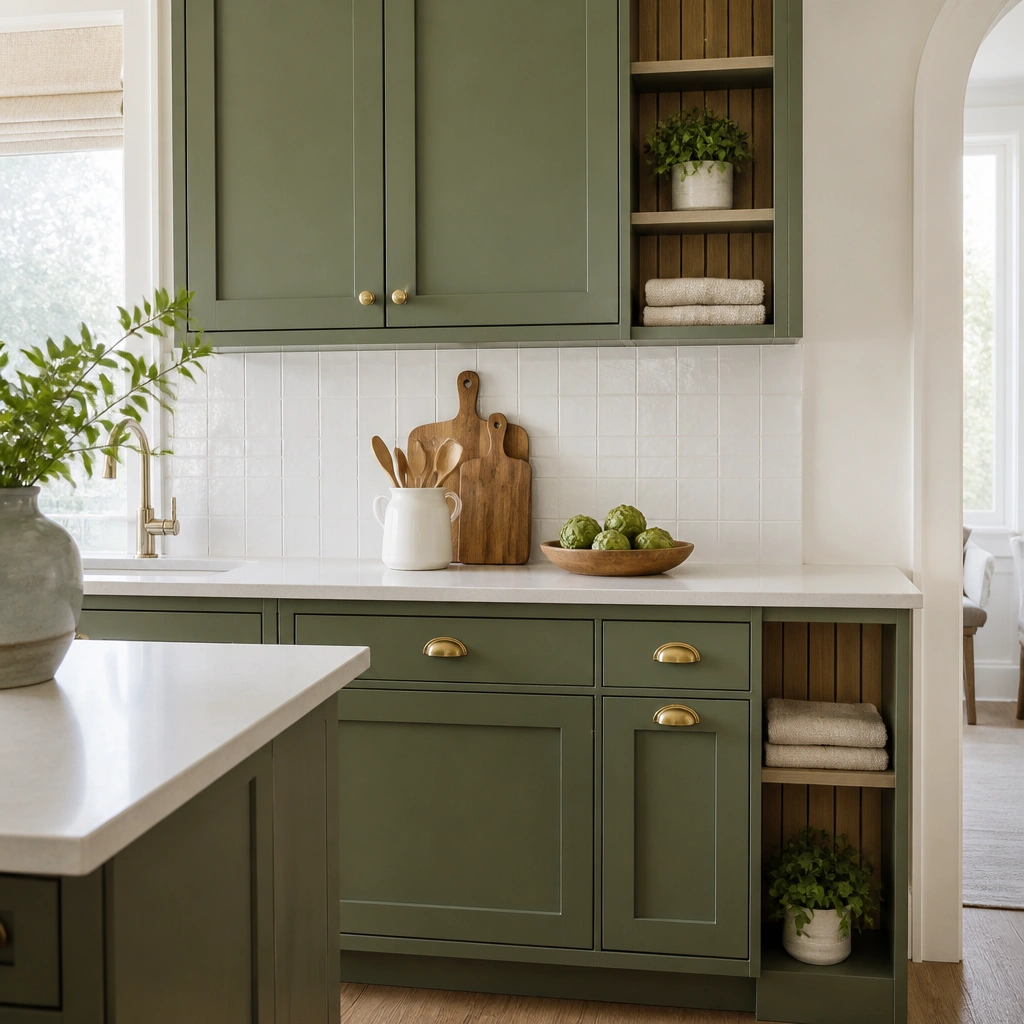
Wood backing inside open nooks adds warmth that balances green’s cooler tones. It also makes open storage look styled, even when you’re using it daily. This idea is perfect for small spaces because nooks use otherwise-empty cabinet framing. Instead of adding more furniture, you get built-in display and functional storage.
Pro tipUse thin slats (about 1/4-inch) or slat-look panels so the nook stays shallow and doesn’t eat valuable storage depth.