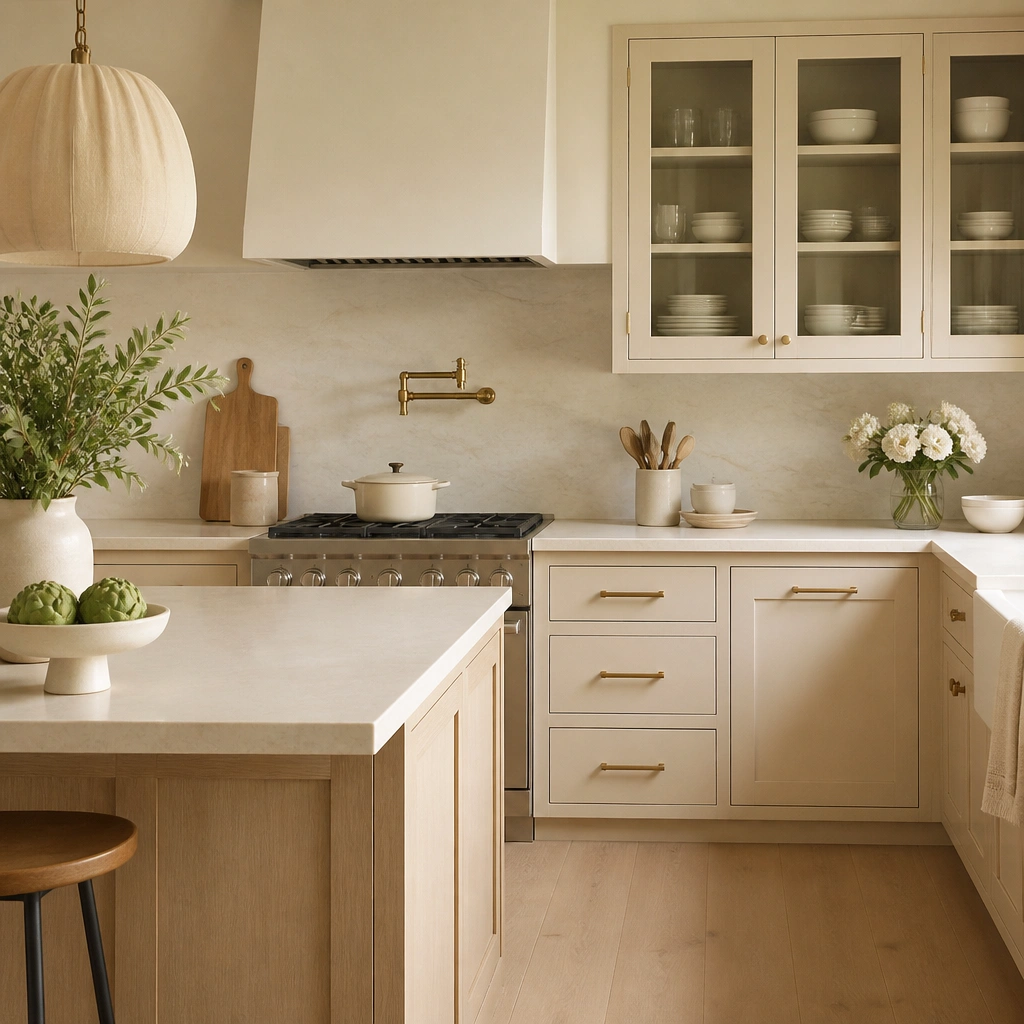
1. Creamy Beige Cabinet Color + Warm White Walls
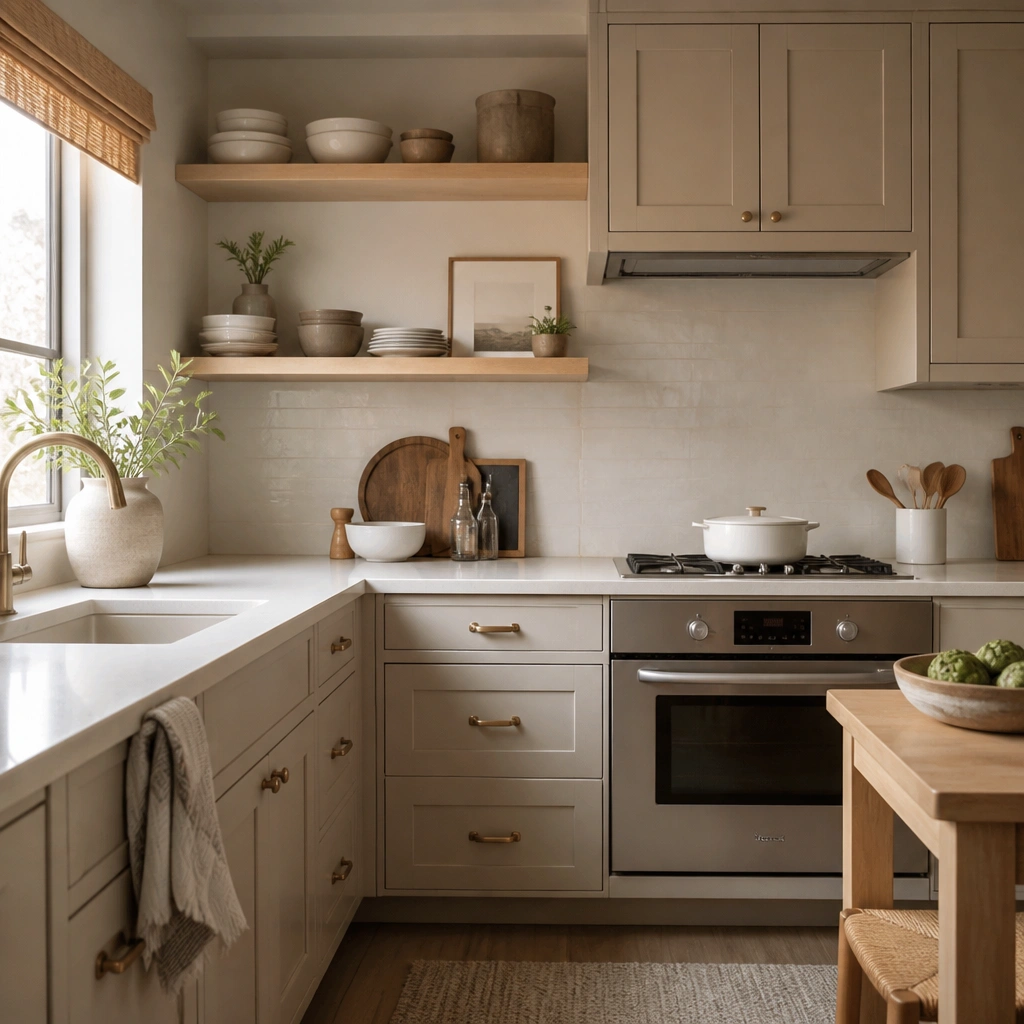
Choose a creamy beige that leans warm (think “oat milk” rather than gray). Pair it with a warm white wall color so the kitchen feels bright instead of yellow or muddy. This combo works especially well with natural wood floors and simple white tile because it keeps everything airy.
Pro tipBefore buying paint, paint a 12x12 inch sample on your wall and check it at night with your current lighting.
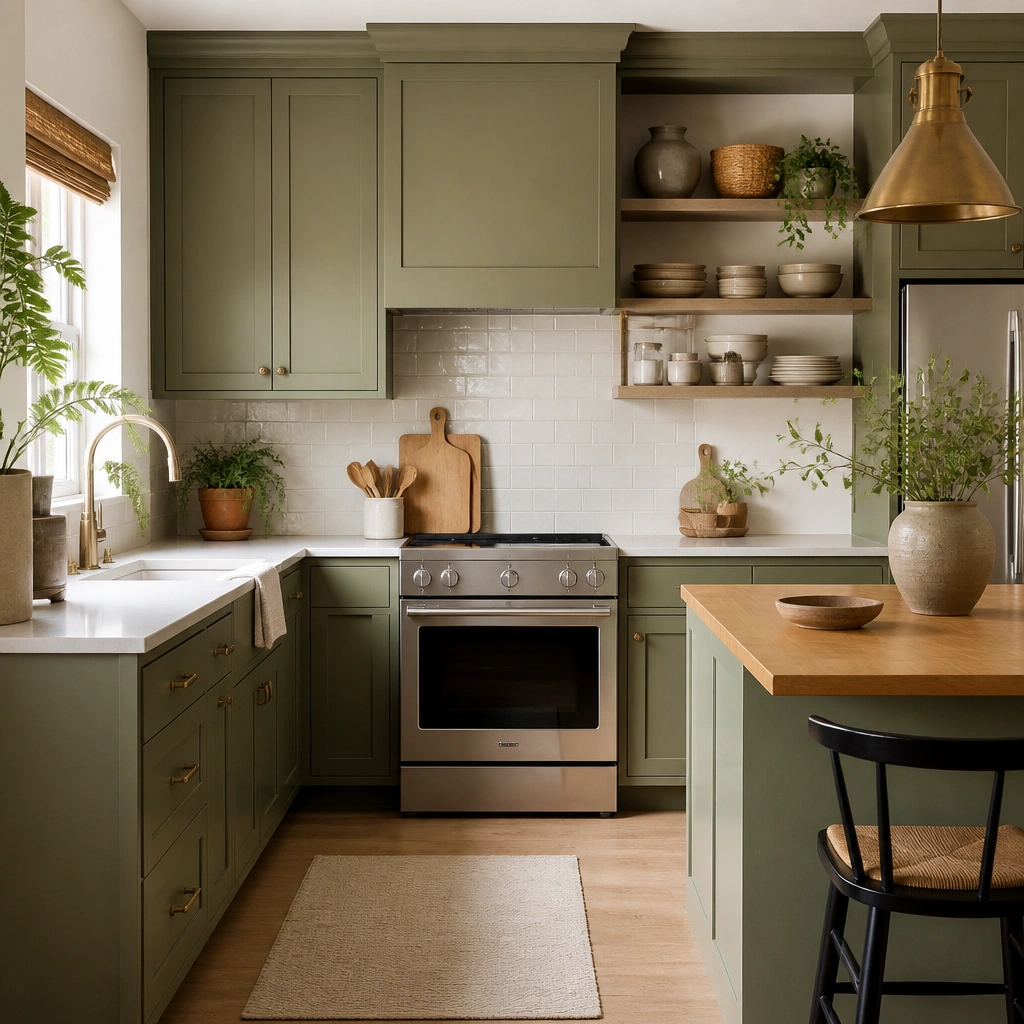
2. Matte Brass Hardware for Instant Beige Warmth
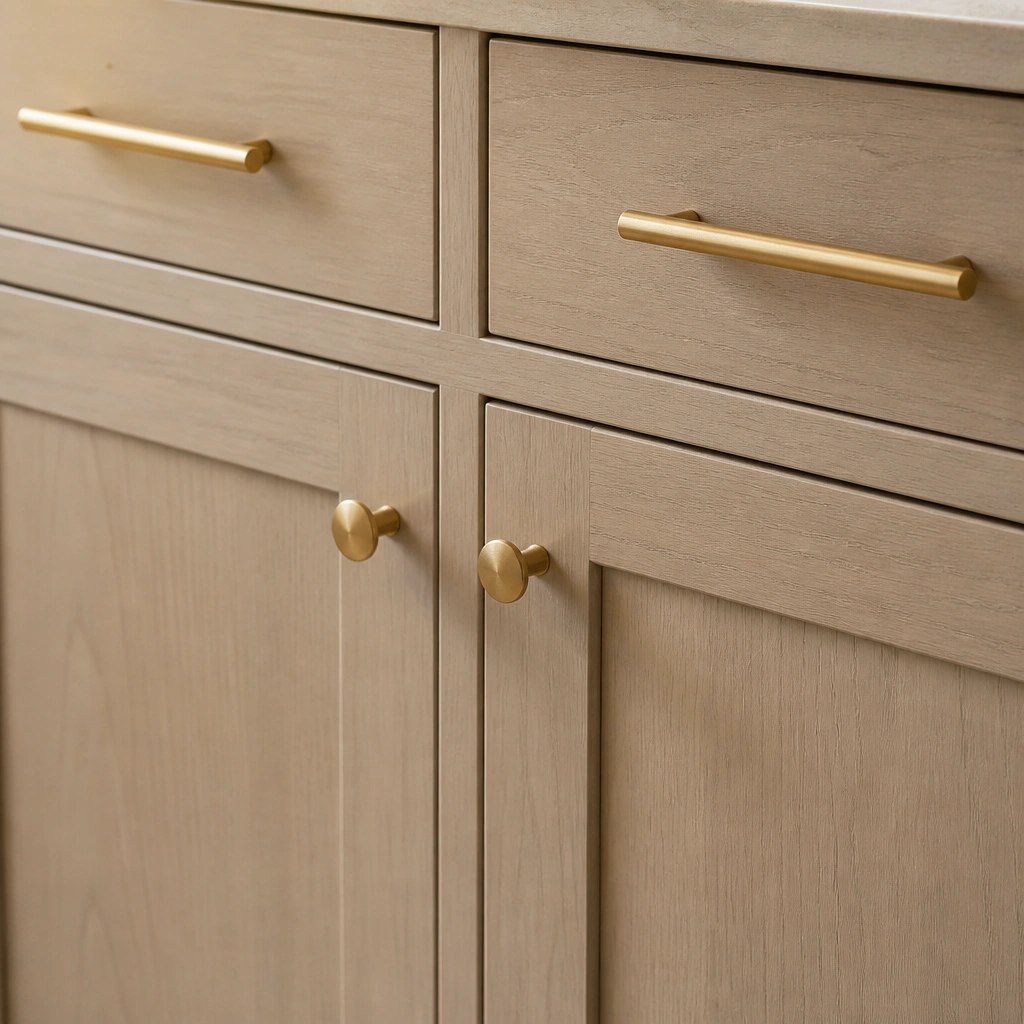
Switching hardware is one of the fastest ways to make beige feel intentional. Matte brass adds a soft glow that looks expensive next to beige without overpowering it. It also hides minor fingerprints better than shiny chrome in real life.
Measure your current hole spacing (center-to-center). Buy hardware that matches so you avoid extra drilling.
3. White + Beige Backsplash with Stone-Look Tile
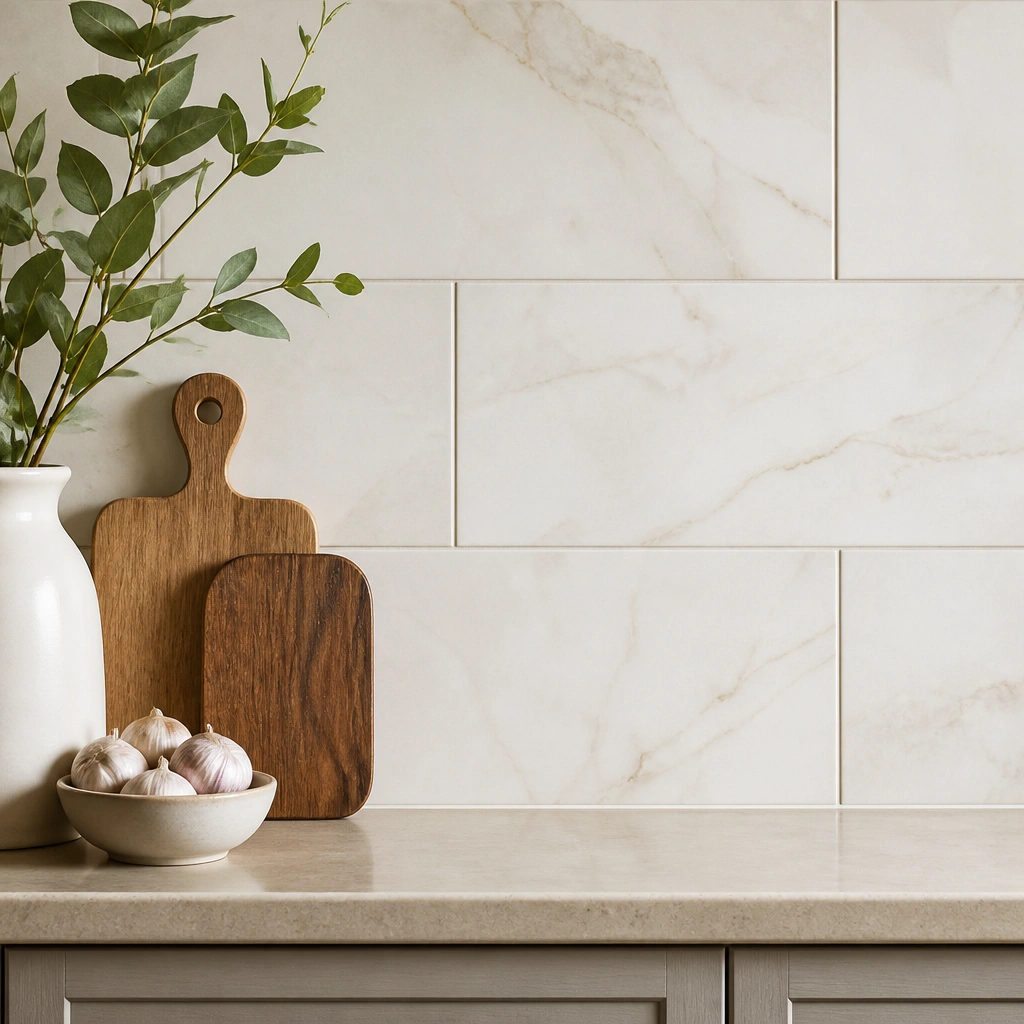
A stone-look backsplash with off-white and light beige veins adds texture while staying neutral. Keep grout light to prevent the pattern from looking busy. This is beginner-friendly because you can use simple straight layout tiles without complex cuts.
Pro tipLay a few tiles and grout colors on your counter area first to see how the veining reads in your kitchen lighting.
4. Light Wood Open Shelving Above Beige Cabinets
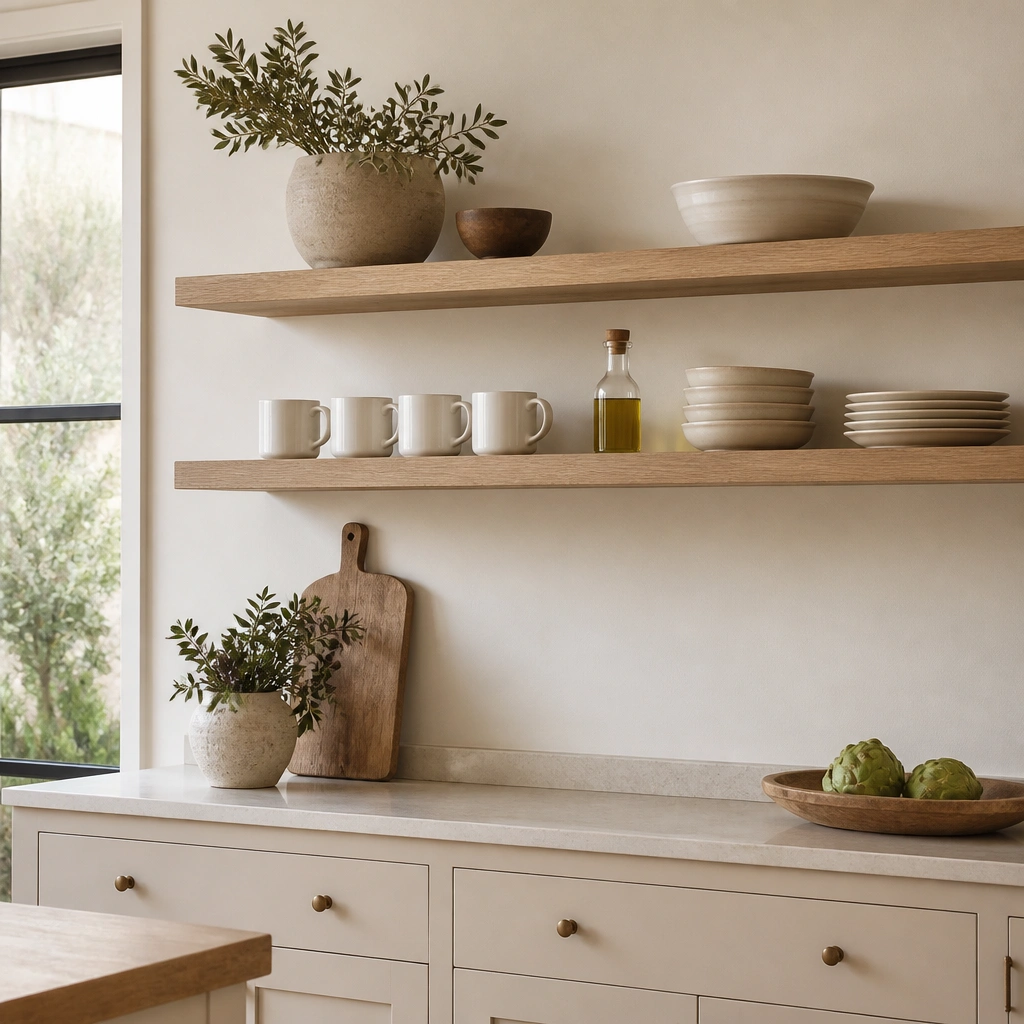
Open shelves break up the beige mass and add real-life warmth. Light oak looks best with creamy beige because it keeps the palette cohesive. Style with mostly whites and one muted accent (olive, sand, or terracotta) so it looks curated, not cluttered.
Use the “3 heights” rule: stack bowls, place cups at eye level, and add one taller bottle for vertical balance.
5. Beige Countertops Styled with Black Trays
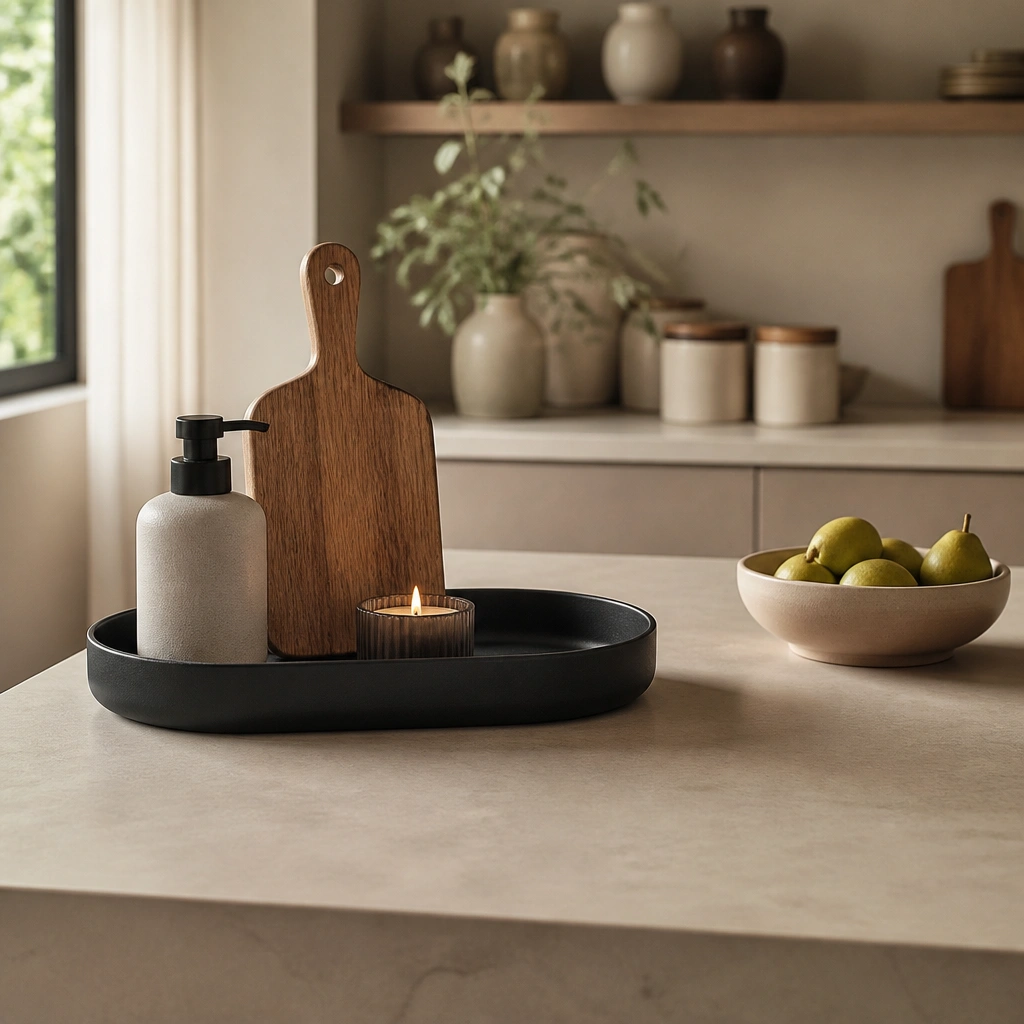
Beige can look a little flat unless you add contrast. A matte black tray gives you a grounding base while keeping the palette neutral. It also organizes daily items so the counter stays tidy, which makes beige look more “designer.”
Group items by function: one tray for sink essentials, one for baking basics, and keep the rest off the counter.
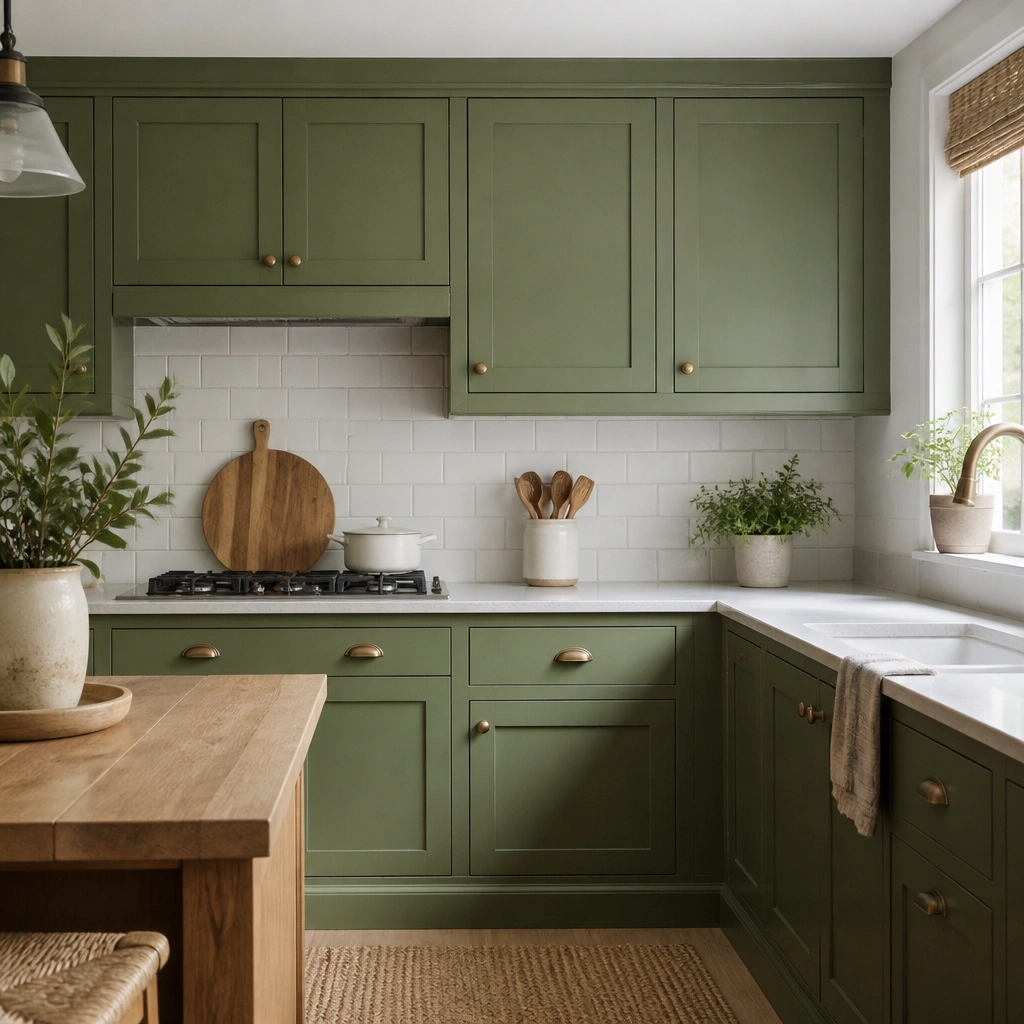
6. Soft Olive + Beige Accent Towels (No Paint Needed)
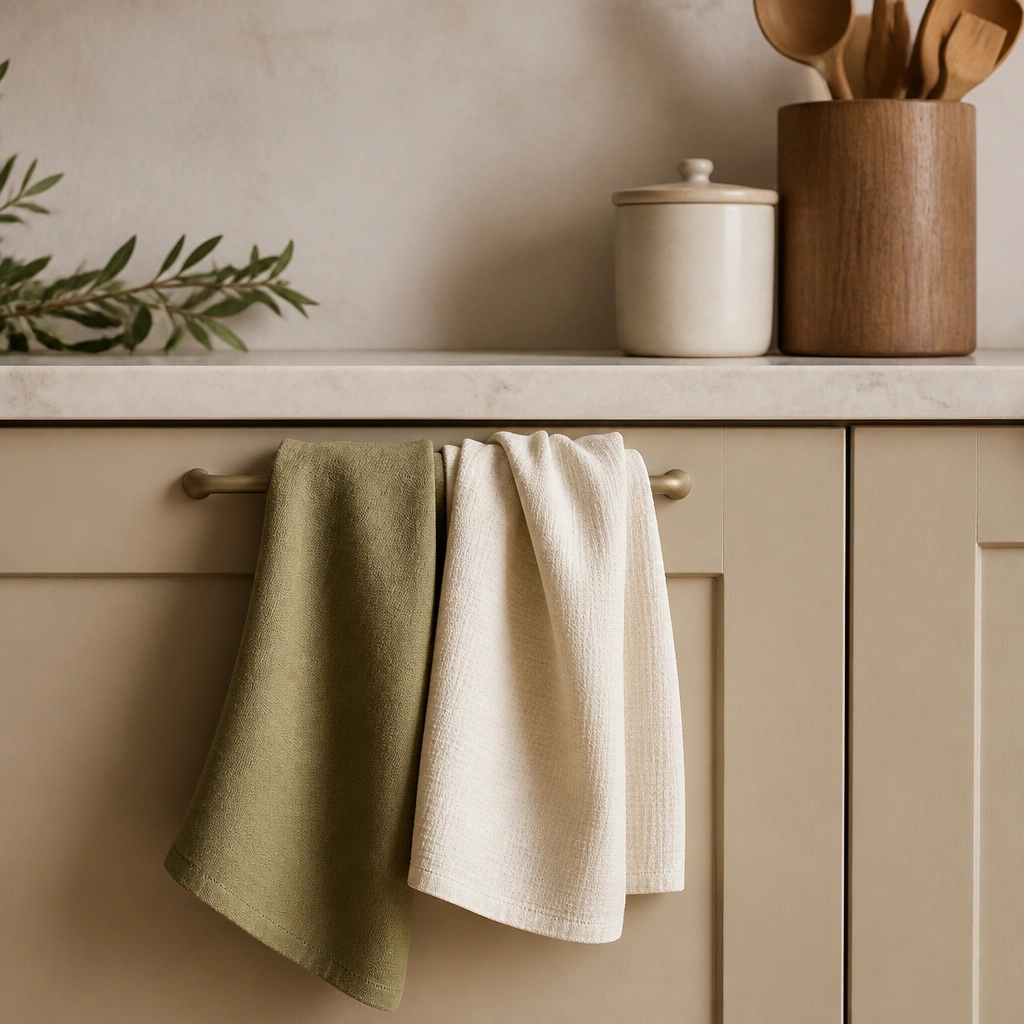
A muted olive accent instantly warms up beige because it sits near the same family as natural materials. Towels are perfect for beginners because you can swap them seasonally without committing. Choose woven textures (linen blend or waffle weave) so the beige doesn’t feel like one flat block.
Pro tipBuy 2 towels first. If you love the look, add a matching oven mitt or runner later.
7. Layered Lighting: Warm Bulbs + Linen Shade
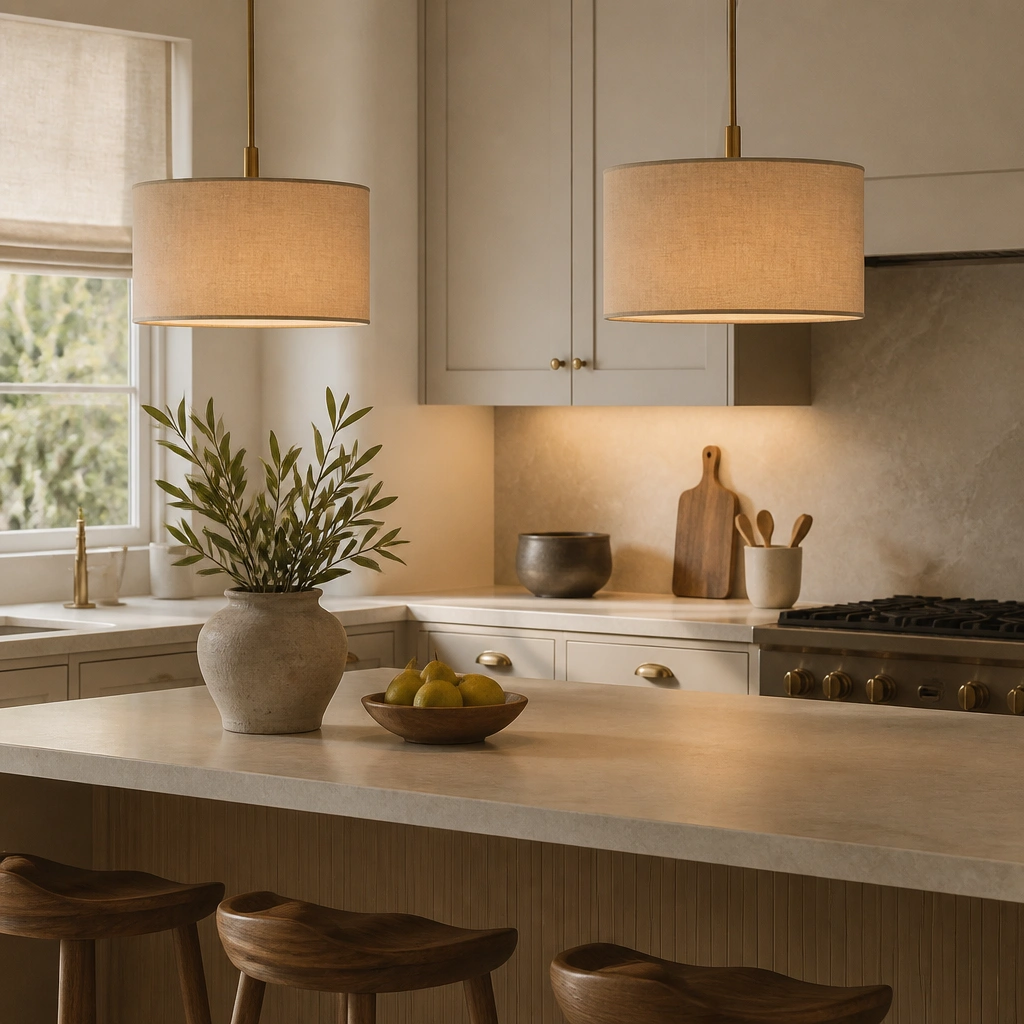
Lighting changes beige more than you’d think. Use warm bulbs (2700K) and add a linen or fabric shade to soften the contrast. The result is a cozy kitchen that feels inviting even in daylight.
Check your bulb temperature at the store. If it doesn’t say 2700K or “warm white,” skip it.
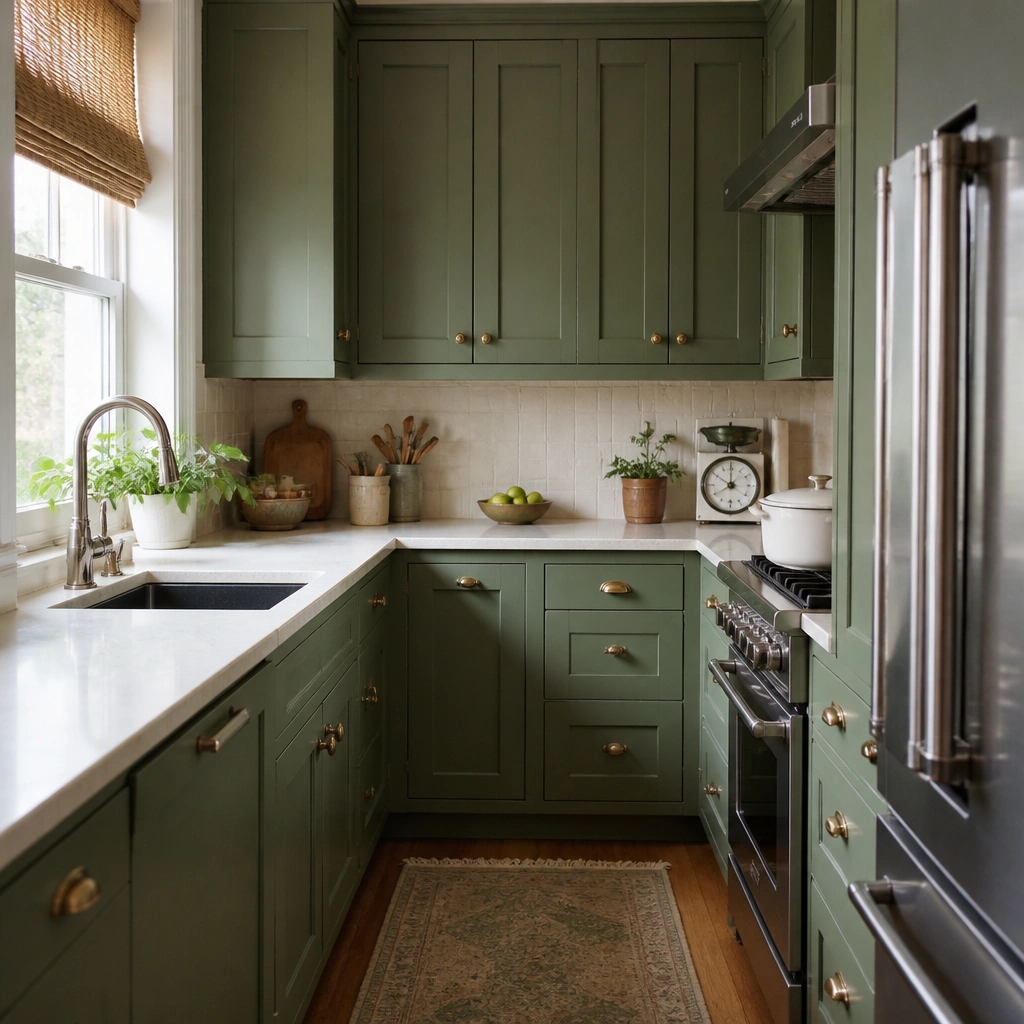
8. Beige Kitchen Rugs with Jute Texture
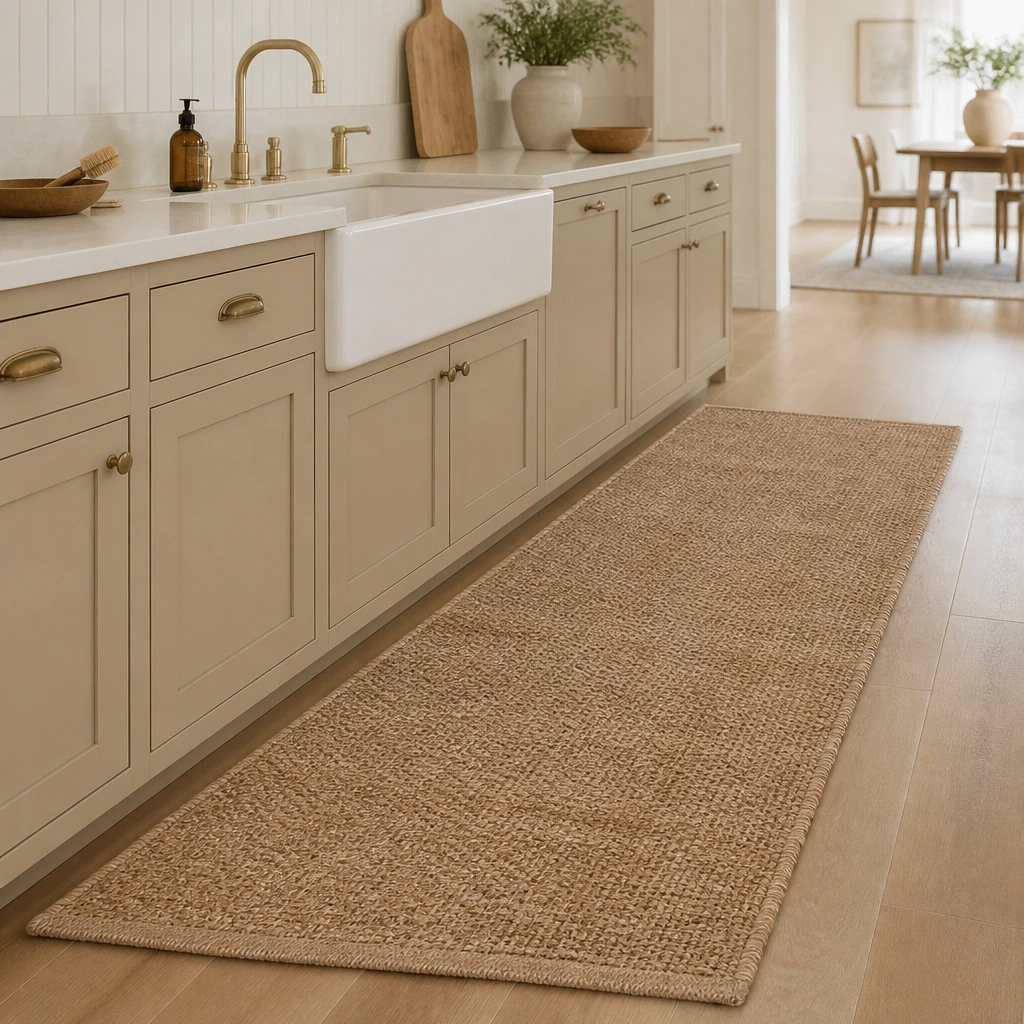
A jute-textured rug adds natural warmth and makes beige feel grounded. Look for a low-pile or flatwoven style so it doesn’t snag or curl. Stick to beige, cream, or natural fibers so the rug supports your palette instead of competing with it.
Measure your walkway. Leave 6-10 inches of floor showing on both sides for a clean, intentional look.
9. Open-Box Apothecary Jars for Neutral Storage
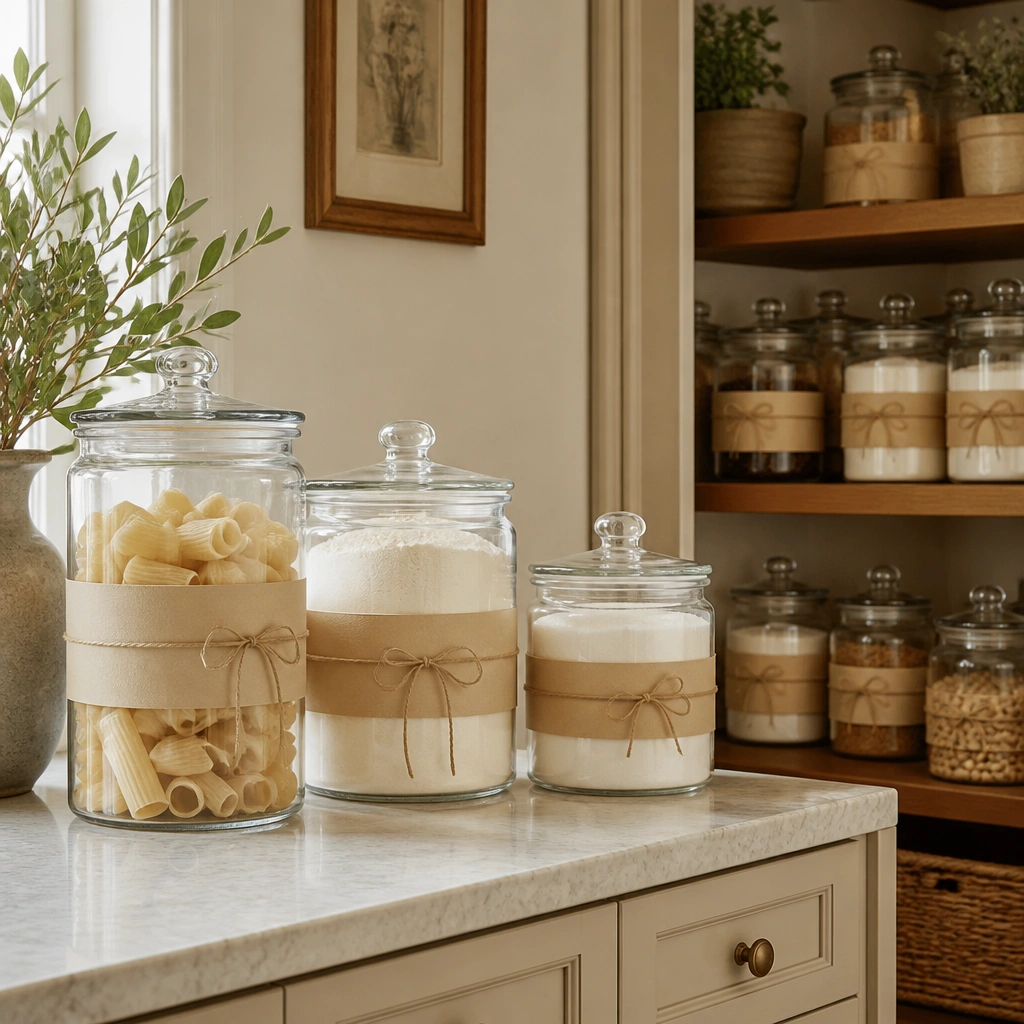
Neutral storage makes beige kitchens look calmer and more expensive. Clear jars let you see what you have, and beige labels keep everything cohesive. This is a beginner trick because you can start with just pantry staples and expand gradually.
Standardize labels: use one font style and keep label size consistent so the shelves look designed.