1. Sage Upper + Bright White Lower with Flat Panels
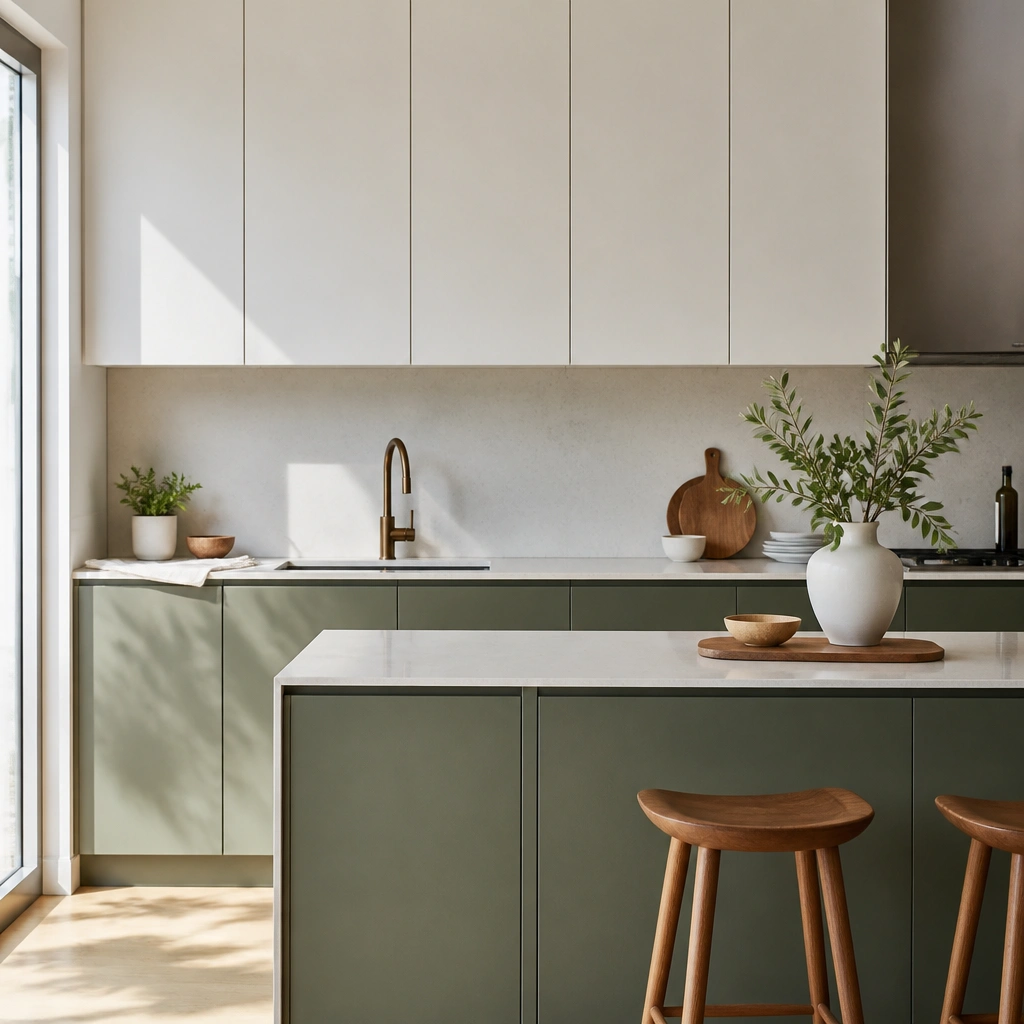
This combo works because the sage reads soft and airy while the white anchors the room. Flat-panel doors keep the green from looking overly traditional, and slim lines reduce visual noise. Pair with warm white lighting so the green stays creamy, not gray.
Ask your paint store for a sample card in sage with a warm undertone (yellow/cream base), then test it on your wall next to cabinet trim for 24 hours.
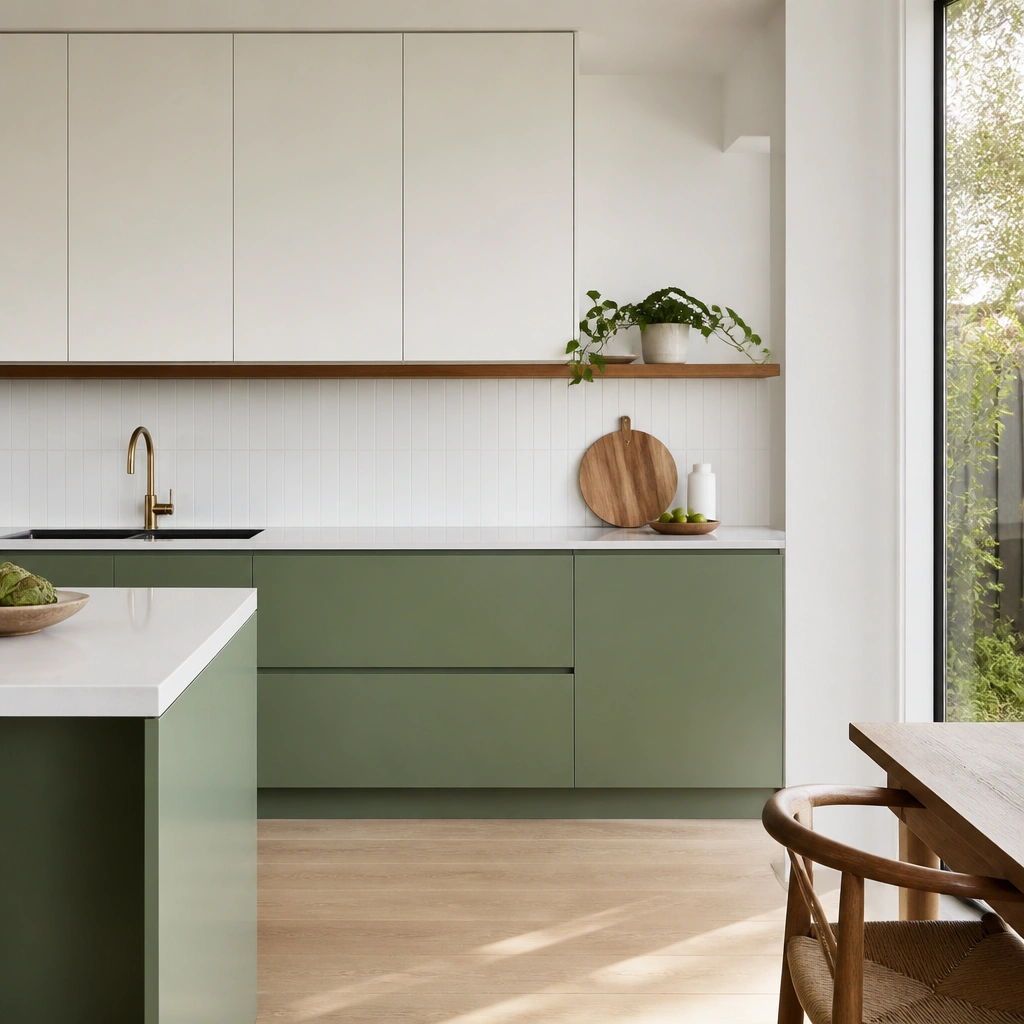
2. Deep Forest Lower Drawers with White Upper Cabinets
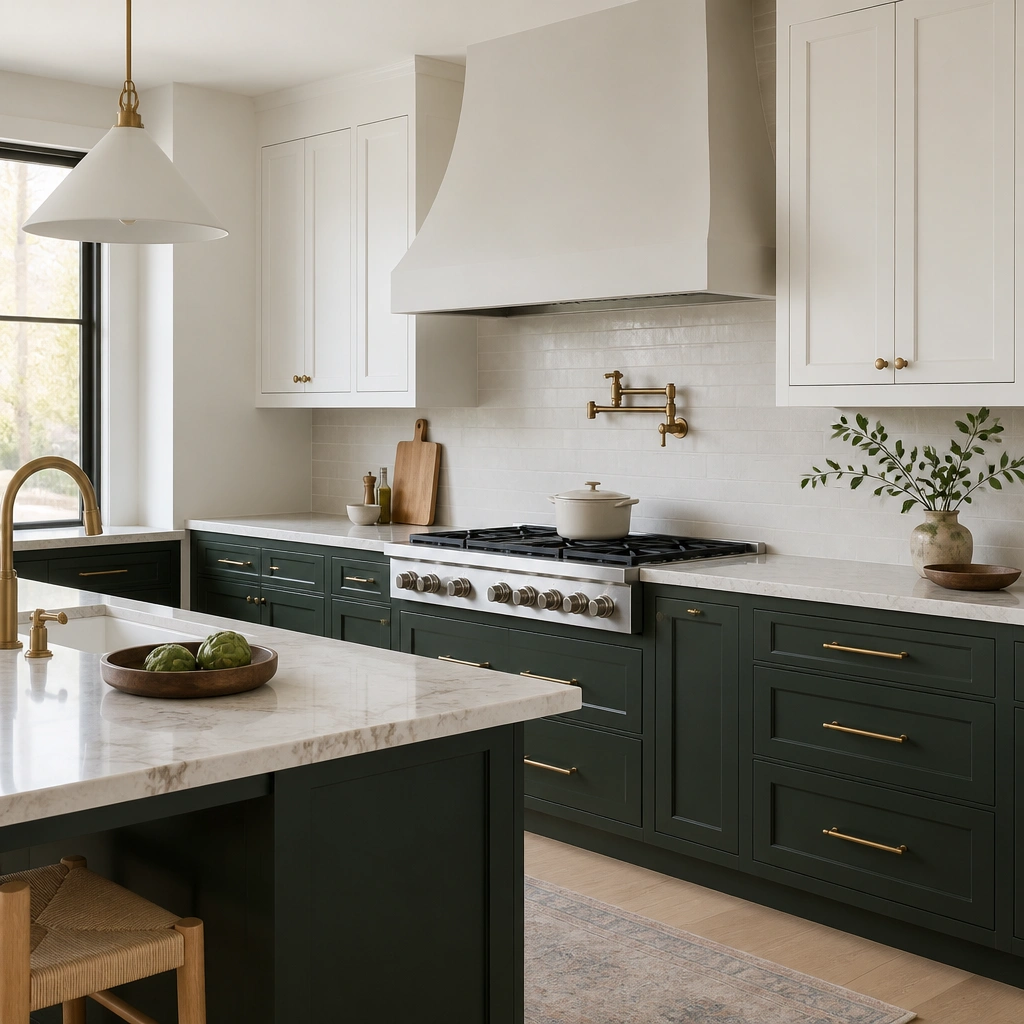
Placing the deeper color on the bottom makes the room feel grounded without turning the whole kitchen dark. White uppers keep sightlines bright, which is especially helpful in smaller kitchens. The key is clean contrast — avoid textured green finishes that can look patchy.
If you’re ordering doors, choose the same sheen level for both colors (matte or satin) so the forest reads smooth instead of blotchy.
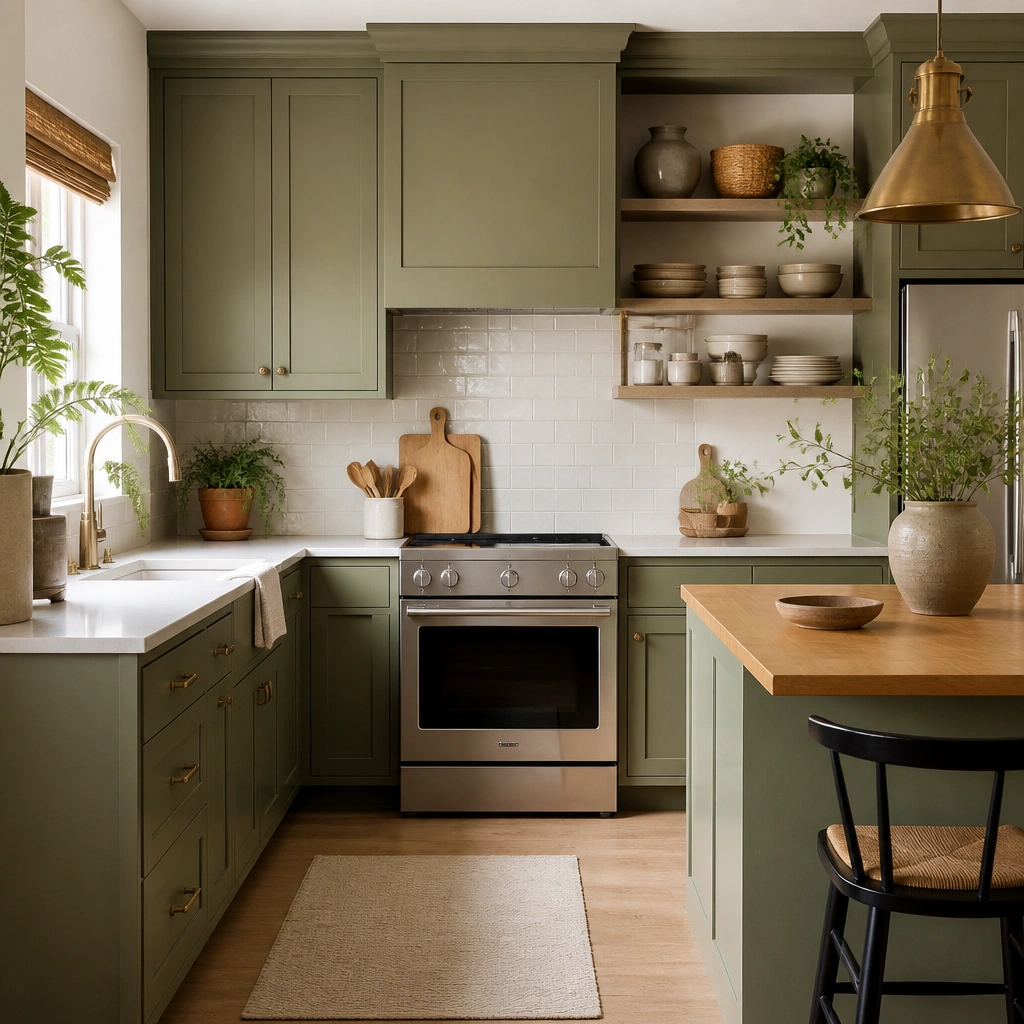
3. Olive Green Cabinets with Off-White Walls and Matte Black Hardware
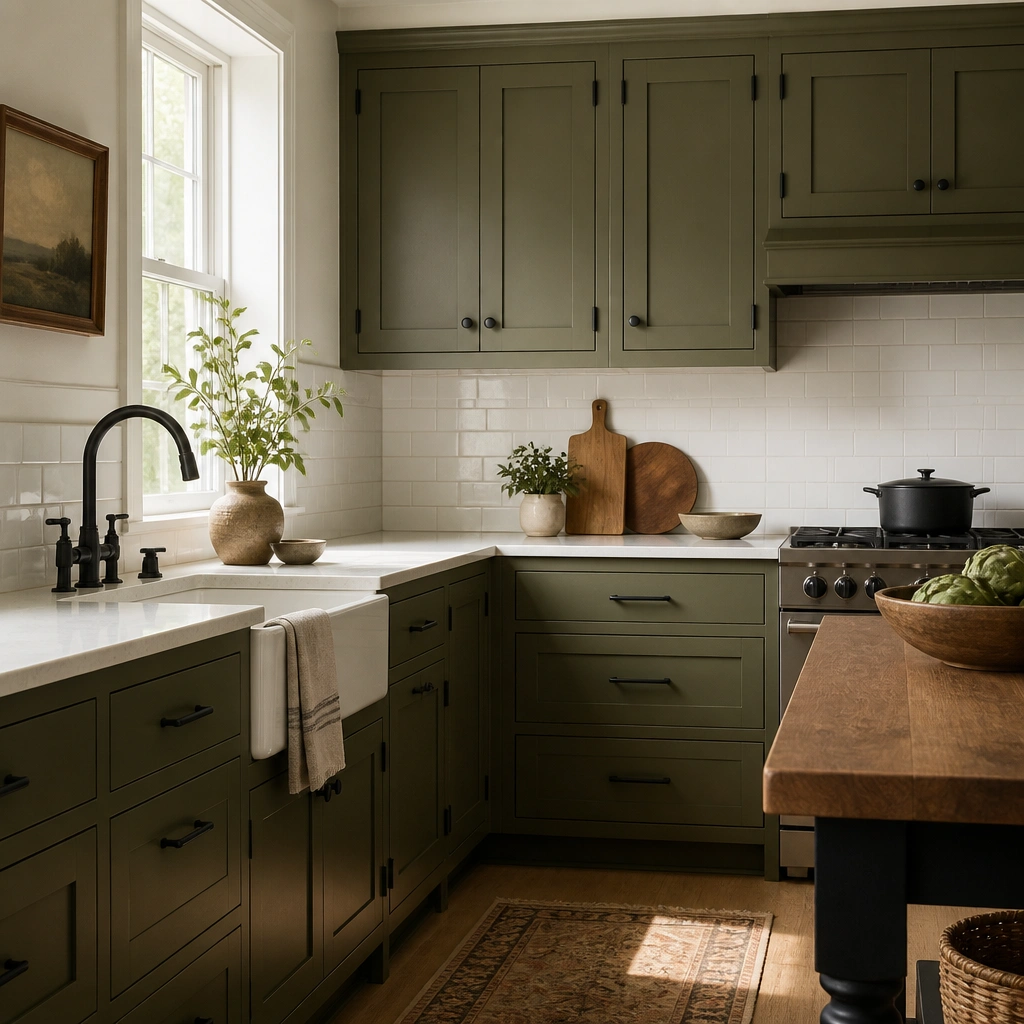
This idea leans modern by using a muted olive that feels more natural than bright green. Off-white walls reduce harsh contrast and make the cabinets look intentional. Matte black hardware gives a crisp, graphic frame against the green.
Use a matte or eggshell wall paint — glossy walls can reflect light and make olive look either yellow or dull.
4. Two-Tone Green and White Island with Matching Perimeter
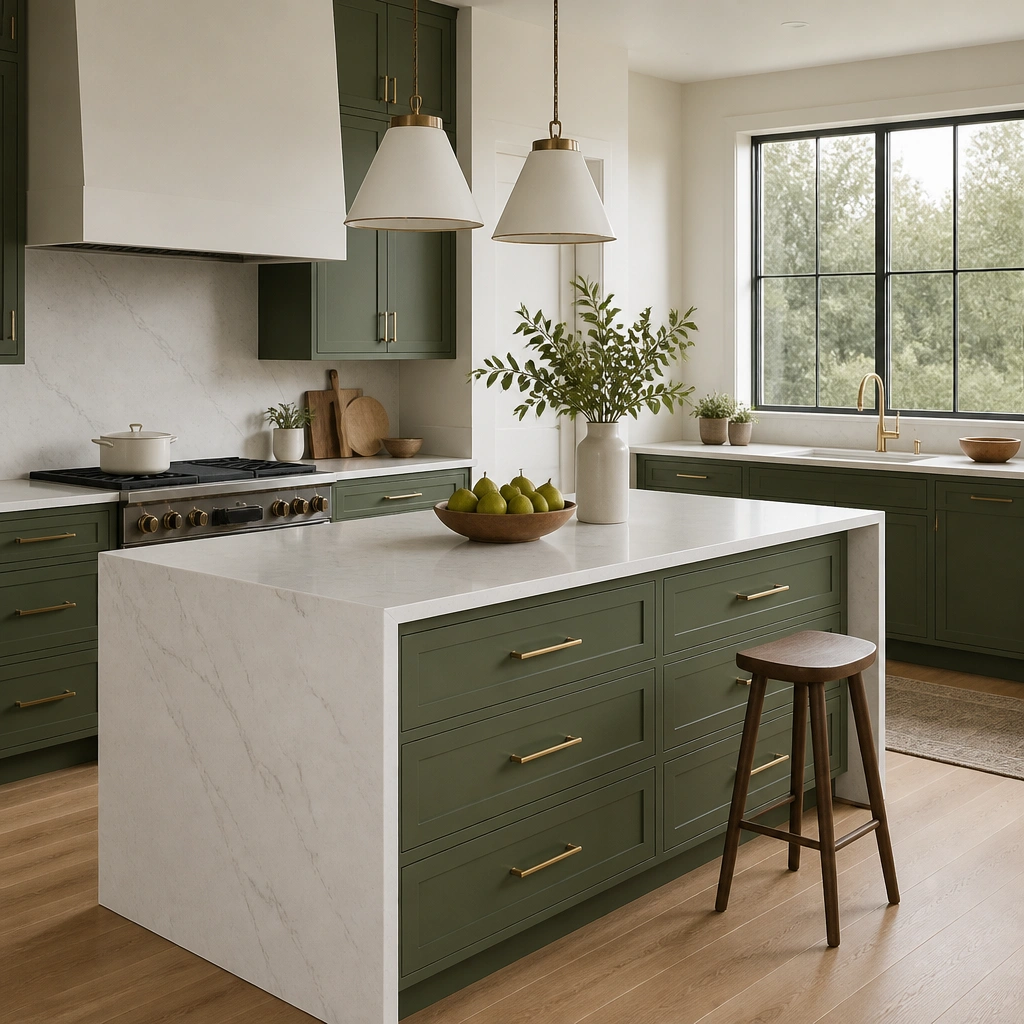
Two-tone islands are a modern shortcut to make the whole kitchen feel designed. Keep the green consistent across the perimeter so your eyes don’t bounce between mismatched shades. The waterfall side panel adds a custom feel without extra cabinetry complexity.
If your island is white, repeat one element in the same green as the perimeter (like a matching vent cover or cabinet interior paint) to tie it together.
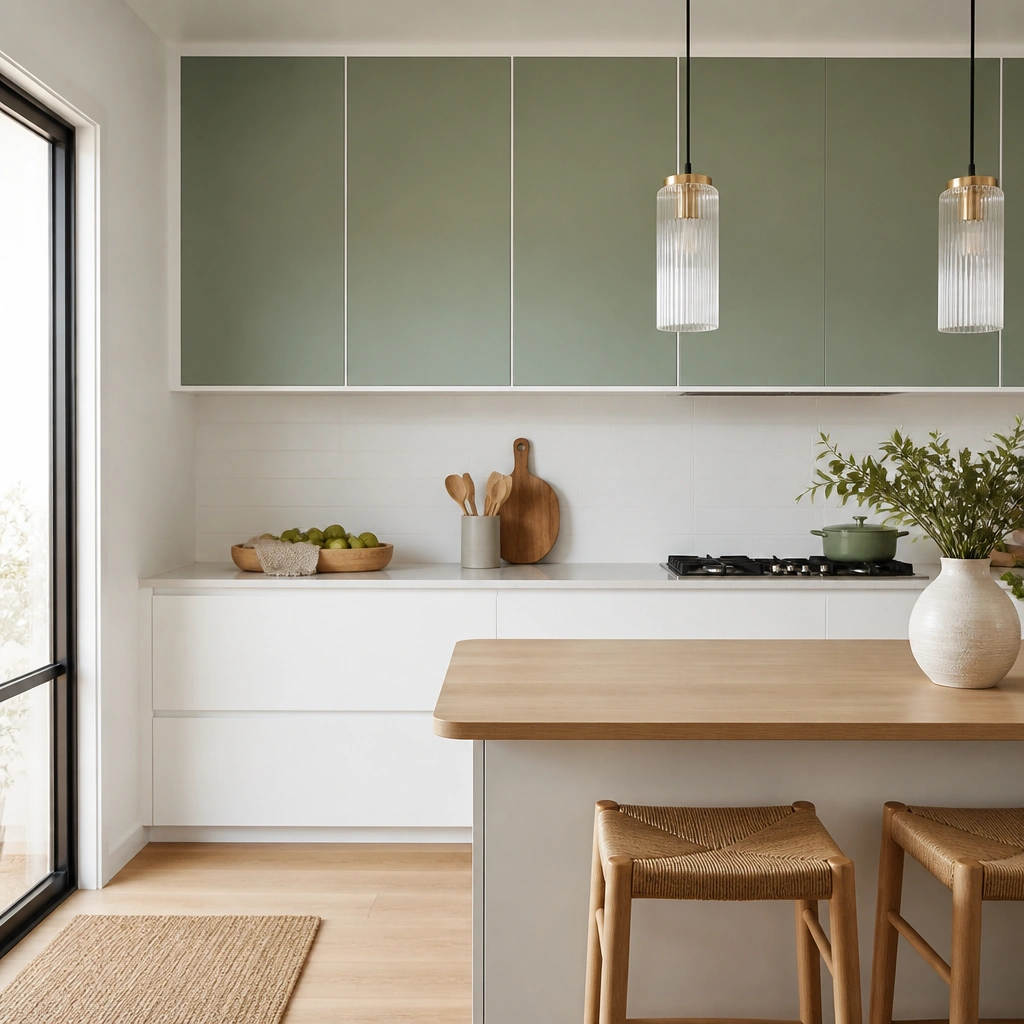
5. White Cabinets with Green Glass-Front Upper Sections
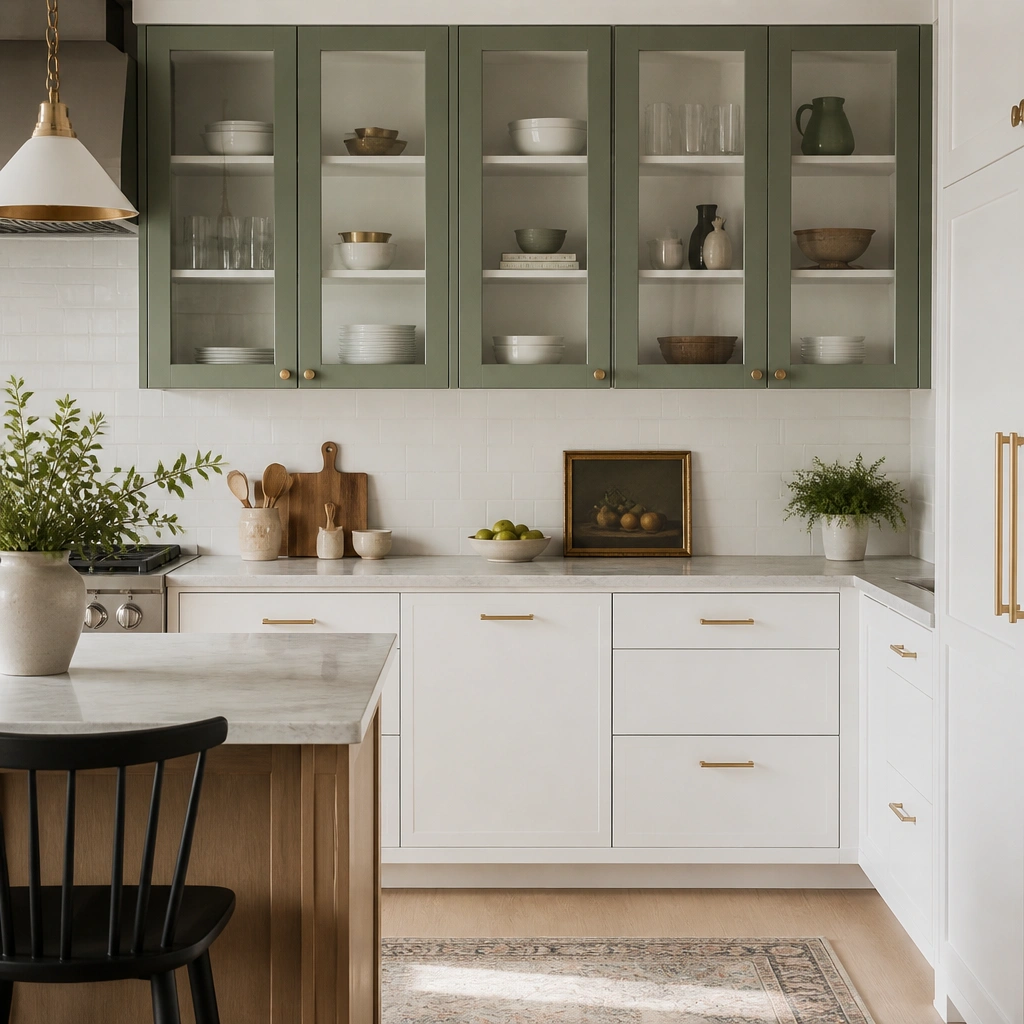
Green glass-front frames add color without blocking light, which is perfect if you want modern green and white kitchen cabinets but still crave openness. White lowers keep the room feeling clean, and glass doors show off styling that looks curated (not cluttered).
Pro tipUse clear glass plus interior lighting strips only if you can keep the shelves styled — otherwise swap to frosted glass for a calmer look.
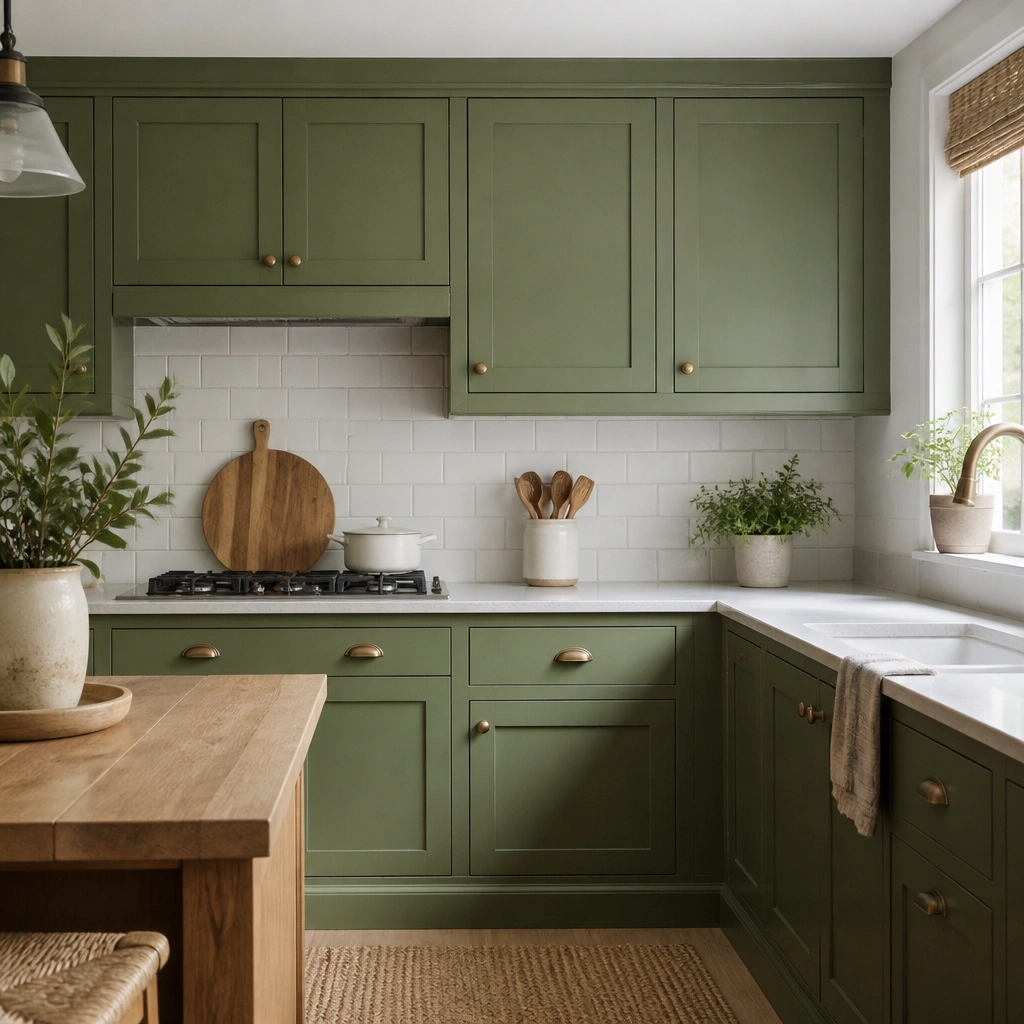
6. Sage Green Shaker Cabinets with White Quartz Countertops
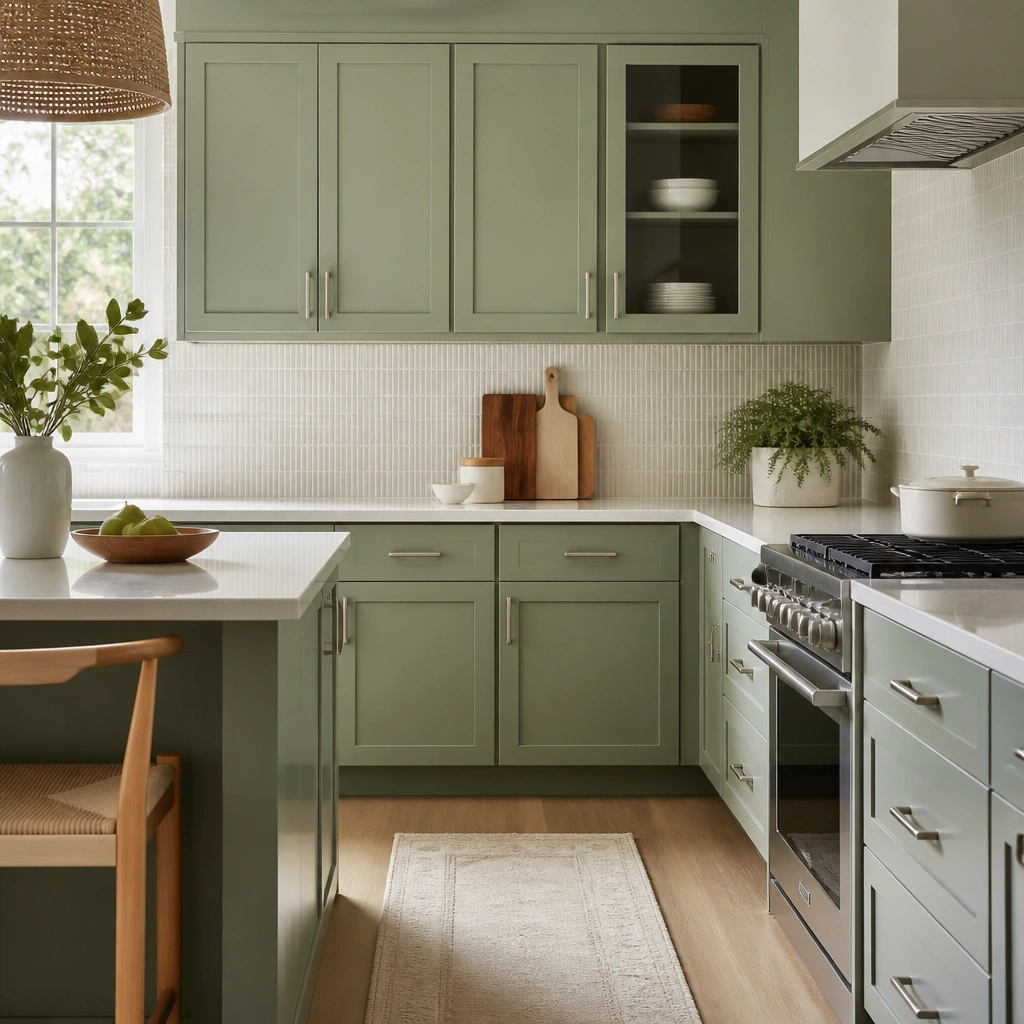
Shaker can still feel modern when the lines are crisp and the proportions are slim. Sage green softens the geometry, and white quartz with gray movement adds a fresh, contemporary edge. Brushed nickel is a safe neutral that won’t overpower the green.
Choose quartz with cool or neutral gray veining if your sage is more blue-green; choose warmer veining if your sage is more yellow-leaning.
7. Green and White Cabinets with Full-Height Pantry Column
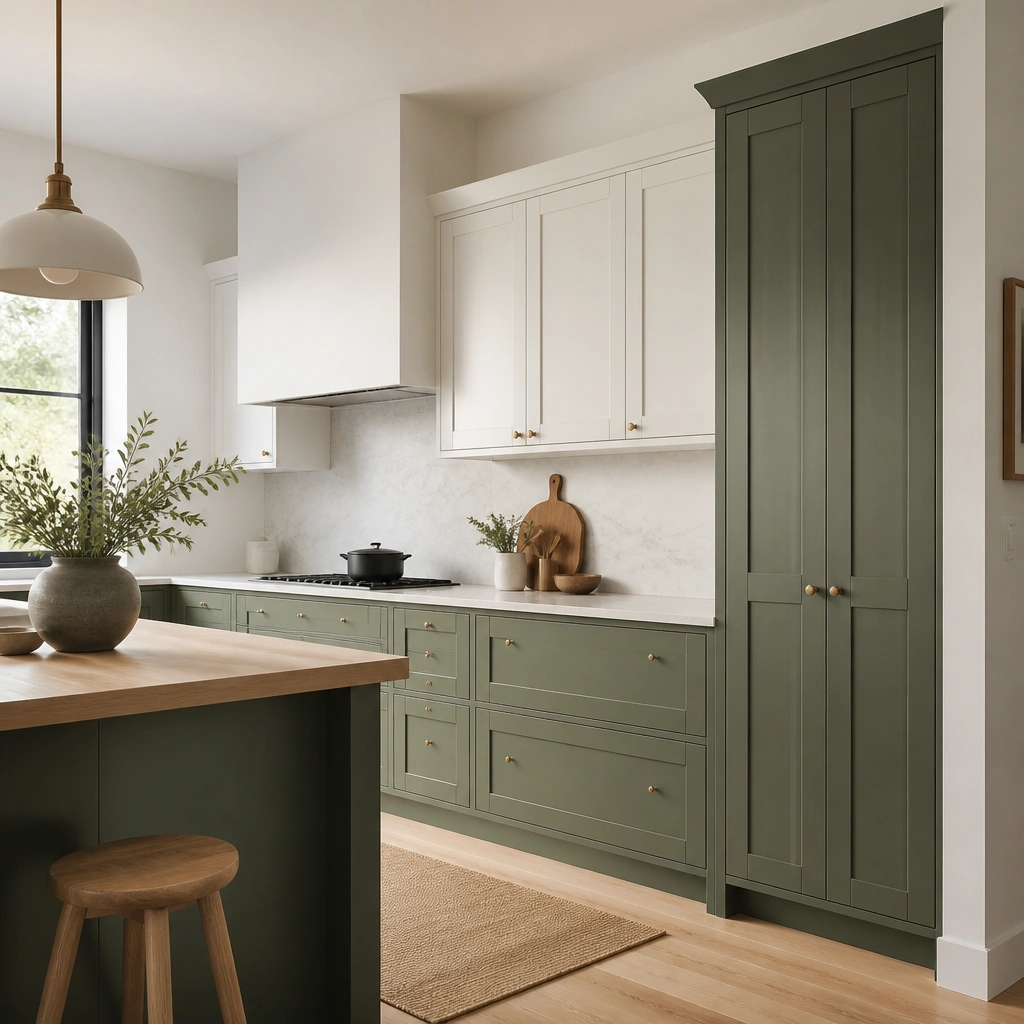
A tall pantry column creates a vertical anchor that makes a two-tone kitchen look intentional, not accidental. Keeping the column in green strengthens the color story while the white uppers maintain brightness. Vertical paneling adds texture without changing the modern palette.
If you’re doing paint or refacing, start with the pantry column first — it’s the focal point, so minor shade differences will be more noticeable.
8. High-Gloss White Upper + Satin Green Lower for Light Play
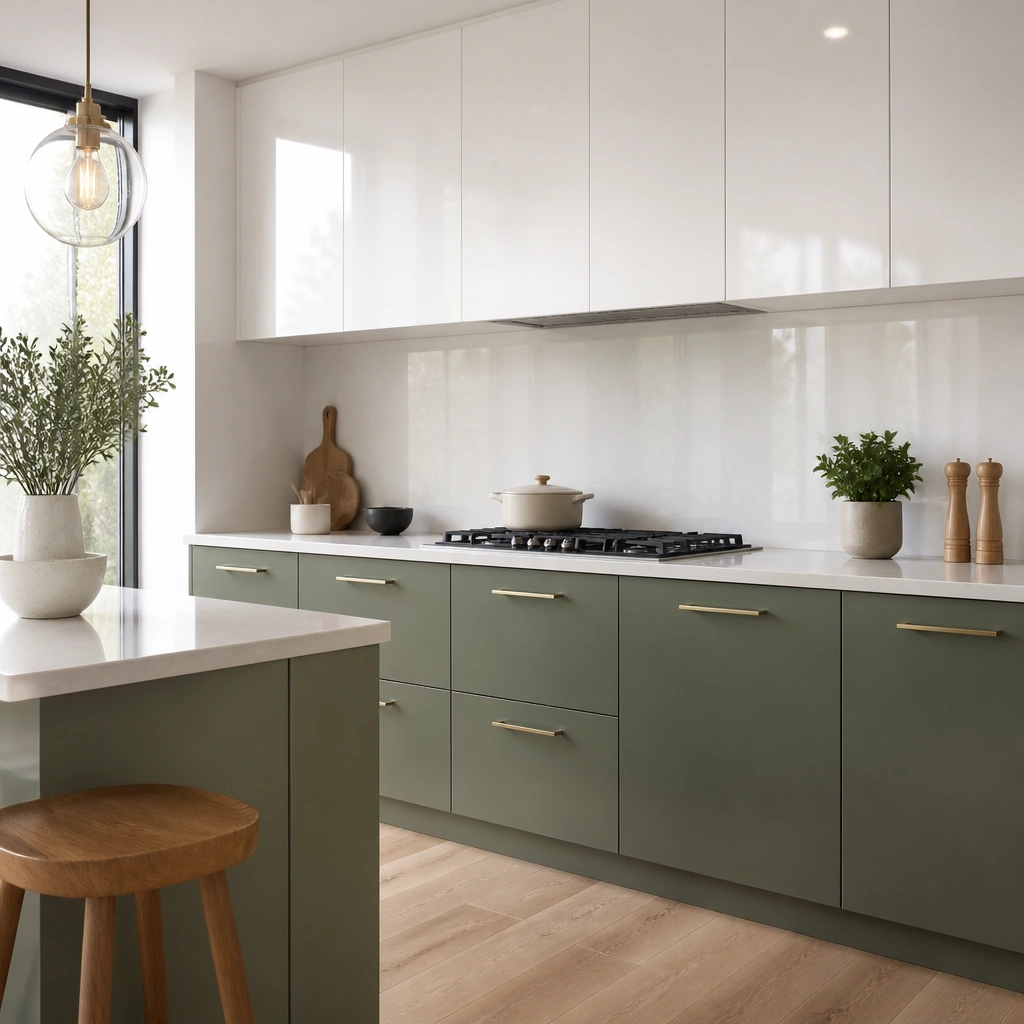
Different sheens create depth while keeping the color scheme minimal. Glossy white reflects light and makes the green lower cabinets feel more saturated. Satin green hides fingerprints better than full gloss, which is a practical win in real kitchens.
If you want this look, use a sprayer for the gloss white top coat and satin for the lowers — brush marks show up fast on glossy finishes.