
1. Honed Travertine-Style Backsplash with Warm Beige Cabinets
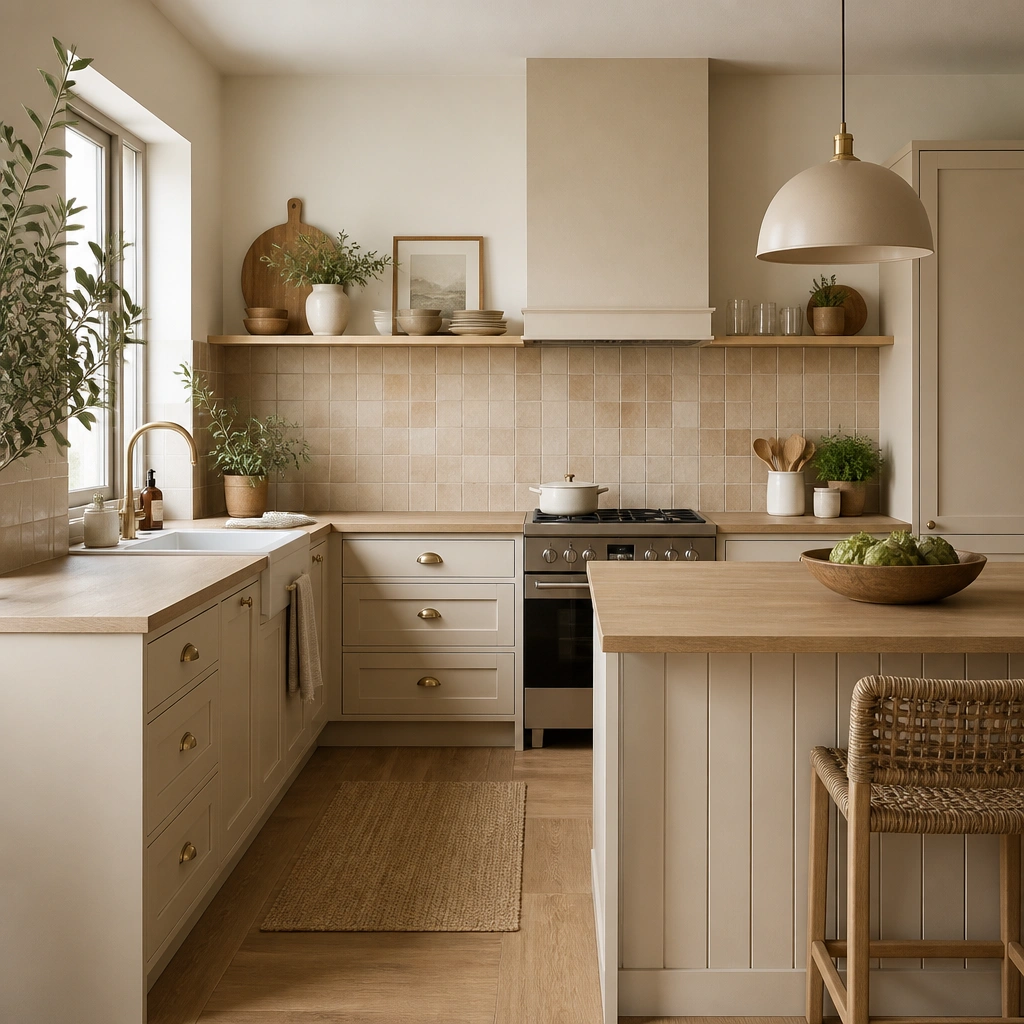
Start by choosing the backsplash first: go for travertine-style porcelain or tile with visible veining and a honed surface. Set grout to a warm light gray, not bright white, then install with consistent joint spacing so the pattern looks intentional. After backsplash is in, mount hardware in a consistent height range — most kitchens look best when pulls sit roughly 2.5-3 inches from the top rail on upper doors. Finish by swapping to warm under-cabinet LED lighting at about 3000K so the beige stays warm instead of yellow-green.
This look reads expensive because travertine-style texture gives you depth even when the color family stays neutral. Pair warm beige cabinets with a backsplash that has real-looking pores and subtle striations, then keep grout a warm light gray so it blends with the stone instead of outlining it. Use aged brass pulls on cabinet doors and a matching faucet finish. The result is calm, but not flat, and it photographs well because the stone catches light differently across the day.
One warningDon’t use bright white grout — it outlines the tile and makes the whole kitchen look temporary.
Pro tipUse a slightly darker beige for the cabinet than you think you need; it makes the stone read richer without getting too brown.
2. Beige Shaker Cabinets with Blackened Bronze Hardware
Shaker doors bring structure, and blackened bronze adds contrast without looking harsh. Keep the cabinet color a creamy beige (not gray-beige), then use hardware with a low-sheen finish so it doesn’t reflect light like shiny chrome. For backsplash, choose a simple cream or light beige tile with minimal pattern so the hardware becomes the focal contrast. This combo works in both small and open-plan spaces because it gives definition around edges without turning the kitchen dark.
Pick shaker cabinets with a clear center panel and straight rails so the door lines show up in photos. Install blackened bronze pulls and knobs — choose one scale and repeat it everywhere, like 5-inch pulls for drawers and 3-4 inch knobs for doors. For backsplash, use a neutral tile with subtle variation, and set grout to an off-white that matches the tile body. Finally, add one blackened bronze detail at the sink area, like a matching faucet or soap dispenser, to keep the contrast cohesive.
Match your faucet and hardware finish exactly; even slight differences can make the kitchen look assembled from parts.
Avoid mixing black hardware with brushed nickel accents in the same sightline.
3. Creamy Beige Cabinets with Marble-Look Quartz Veining
Select countertop material first if you’re remodeling: look for marble-look quartz with warm undertones and medium veining, not heavy dramatic swirls. Pair it with creamy beige cabinets and install a thin backsplash — either a slab-style tile or large-format tile to reduce grout lines. Use brass hardware in a satin finish and keep the spacing consistent across drawers and doors. For lighting, aim for 3000K and avoid harsh overhead glare by using a dimmable ceiling fixture plus under-cabinet strips.
If you want “expensive” with minimal fuss, marble-look quartz is the easiest win — especially when the beige cabinetry is creamy, not gray. Choose a quartz with soft, warm veining (think light caramel or light taupe over a cream base) so it blends with beige rather than fighting it. Keep the backsplash simple: a light, warm white or beige slab tile with low pattern so the counter vein stays the star. Warm brass accessories tie it together and make the beige feel intentional.
One warningDon’t pick a quartz with cool gray veining — it often turns the whole palette into sad greige.
Pro tipChoose quartz with veining that moves vertically in the slab; it makes tall cabinets look taller in photos.
4. Monochrome Beige with Matte Finish and Same-Tone Backsplash
Pick a matte cabinet paint or finish in a specific beige tone (look for “warm” on the sample cards). Choose a backsplash in the same undertone but a different texture, like stone-look tile with gentle mottling. Install with warm gray grout and keep the backsplash height around 16-18 inches unless you’re going full-height. Use small warm brass pulls and a matching faucet, then add one contrasting element like a darker tray or wood cutting board to keep the eye moving.
This is the beige kitchen idea that looks designer when it’s done with finish control. The trick is to use the same color family across cabinets, backsplash, and upper wall — then add contrast through finish and texture, not color. Matte cabinets hide smudges and look upscale, while a backsplash with subtle variation (like micro-texture plaster look or stone-look tile) prevents the room from flattening. Keep hardware minimal and warm metal so the palette stays cohesive.
One warningAvoid full gloss on cabinets — it creates uneven reflections and kills the calm, expensive look.
Pro tipUse one lighter shade for the wall paint and one slightly darker shade for cabinets; the side-by-side difference makes it look layered.
5. Two-Tone Beige Upper Cabinets and Lower Cabinets with Darker Beige
Two-tone beige looks high-end because it gives your kitchen built-in hierarchy. Use a lighter warm beige on upper cabinets and a darker caramel beige on lowers so the room has depth at a glance. Keep countertops and backsplash neutral to avoid competing patterns; let the cabinet color difference do the work. Warm brass hardware and a matching bar pull on the lowers makes the contrast feel tailored instead of accidental.
Choose a lighter beige for uppers and a darker beige for lowers so the difference is visible but not brown-heavy. Keep countertop material consistent across the whole run, then pick a backsplash in between the two cabinet tones — light warm beige or cream. Mount hardware so the pulls align across both cabinet types; use the same metal finish and similar pull size. For the best look, keep the lower cabinets' color on flat-panel or shaker doors, and avoid adding extra decorative trim that can make the palette busy.
If your backsplash is busy, keep the darker lower color closer to the backsplash undertone to make the transition look custom.
Don’t choose upper and lower beiges that are too close; a 1-step difference reads like a mistake.
6. Beige Kitchen with Black Countertop and Warm White Backsplash
Pick your countertop first if you’re renovating: choose a black with a matte or satin finish to reduce glare. Select a warm white backsplash with either simple subway tile or large-format tile, and use warm gray grout to keep it soft. Install beige cabinets in a creamy tone and pick brass hardware with a satin sheen. Add one blackened bronze or brass-to-black detail near the stove, like a vent hood finish or a dark faucet, so the black reads intentional across the room.
A dark countertop gives beige kitchens the contrast they need to look expensive. The key is to keep everything else warm and bright so the black feels grounded, not heavy. Choose a black or very dark charcoal countertop with a subtle pattern or satin finish, then pair it with a warm white or cream backsplash that has minimal movement. Brass hardware pops against the dark surface and keeps the kitchen from reading too cold.
One warningAvoid glossy black stone under bright overhead lights — it can look like plastic in photos.
Pro tipKeep the backsplash grout slightly warmer than you think; it prevents the white from turning icy next to black.
7. Beige Cabinets with Glass Tile Backsplash in Champagne Tones
Choose glass tile sheets with a warm champagne tone and a satin or semi-matte finish so reflections stay soft. Install on a backsplash area from counter to hood height or about 18 inches if you want a lighter look. Use unsanded grout in a warm off-white and keep the spacing tight so the glass reads smooth. After install, set up under-cabinet lighting at about 3000K so the tile glows instead of looking flat.
Champagne-toned glass tile is one of the fastest ways to make a beige kitchen look expensive because it reflects light in a controlled way. The tile should be warm — think champagne, soft gold, or pale bronze — not cool silver. Pair it with matte beige cabinets and a warm brass faucet so the reflections don’t clash. Keep the rest simple: clean countertops and minimal pattern in the backsplash so the glass becomes the focal sparkle.
One warningDon’t pair champagne glass with cool gray cabinets — the undertones will fight.
Pro tipUse a dimmer on your kitchen lights; glass tile looks best when the glow is slightly softened.
8. Beige Kitchen with Brass Rail Shelf Above Counter
A brass rail shelf is an aesthetic trick that looks custom because it adds a “designed” moment above the work zone. Use it with beige cabinets and a plain backsplash so the rail and the items on it become the visual interest. Choose warm brass in a satin finish, then style with ceramic pieces that repeat: same shape bowls, a single vase, and a couple of matching canisters. This works especially well when your kitchen has blank wall space and needs height without clutter.
Mount the rail shelf centered above the counter run, usually 18-22 inches above the countertop surface so mugs and small items sit comfortably. Use a brass rail system with adjustable hangers so you can level it perfectly. On the rail, keep 4-6 items max: two bowls, one small vase, two canisters, and one utensil holder. Keep your backsplash simple and use warm grout so the rail looks like part of the architecture.
Use one ceramic glaze that matches your countertop undertone — warm cream or light taupe — to keep the display cohesive.
Avoid mixing random colors on the rail; it turns into a clutter shelf quickly.
9. Beige Kitchen with Wood Slat Accent on One Wall
Pick a slat size around 1.5-2 inches wide with consistent spacing for a clean rhythm. Install on a single wall section — usually the wall adjacent to the main counter or the area above a coffee nook — and keep the slat height matched to your shelving or hood line. Use a clear matte seal so the wood doesn’t look shiny under kitchen lights. Then style with matching wood-handled tools, cream ceramics, and 2-3 neutral textiles like a small runner or a towel with a similar tone.
Wood slats break up beige without turning the room into rustic. The look is expensive because the slats create linear shadow patterns that read like built-in millwork. Use light oak or ash slats with a matte finish, and keep the rest of the kitchen beige and smooth. Put open shelving or a small coffee station within the slat area so the wood becomes a frame for curated items. This idea also helps when your kitchen has a flat wall that needs texture but you don’t want a full renovation.
One warningDon’t paint over the slats without a plan; beige paint can turn light wood gray.
Pro tipKeep slats vertical if your ceiling is low; vertical lines make the space feel taller in photos.
10. Beige Kitchen with Oversized Off-White Subway Tile and Warm Grout
Oversized subway tile looks expensive because it reduces grout lines and gives you a cleaner, architect-like surface. Keep the tile off-white, not stark white, and use warm gray grout to blend into beige cabinets. This is one of the easiest ways to get that “custom builder” look without complicated patterns. Add warm brass hardware and a simple faucet so the backsplash stays the star without looking busy.
Choose subway tile that’s bigger than standard — aim for 4x12 inches or similar — and install in a straight layout or a subtle offset you can repeat consistently. Use warm gray grout and keep the joint lines even; a 1/16-inch variation shows up in photos. Install the backsplash from countertop to hood line or about 18-20 inches for a lighter look. Finish by adding a single warm metal accessory like a brass soap dispenser and matching cabinet pulls.
Use a satin caulk line at the edges where tile meets the counter for a crisp, finished look.
Avoid tiny subway tile with bright white grout; it reads builder-basic, not expensive.
11. Beige Kitchen with Soft Taupe Panel Hood and Matching Trim
A panel hood is the fastest way to make a beige kitchen look designed, because it creates a focal point above the stove. Use a soft taupe panel color that’s slightly deeper than the cabinets so the hood reads intentional. Match trim details — the same width and finish on the hood and around cabinets — so the eye sees one cohesive build. Keep countertops and backsplash neutral so the hood becomes the anchor, and use brass hardware to connect the metal tones across the room.
Select a hood style with a panel front so you can match it to your cabinet color system. Choose a soft taupe that is 1-2 steps darker than the cabinet beige, then repeat the trim width used on your cabinet frames. Install the hood so it sits centered over the cooktop, following the manufacturer’s clearance — don’t guess. After install, match the backsplash height to the hood panel line and keep hardware consistent in size and placement.
If your hood is visible from the dining area, paint the interior face of the panel too so it doesn’t look unfinished in wide shots.
Avoid a hood that’s a totally different undertone (cool gray) next to warm beige.
12. Beige Kitchen with Cream Ceramic Tile Floor and Black Lines
Choose cream ceramic floor tile with a consistent tone and a grout plan that includes a darker grout color, like charcoal or near-black. Lay the tile with a straight pattern and keep grout joints consistent; misaligned joints show up fast on the floor. Use a matte finish tile to reduce glare under kitchen lighting. Then coordinate cabinet hardware and faucet in warm brass so the black lines don’t make the room look cold.
Floor tile can make beige kitchens look expensive when the pattern is controlled. Cream ceramic tile with subtle black grout lines gives you contrast at foot level without making the room dark. Pair it with beige cabinets and warm brass so the black becomes a design line, not a harsh shadow. This works well in galley kitchens and open kitchens where the floor is visible from multiple angles. The look feels styled because the pattern is graphic but still neutral.
One warningAvoid glossy floor tile; it reflects overhead lights and makes beige look dull.
Pro tipKeep rugs minimal or choose a rug with cream and charcoal tones so the floor pattern doesn’t fight it.
13. Beige Kitchen with Soft Green Accent in Tile or Canisters
Beige kitchens look expensive when they include one calming color that isn’t gray. Soft green (sage or eucalyptus) adds freshness while staying grounded, especially when it’s used in a small, deliberate way. Use it in a backsplash insert, a narrow tile band, or even just matching canisters and a small vase on a shelf. Beige provides the neutral base, and green gives the eye a place to land. This is a great option if your kitchen feels beige-heavy and you want personality without going bold.
Pick one green element: either a small tile band in sage behind the sink or a few green-glazed tiles within an otherwise neutral backsplash. Keep the green pale enough that it reads soft, not minty. Match the rest of the materials to warm beige and cream: honed quartz or light stone-look counters, warm brass hardware, and warm white walls. For styling, choose 2-3 items in the same green tone and keep everything else cream, wood, or brass.
Use green in one vertical zone only; repeating it in too many places makes it look like decor, not design.
Avoid neon or bright mint green — it makes beige look dated.
14. Beige Kitchen with Matte Black Faucet and Matching Lighting
Choose a matte black faucet with a clean profile and install it aligned to the sink center. Pick pendant lights with a matte black finish and warm bulbs around 2700-3000K; adjust height so the bottom of the shade hangs about 30-36 inches above the countertop. For backsplash, choose warm beige, cream, or small-scale neutral tile with minimal pattern. Add cabinet hardware in brass or keep it simple with matte black only if your faucet and lighting already match the black tone.
If you want the expensive look without changing cabinets, hardware and lighting do a lot. Matte black against beige creates crisp contrast and reads modern, especially when the black is matte (not glossy). Pair a matte black faucet with black pendant lights over the island or a single black semi-flush above the main counter. Keep the backsplash warm and simple so the black feels like a frame. This combo works best when your beige is warm and your countertops have a light stone tone.
One warningAvoid shiny chrome fixtures — they look cheap next to warm beige.
Pro tipMatch the black finish sheen across faucet and pendants; satin black and matte black together can look mismatched.
15. Beige Kitchen with Large Format Beiges and Minimal Grout Lines
Choose a large-format tile or slab panel size, like 24x48 inches or similar, and plan your layout around outlet positions so you don’t end up with awkward cuts. Use a grout shade that matches the tile — a light warm gray — and keep grout lines consistent during installation. Install backsplash at standard height (around 18-20 inches) or go higher if you want a more tailored wall. After it’s set, install brass hardware and a matching faucet, then add one wood detail like a cutting board to bring warmth without breaking the clean lines.
Large-format backsplash tile makes beige kitchens look expensive because it removes visual noise. When you cut down grout lines and keep the surface smooth, the kitchen reads custom and calm. Choose large-format porcelain or stone-look panels in beige tones with subtle movement — not heavy marbling. Keep grout color close to the tile so the surface looks nearly monolithic in photos. Add warm brass hardware so the kitchen has metal contrast without clutter.
One warningDon’t choose a grout color that’s clearly lighter or darker; it turns the backsplash into a patchwork.
Pro tipUse a level and spacers even for small deviations; large-format installs show every wonky line in wide shots.
16. Beige Kitchen with Brass Pendant Over the Sink and Warm Under-Cabinet Glow
Lighting is the difference between beige that looks soft and beige that looks tired. A warm brass pendant over the sink gives you a focal point at eye level, and under-cabinet LED makes the countertops look richer. Choose a brass fixture with a warm tone and a shade that spreads light evenly. Pair it with matte beige cabinets and a light backsplash like cream tile or a simple stone-look panel. The glow makes beige look intentional and helps stone veining and grout texture show up in photos.
Install under-cabinet LED strips and set the color temperature around 3000K, then place the diffuser so light lands on the counter surface, not the cabinet face. Hang a brass pendant centered over the sink — usually 28-34 inches from the countertop to the bottom of the shade, depending on the fixture size. Choose a backsplash that won’t compete with the pendant: warm cream or light beige tile with minimal pattern. Finish by using brass hardware and a brass soap dispenser so the metal reads consistent.
Use dimming for overhead lights; beige looks best when the room isn’t blasted bright.
Avoid cool white LEDs (4000K) — they turn warm beige into a flat, slightly green tone.
17. Beige Kitchen with Patterned Tile Ceiling-Height Backsplash Behind Stove
Choose a patterned tile that uses a beige-based palette and has clear repeat geometry; avoid high-contrast black-heavy patterns if your cabinets are warm beige. Install full-height behind the range to the underside of upper cabinets or to the ceiling, using warm gray grout and consistent spacing. Protect the edges with trim pieces so the line looks built-in. After install, style the surrounding counter with only 2-3 items in warm neutrals and add brass hardware so the pattern doesn’t feel random.
You get an expensive look by making one area feel designed, and the stove wall is the perfect spot. Use ceiling-height or at least full-height backsplash tile behind the range with a pattern that stays within beige, cream, and warm taupe. Keep the rest of the kitchen quiet — matte cabinets, simple counters, and minimal wall decor. The pattern should be crisp, not busy, and grout should be a warm tone so it blends with the beige palette. This gives you a focal wall that photographs well even with minimal styling.
One warningAvoid patterned backsplash on every wall; keep it to the range zone.
Pro tipIf your tile pattern is busy, keep your cabinet hardware simple and small so the wall and cabinets don’t compete.
18. Beige Kitchen with Walnut Open Shelving and Matching Tray Styling
Mount walnut shelves with sturdy brackets and align them level across the run. Place shelving where it frames the main counter zone, usually above the coffee or near the dining entry, and keep shelf depth around 10-12 inches so items sit neatly. Style with 6-10 pieces total across the shelves, including at least one tray or large serving dish to create a base layer. Keep colors neutral and repeat one shape twice, like two cream bowls, to make the display feel intentional.
Open shelving looks expensive when the wood and the styling are disciplined. Walnut (or dark oak) against beige cabinets creates warmth and contrast without going dark everywhere. Use shelves that match in thickness and finish, and keep the contents in a tight palette: cream ceramics, light wood utensils, and one dark accent like a small black tray. The key is spacing — leave gaps, don’t pack everything to the front edge. This creates a curated look that reads high-end in photos and in real life.
One warningDon’t overload open shelves; overcrowding makes beige kitchens look cluttered fast.
Pro tipUse one vertical height difference on the shelf, like a tall vase next to stacked bowls, so it doesn’t look flat.